
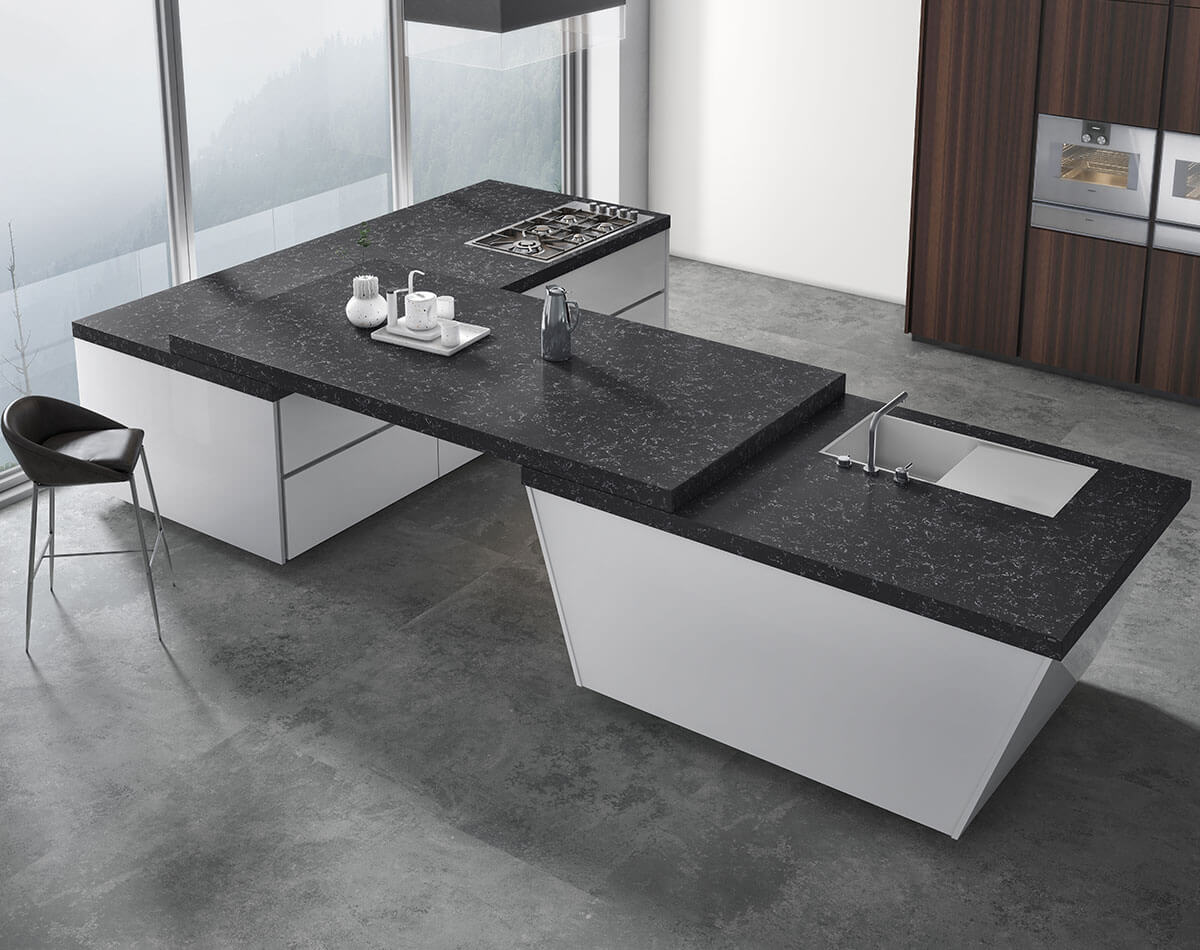

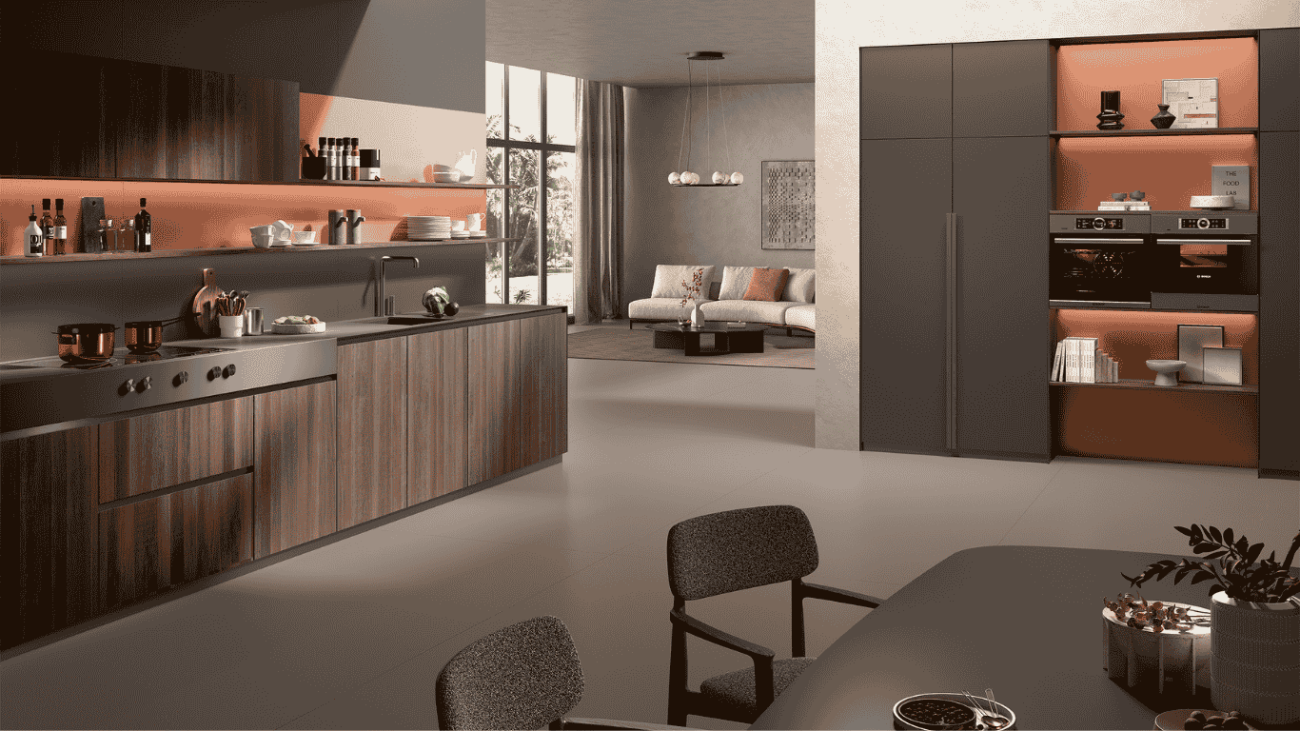
Why Countertops Define Modern Kitchen Interiors
A countertop is rarely an afterthought in a well-designed kitchen platform; it often decides the character of the entire space. Here’s why it plays an important role—
- Sets the material palette – texture and countertop tone usually decide the cabinet finish, wall colour, and flooring that follow it.
- Anchors the visual flow – from backsplash to island, countertop continuity ties together the different zones of a kitchen.
- Balances form and function – a well-chosen surface handles daily kitchen activity while still looking polished and considered.
- Elevates perceived value – a premium countertop lifts the overall feel of a kitchen, even with simple cabinetry around it.
- Reflects design intent – matt, glossy, concrete, stone, marble, and wood-look finishes each communicate a distinct kitchen personality.
10 Kitchen Interior Design Ideas
Each of the following ideas treats the countertop as the starting point, showing how thoughtful choices in finish, material, and layout can reshape a kitchen’s overall character.
Also Read: Top 10 Kitchen Countertop Design Ideas for Modern Homes
1. Waterfall Edge Countertop Design
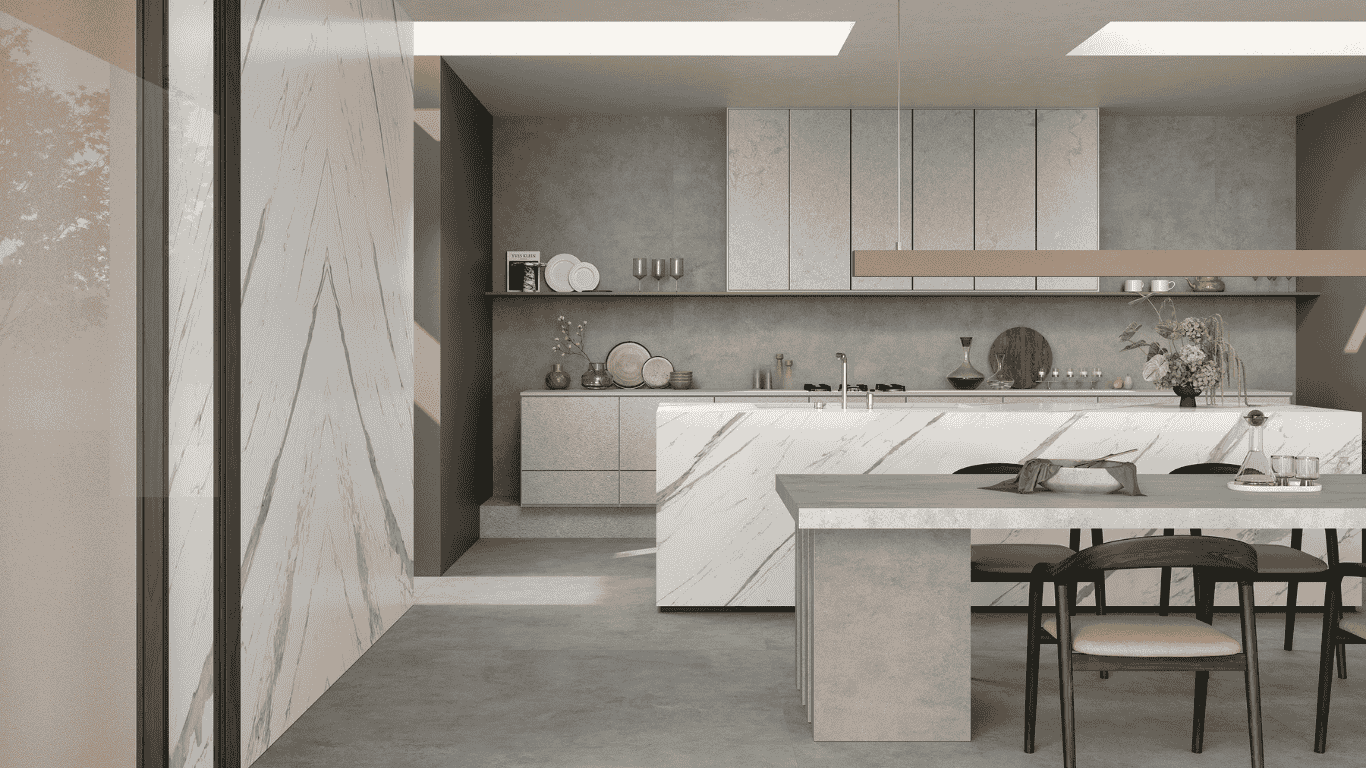
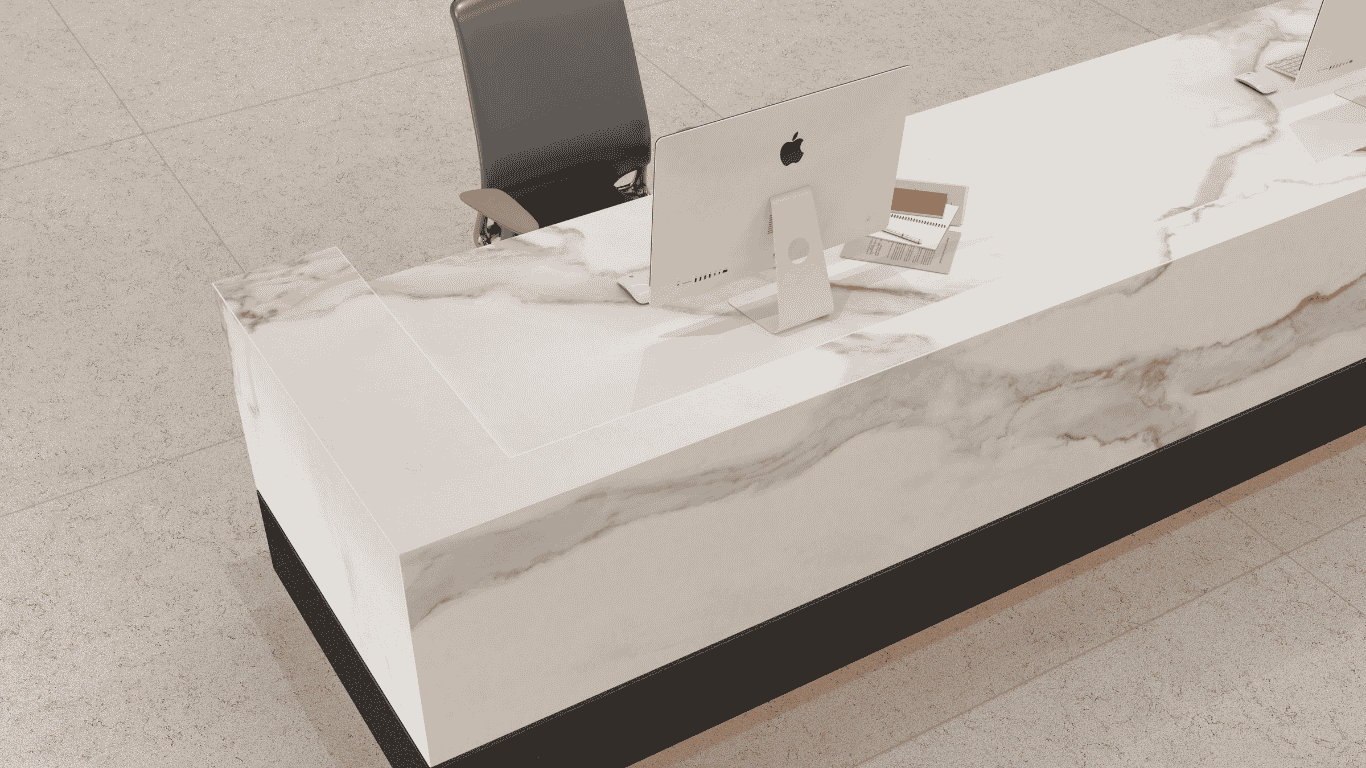
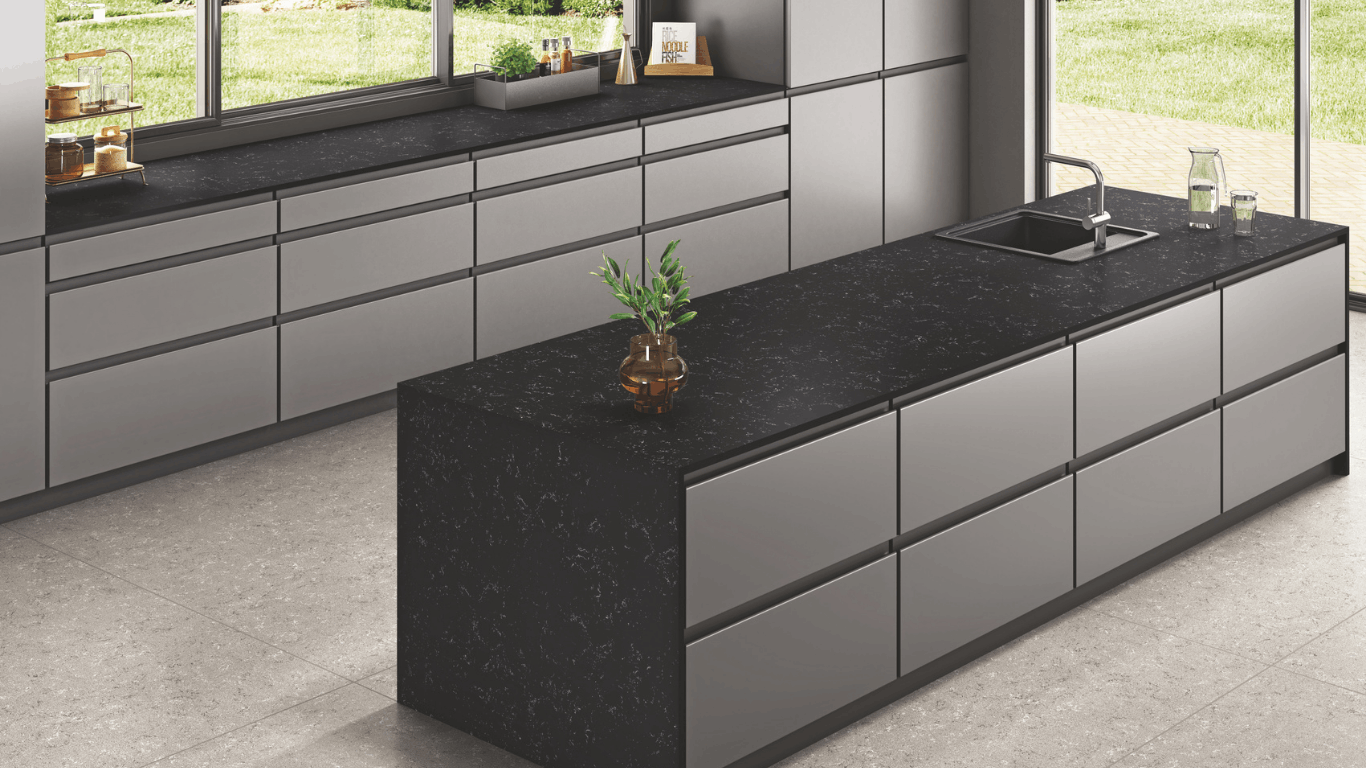
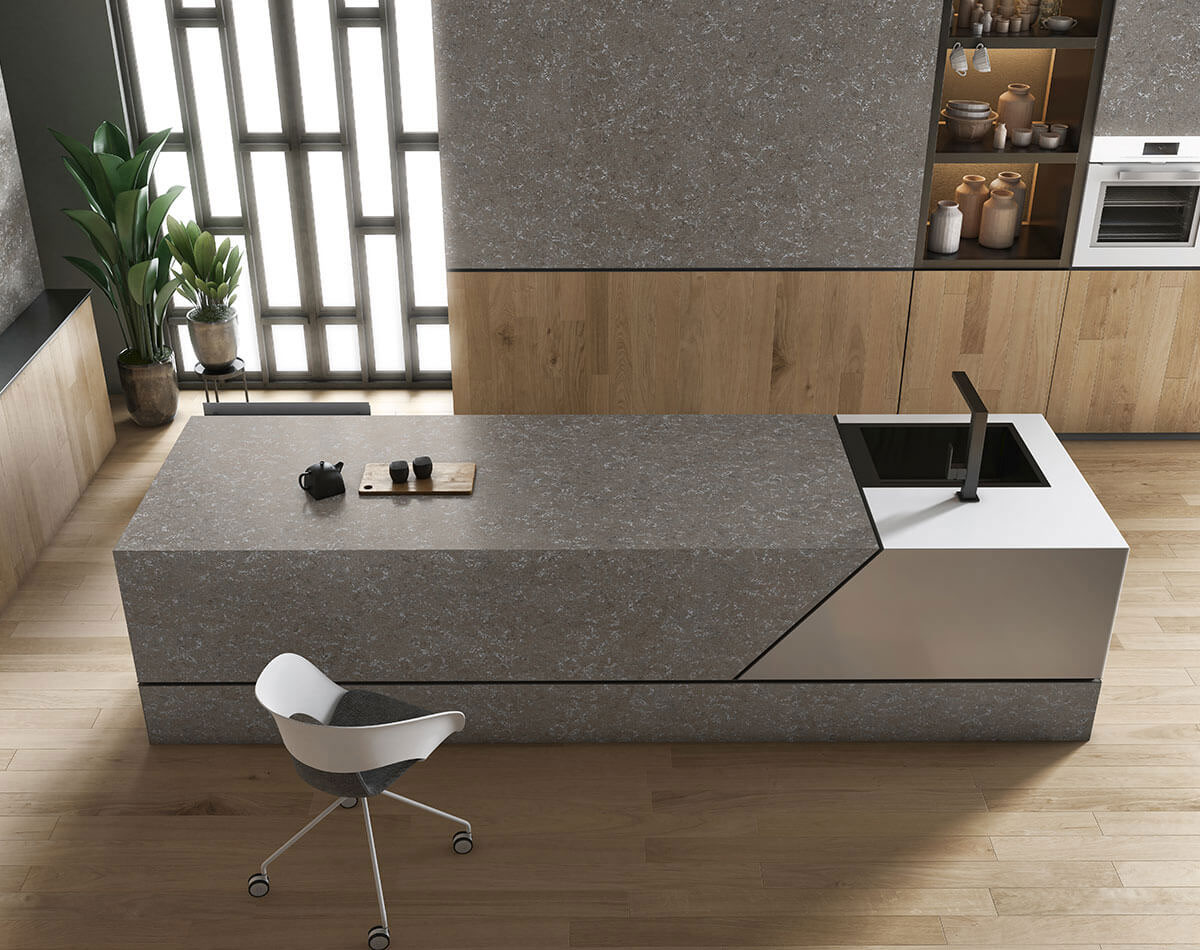
A waterfall edge extends the countertop material down the sides of the island, creating an unbroken line from top to floor. This removes visual clutter and gives the kitchen an architectural presence. Available in stone, concrete, marble, and concrete-look, it suits modern, minimal kitchens and works well on islands where the countertop becomes the room’s focal point.
2. Two-Tone Cabinet and Countertop Pairing
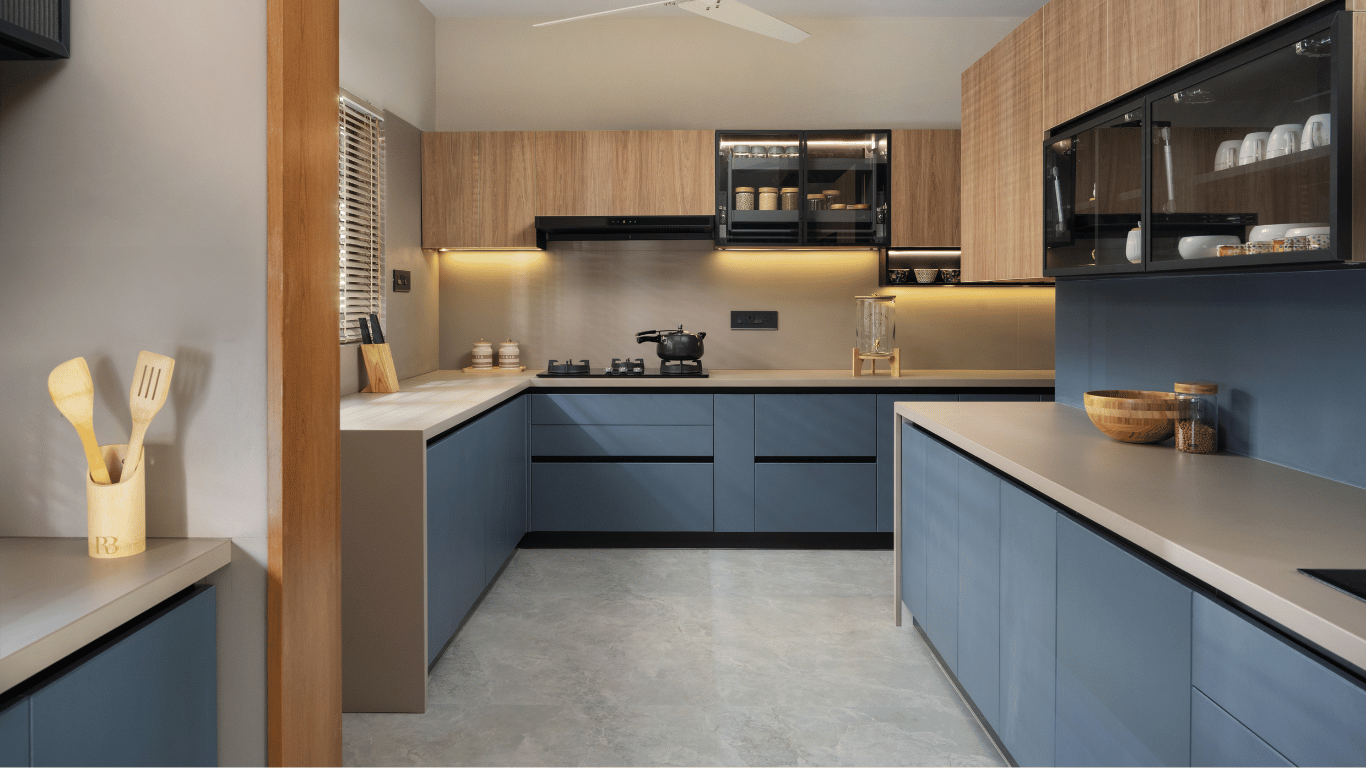
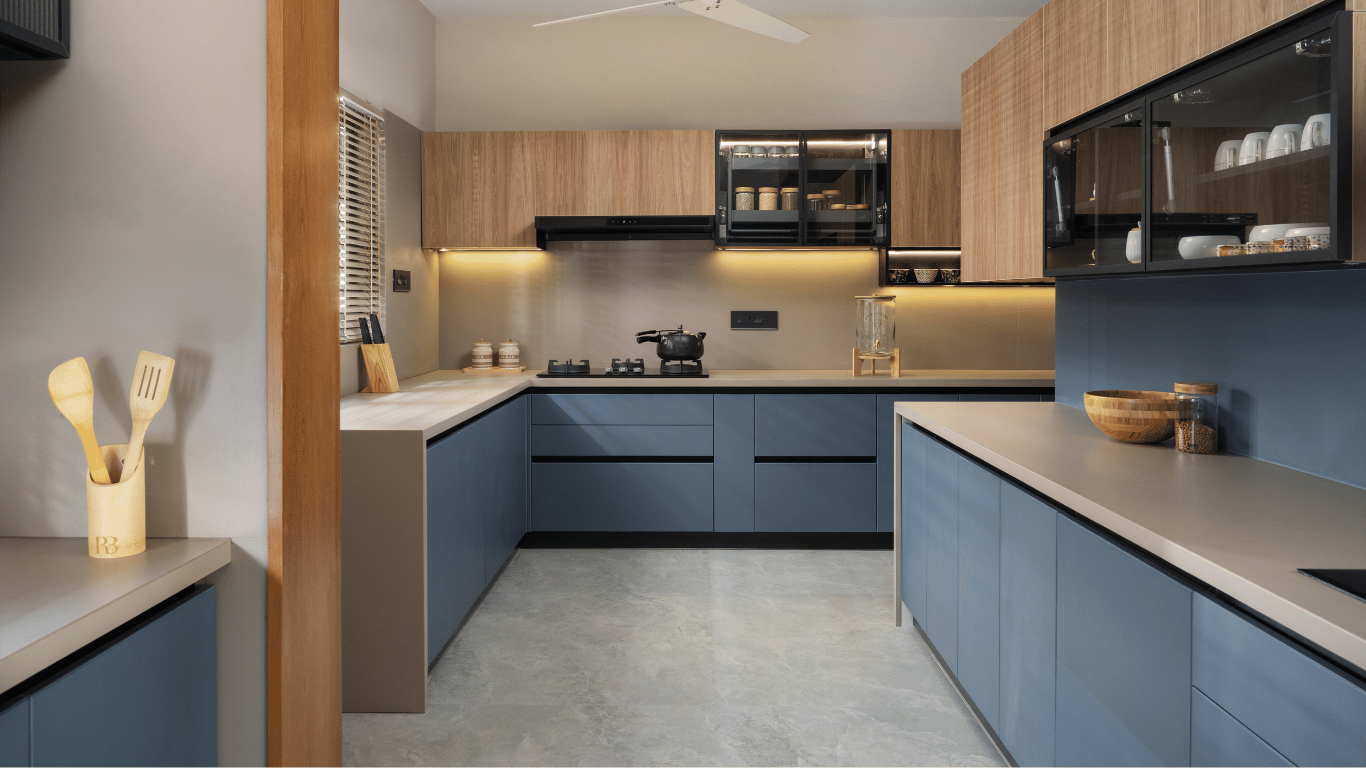
Pairing a light countertop with darker lower cabinets, or vice versa, adds contrast and depth without overwhelming the space. This works well in open-plan and compact kitchens, letting the countertop stand out as a distinct element. Concrete- and stone-look finishes are effective, offering neutral tones that balance bolder cabinet colours while keeping the palette cohesive.
3. Open Shelving with Countertop Continuity
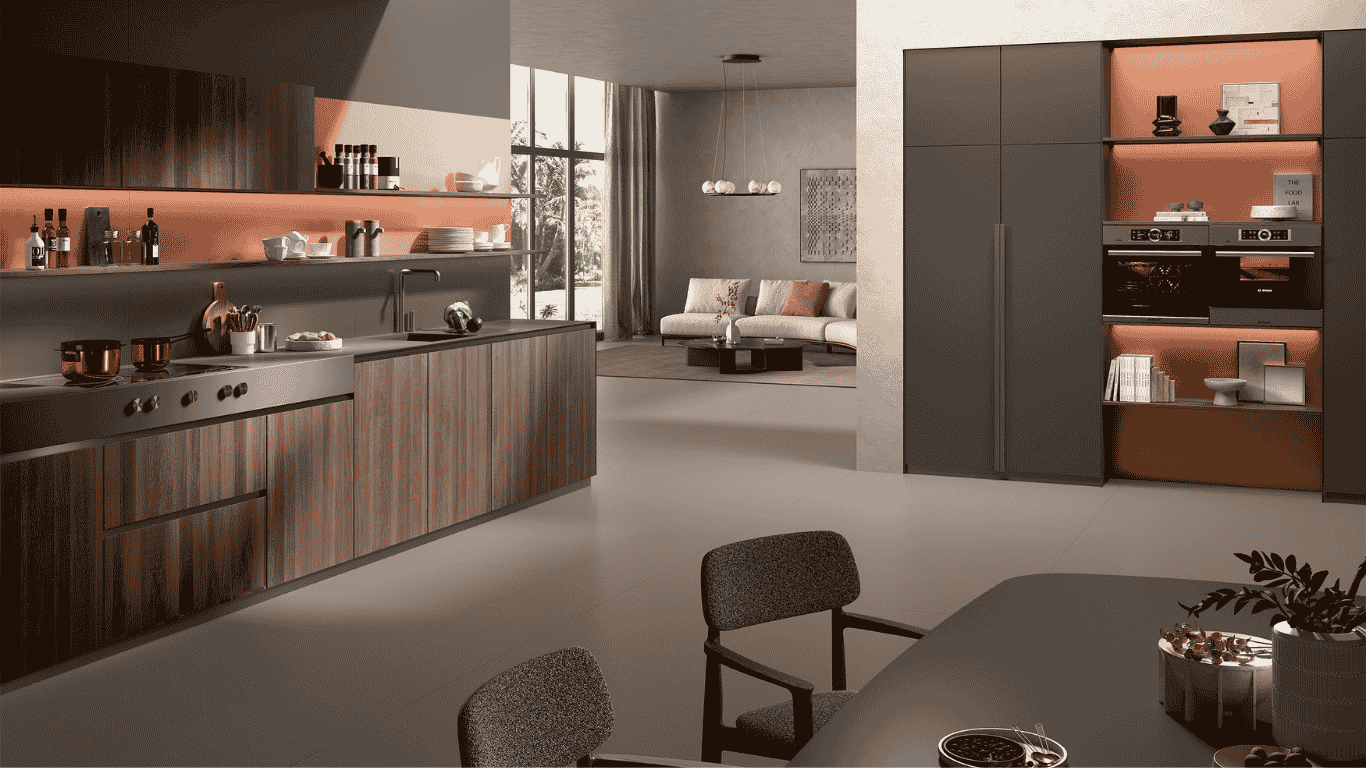
Works best when it echoes the countertop’s material or tone, creating continuity across the kitchen. Thin shelf brackets in modern or matching finishes keep the look uncluttered. This idea suits kitchens that want to display crockery or decor while maintaining a unified surface language, extending the countertop’s character upward.
Also Read: Types of Countertops for Indian Kitchens: What Works Best?
4. Kitchen Island with Breakfast Counter
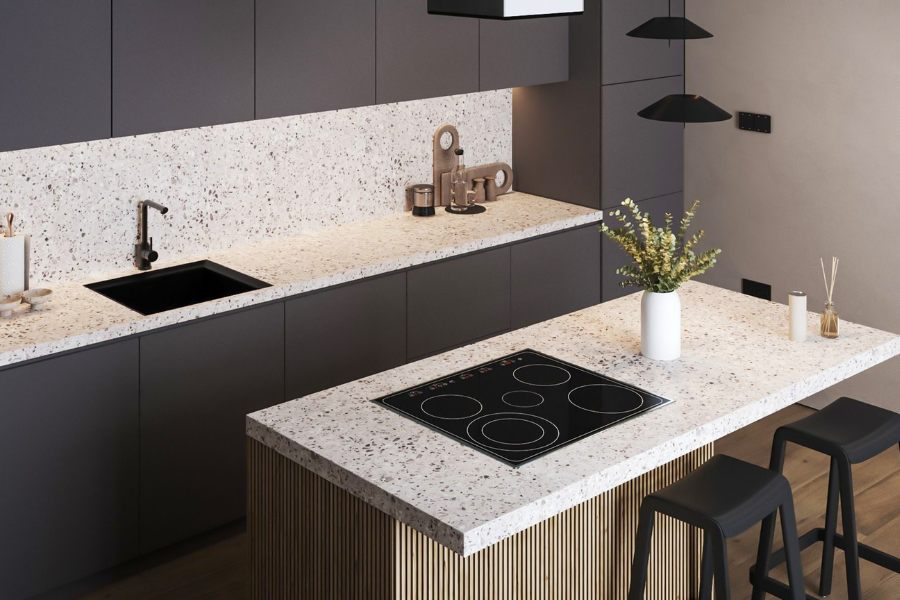
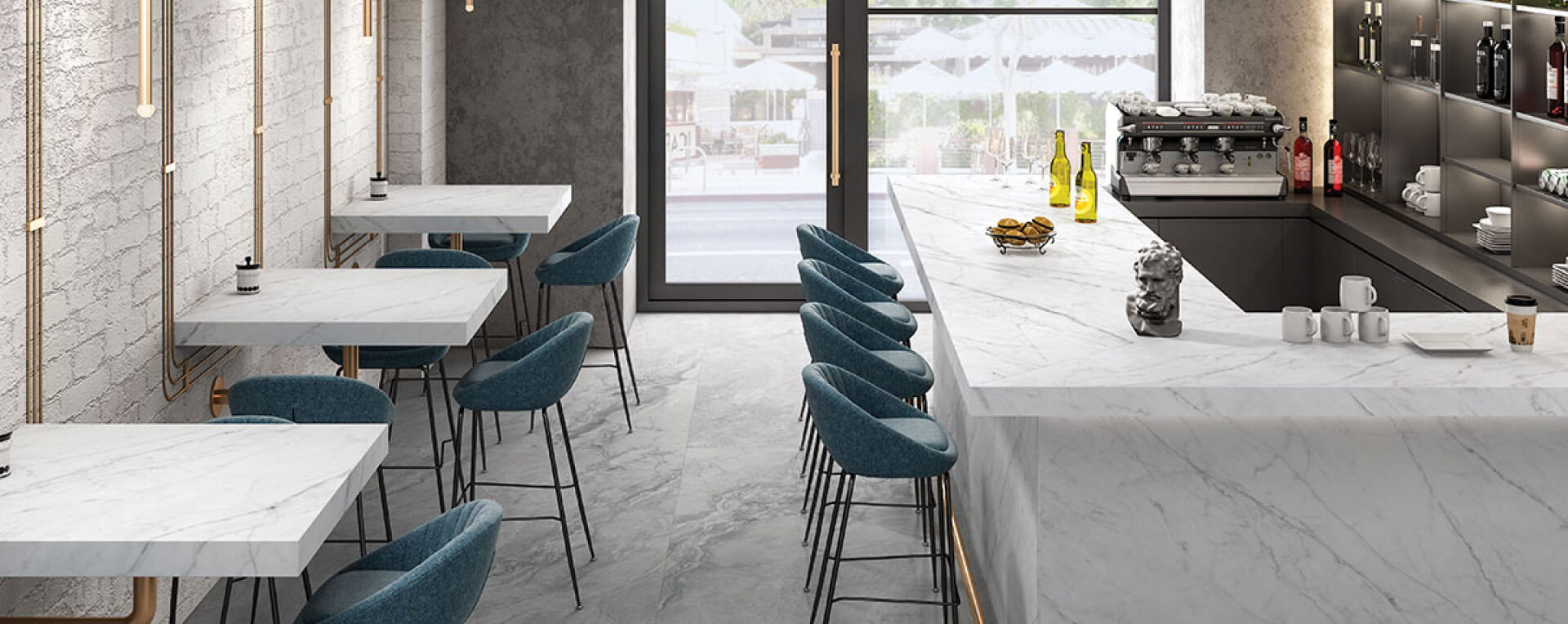
An island with an extended breakfast counter combines functionality with social design, giving the kitchen a casual dining zone without a separate table. A slightly raised or overhanging section allows seating on one side while keeping the working surface intact. This layout suits open-plan homes, and a durable countertop finish handles both dining and cooking use.
5. Matt Finish Countertop Trend
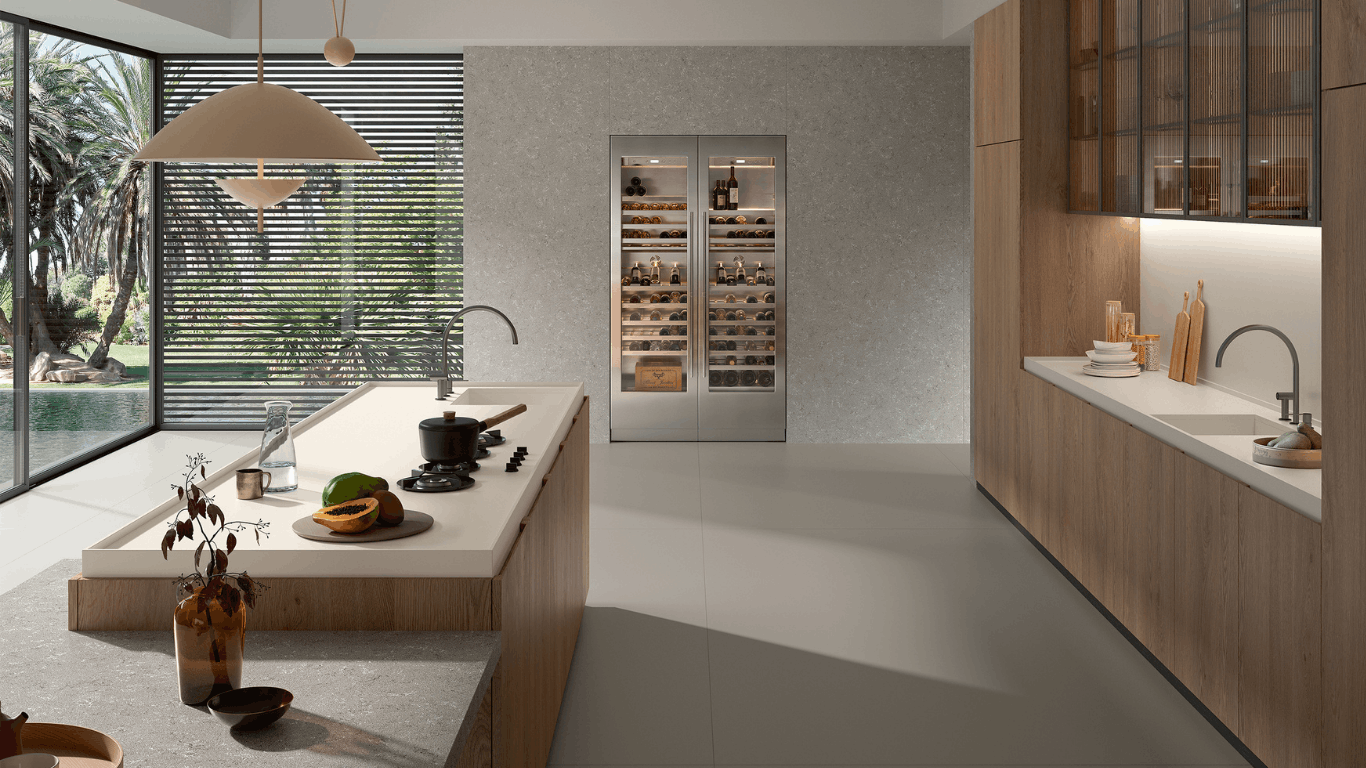
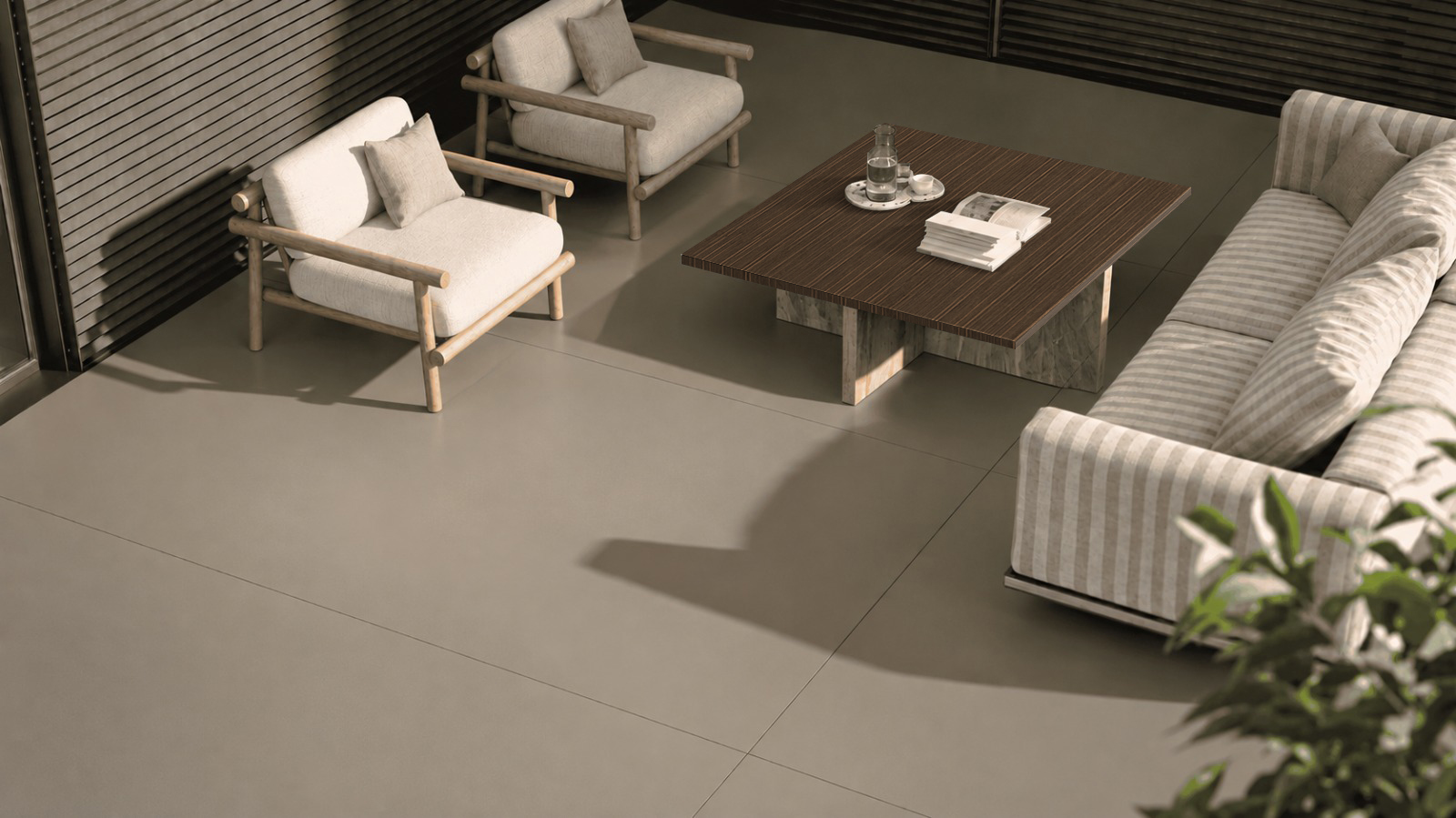
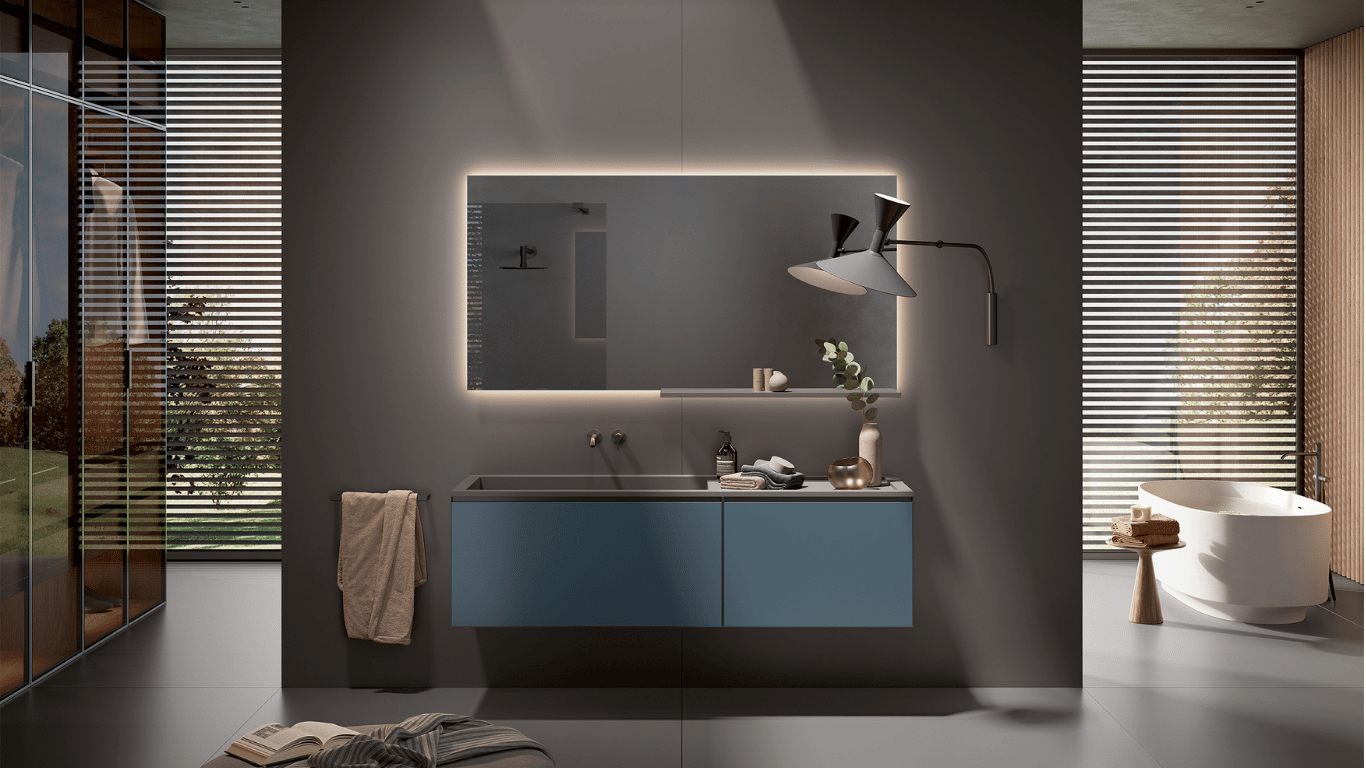
They have moved from niche to mainstream, offering a soft, non-reflective surface that hides fingerprints and light scratches better than glossy alternatives. The finish suits warm and minimal, textured kitchen styles, pairing well with matt cabinetry for a coordinated look. Matt concrete and stone-look surfaces are especially popular for their understated, contemporary appeal.
6. Backsplash Matching Countertop Material
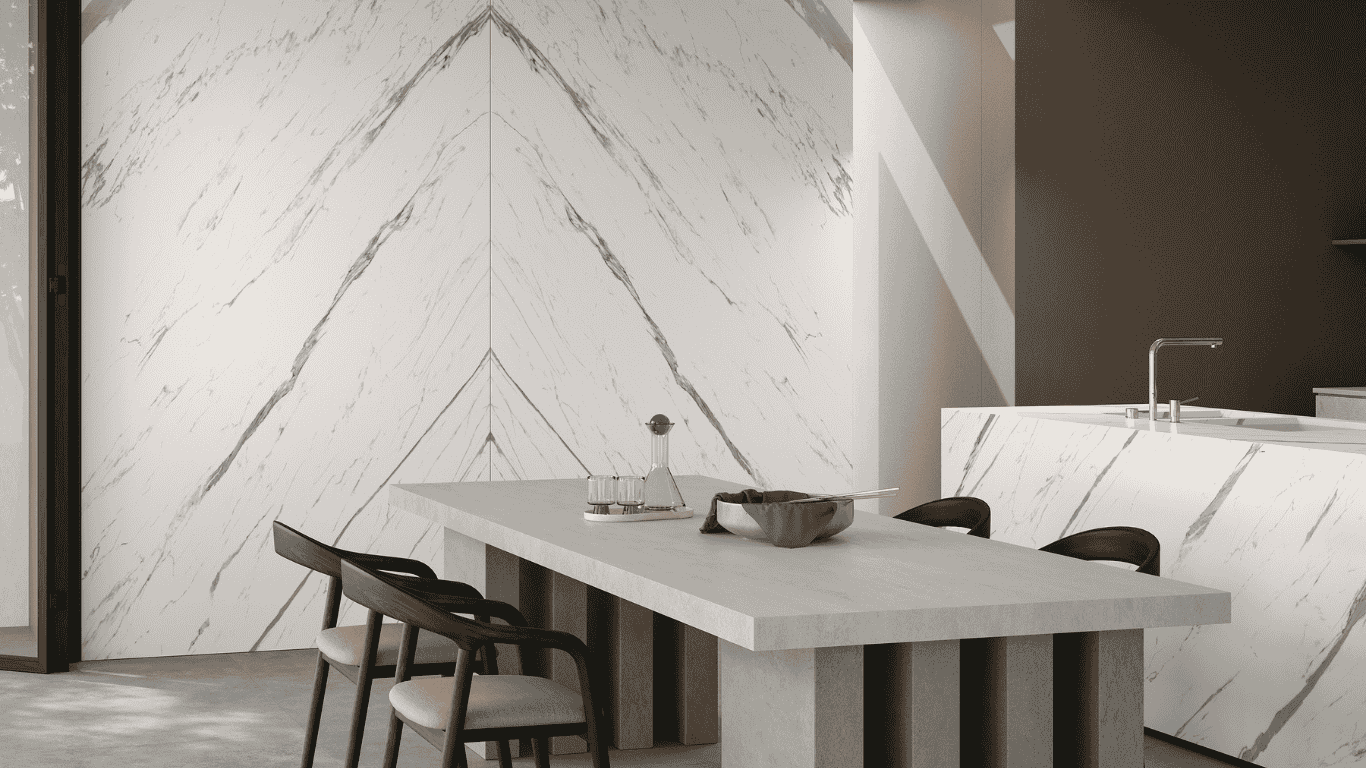
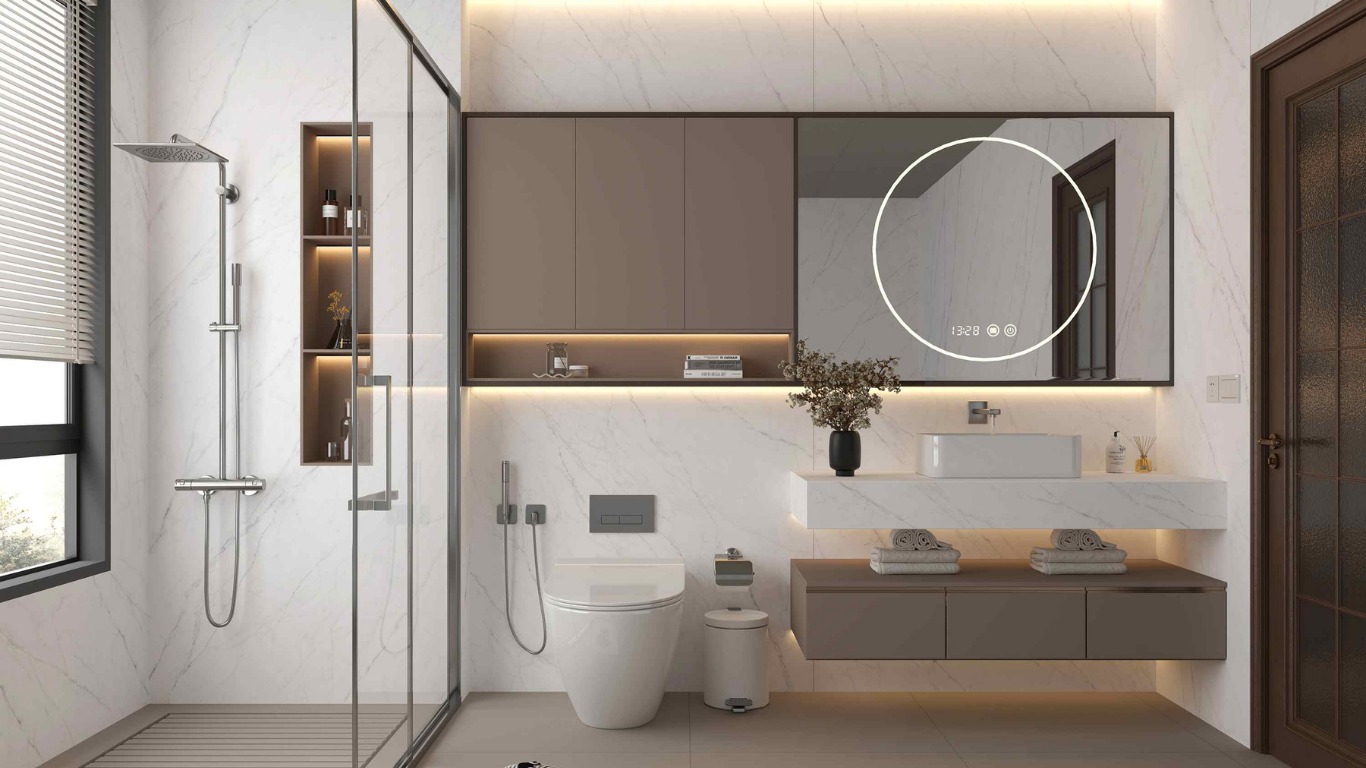
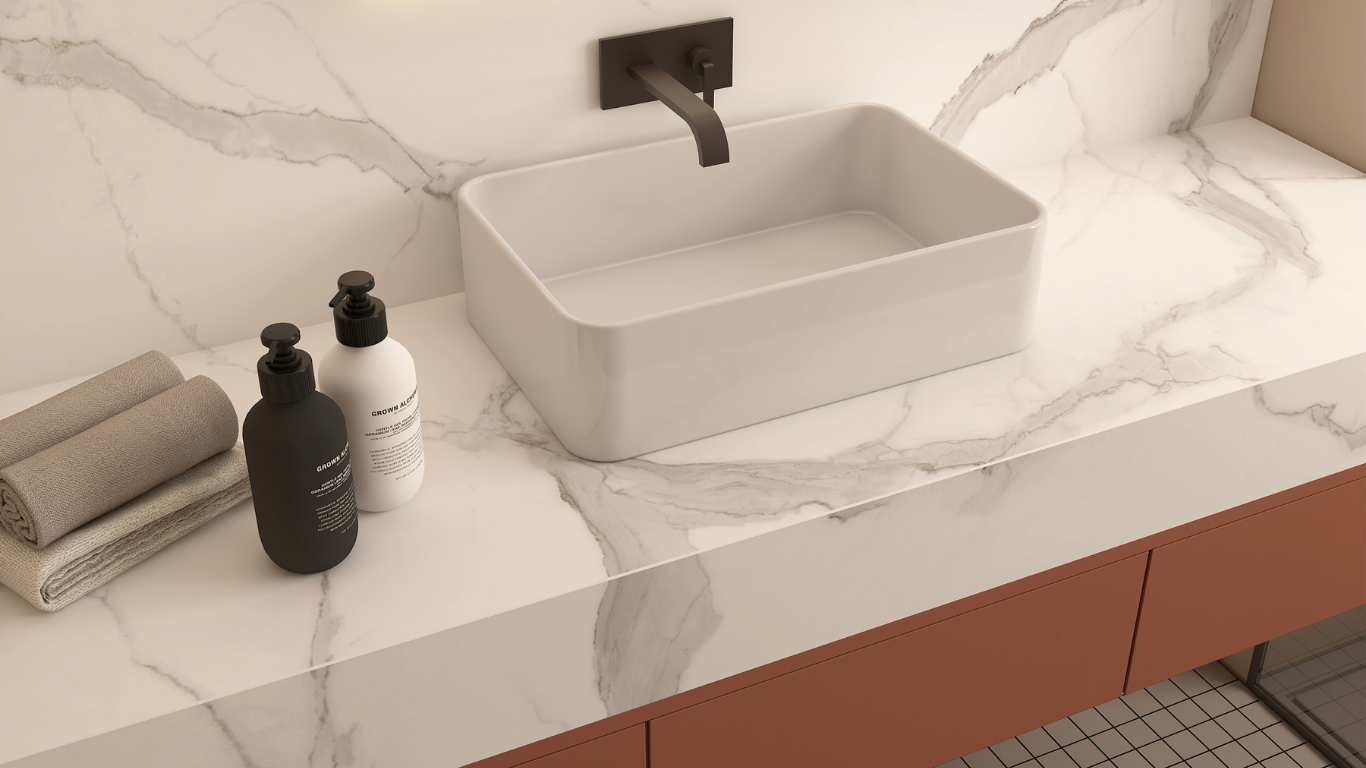
Extending the countertop material up the wall as a backsplash creates a seamless surface that reads as one continuous design gesture. This removes visible seams between the wall and counter, simplifying maintenance while giving the kitchen a clean, monolithic look. It works well with marble and stone-look surfaces, where the texture continues naturally from worktop to wall.
Also Read: 10 Modern Kitchen Counter Design Ideas for Every Budget
7. L-Shaped Kitchen with Corner Countertop
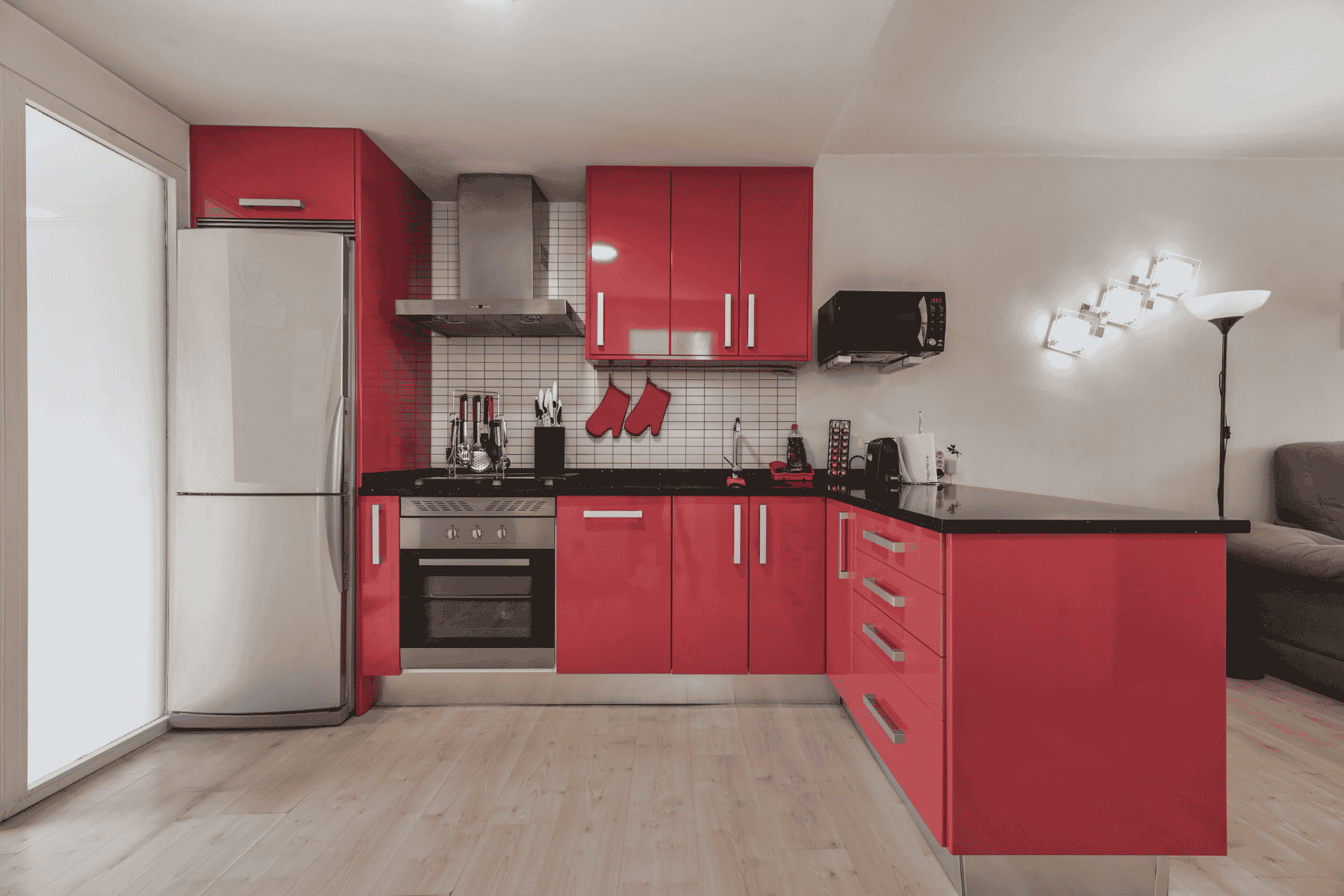
These layouts rely on the corner countertop to connect two work zones into a single efficient surface. A continuous countertop across the corner avoids awkward seams and keeps the workflow between cooking and prep areas smooth. This layout suits mid-sized and compact kitchens, and a premium finish across the full L keeps the design visually unified.
8. Handleless Cabinet Kitchen Design
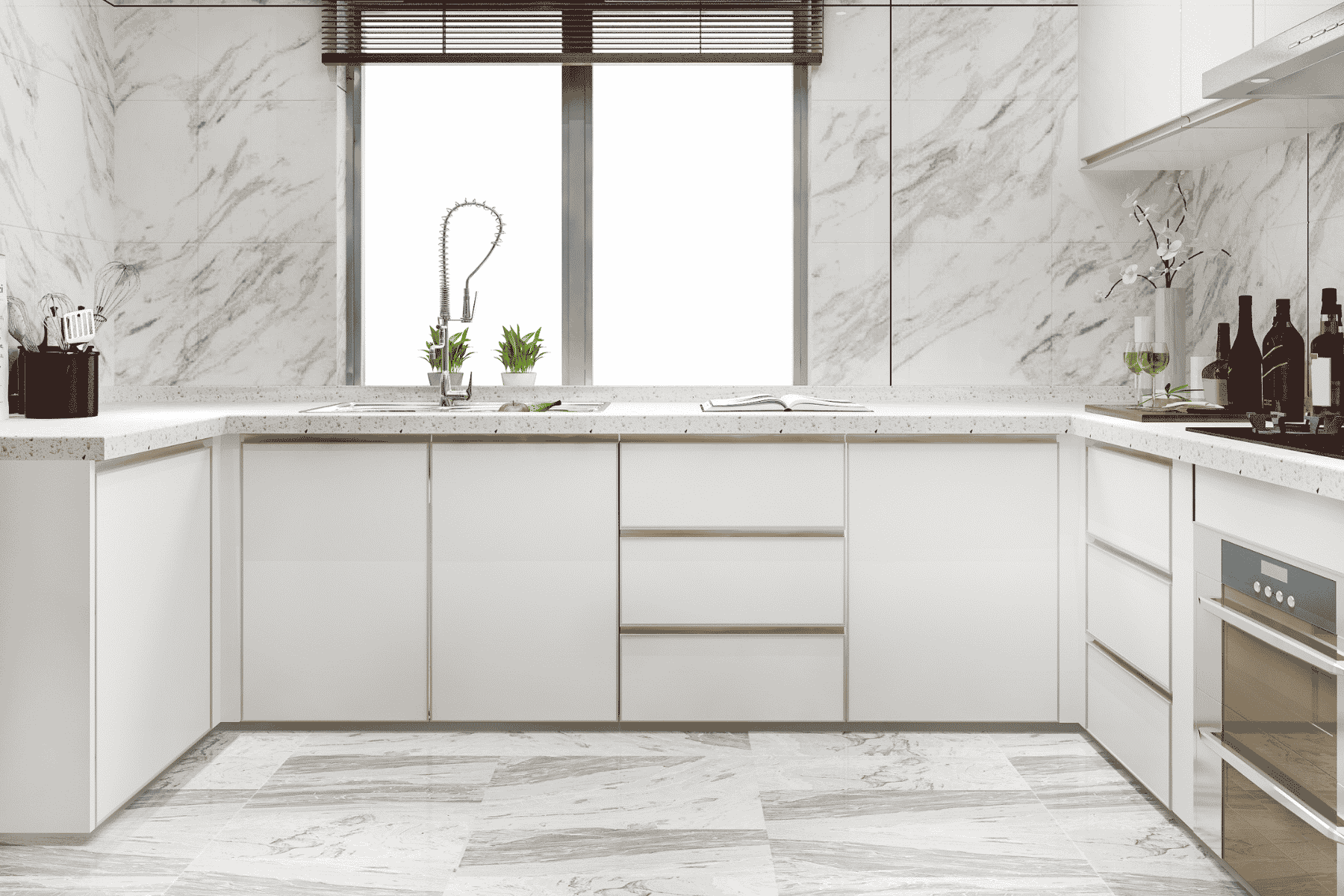
Relies on clean lines, so the countertop becomes the visually dominant, most tactile surface in the kitchen. Recessed grips or push-to-open cabinets keep facades smooth, letting the countertop’s texture and finish carry the design. This pairing suits minimal, contemporary kitchens where every visible surface is expected to look refined and deliberate.
9. Statement Countertop as Design Focal Point
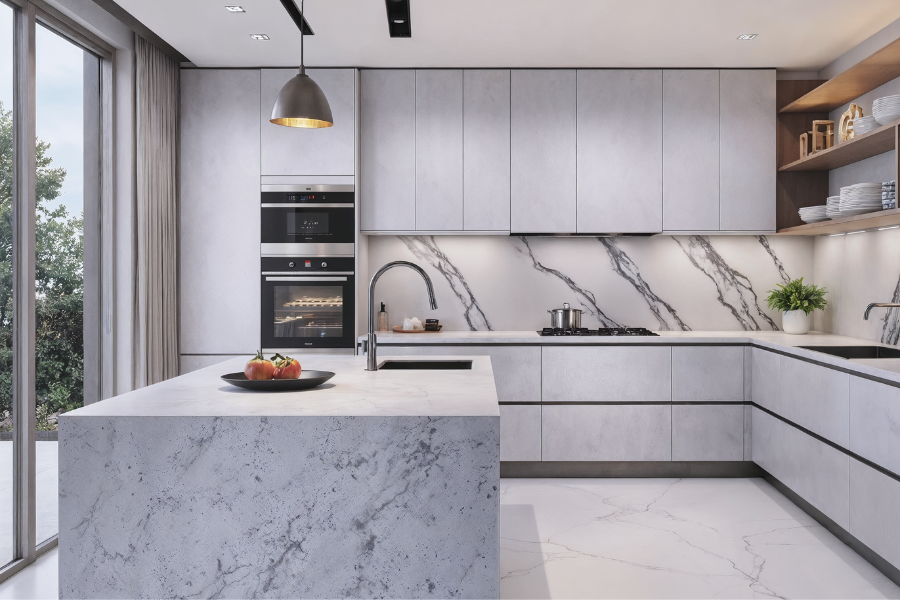
Instead of blending in, a statement countertop is chosen to lead the design, a distinctive tone, bold veining, or a striking texture that draws the eye first. Backsplash and cabinetry are kept simple to let the countertop dominate. This approach suits kitchens that want a single, confident kitchen platform design rather than competing elements.
10. Countertop Upgrade with Neotra Engineered Surfaces
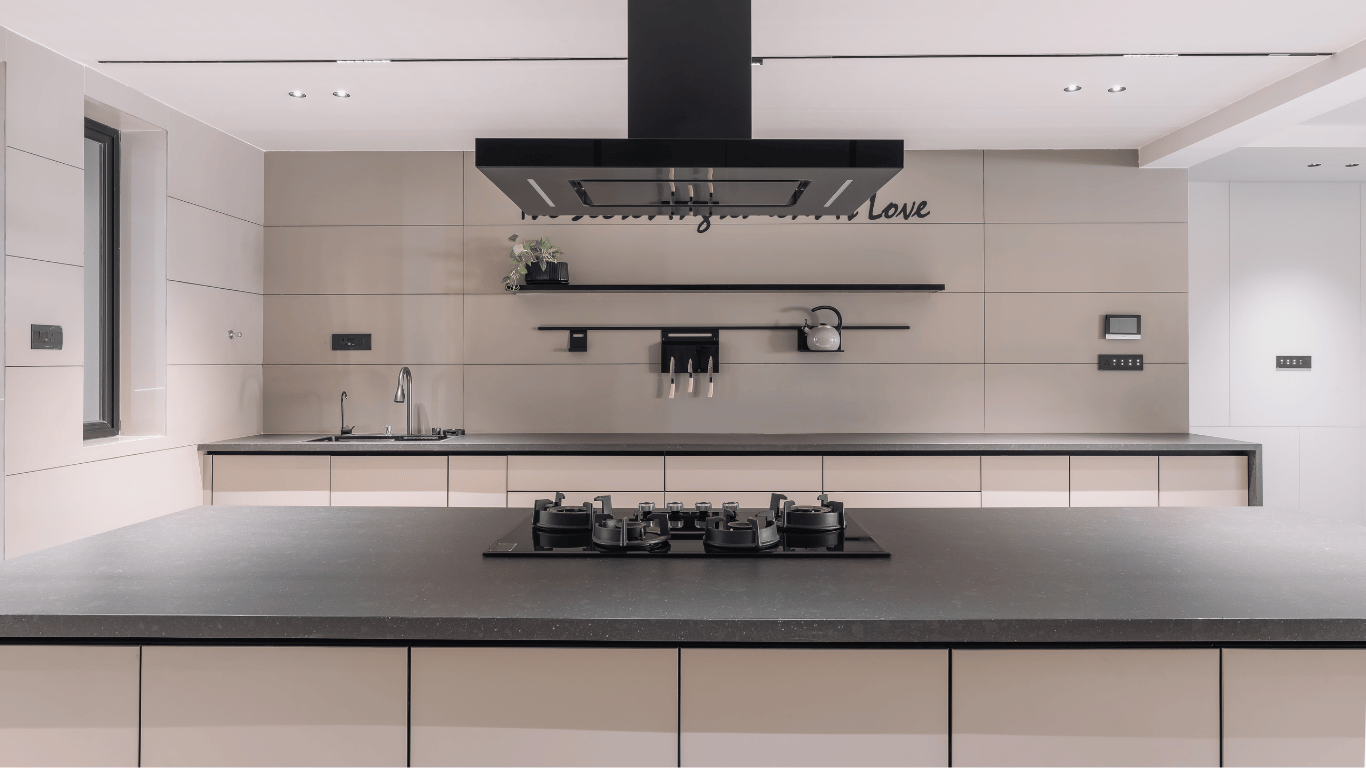
Upgrading to Neotra-engineered surfaces gives homeowners marble, stone, wood, and concrete-look finishes without compromising on performance for daily kitchen use. Available in multiple thicknesses, Neotra surfaces suit waterfall edges, backsplashes, islands, and open shelves alike. For a kitchen upgrade, Neotra brings a genuinely premium, considered finish to every visible surface in the space.
Also Read: Top 5 Durable Stones for Kitchen Slabs in Indian Homes
Natural Stone Countertops vs Engineered Surface Countertops
Natural stone countertops, such as granite or marble, are priced for their unique veining and organic character, but each slab varies and requires ongoing sealing and careful maintenance. Engineered surfaces, such as Neotra, replicate the look of marble, stone, wood, and concrete while offering consistent texture and colour across every slab. The choice often comes down to whether homeowners prioritise natural variation or a more uniform, low-maintenance finish across their kitchen.
| Aspect | Natural Stone | Neotra Engineered Surfaces |
| Appearance | Unique veining, varies per slab | Consistent marble, stone, wood, or concrete look |
| Maintenance | Requires periodic sealing | Low-maintenance surface finish |
| Consistency | Slab-to-slab variation | Uniform appearance across slabs |
| Design Options | Limited to natural stone types | Multiple looks and thicknesses available |