

Why Kitchen Window Design Is More Than Aesthetics
Kitchen window design influences lighting, ventilation, comfort, and the overall functionality of the space. Beyond appearance, the right window placement helps create a kitchen that is more comfortable and efficient to use every day.
- Reduces dependence on artificial lighting during the day
- Helps remove cooking odours and humidity before they settle into cabinets and fabrics
- Influences how warm or cool the kitchen feels based on window orientation
- Poor placement can result in a dim, stuffy, or overheated kitchen
- Natural light affects how colours, surfaces, and finishes appear within the space
- Materials can look different under direct sunlight, diffused light, or northern light conditions
- A well-planned window design balances functionality and aesthetics for a better living experience
- Prioritising performance first and visuals second helps create a kitchen that works as well as it looks
12 Kitchen Window Design Ideas
Find the top 12 ideas for kitchen window designs that enhance your space—
1. Pass-Through Kitchen Window
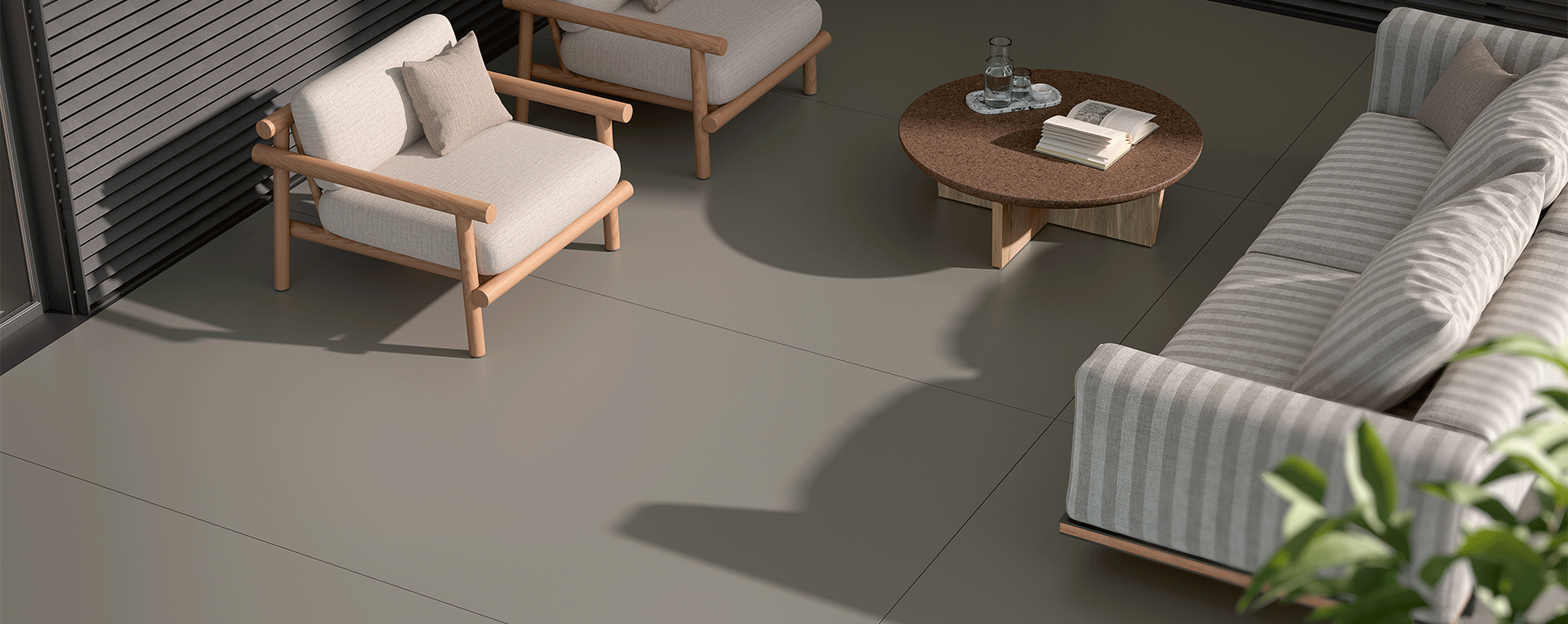
A pass-through window is essentially a wide, low window that opens horizontally, like slides up or a shutter, and is popular for kitchens that open to an outdoor dining area, balcony, or patio. It serves a practical purpose of passing drinks and food directly but also functions as a ventilation opening and a visual connection to the outdoors, making the kitchen feel like an extension of the gathering space beyond it. An engineered slab, the UV-stable Neotra surface, won’t stain, fade, or warp with exposure, so the ledge looks the same whether it’s catching morning shade or afternoon sun.
2. Above-Sink Garden View Window
This is popular for kitchens that open to an outdoor patio or dining area. It serves a practical purpose but also functions as a ventilation opening and a visual connection to the outdoors. The countertop running this window should be in a surface that handles both indoor and outdoor conditions, a fully sintered, UV-stable material from Neotra, which is an ideal choice that won’t stain, fade, or degrade with exposure.
3. Casement Windows Above the Sink
The kitchen sink area is one of the hardest-working spots in the kitchen, and a casement window directly above it is a classic for good reason. It opens outward with a simple crank, allowing excellent cross-ventilation and an unobstructed view while you work. From a design standpoint, the wall behind the sink is also the most visible, especially in kitchens with a thoughtfully planned kitchen countertop design. A backsplash on a surface that complements the window frame, whether a matte stone look or a subtle wood look, ties the look together without competing with the natural light.
4. Sliding Kitchen Window
Sliding windows offer a practical advantage; you can control exactly how much air enters the kitchen by sliding one panel partially or fully open. They work well in compact kitchens where there’s no room for an outward-swinging casement. The clean horizontal lines also blend well with contemporary kitchen aesthetics. Choose slim aluminium frames in a matt finish to keep the look streamlined alongside modern cabinetry.
5. Frosted Glass Kitchen Window
Not every kitchen window needs to be transparent. A frosted or textured window brings in soft, diffused light while completely preserving privacy, which is useful on street-facing walls or in tight urban plots. It’s worth sampling your kitchen countertop or backsplash material in the actual light conditions of the space before committing.
6. Louvre Kitchen Window
Features horizontal slats that can be tilted open to different angles, giving you precise control over both the volume and direction of airflow. They’re especially effective in warm climates where you want to catch a breeze without opening the kitchen. Aesthetically, they bring slightly topical vibes, suitable for kitchens that lean into natural textures and organic surface finishes.
Also Read: 10 Modern Kitchen Slab Design Ideas for Your Kitchen
7. Corner Kitchen Window
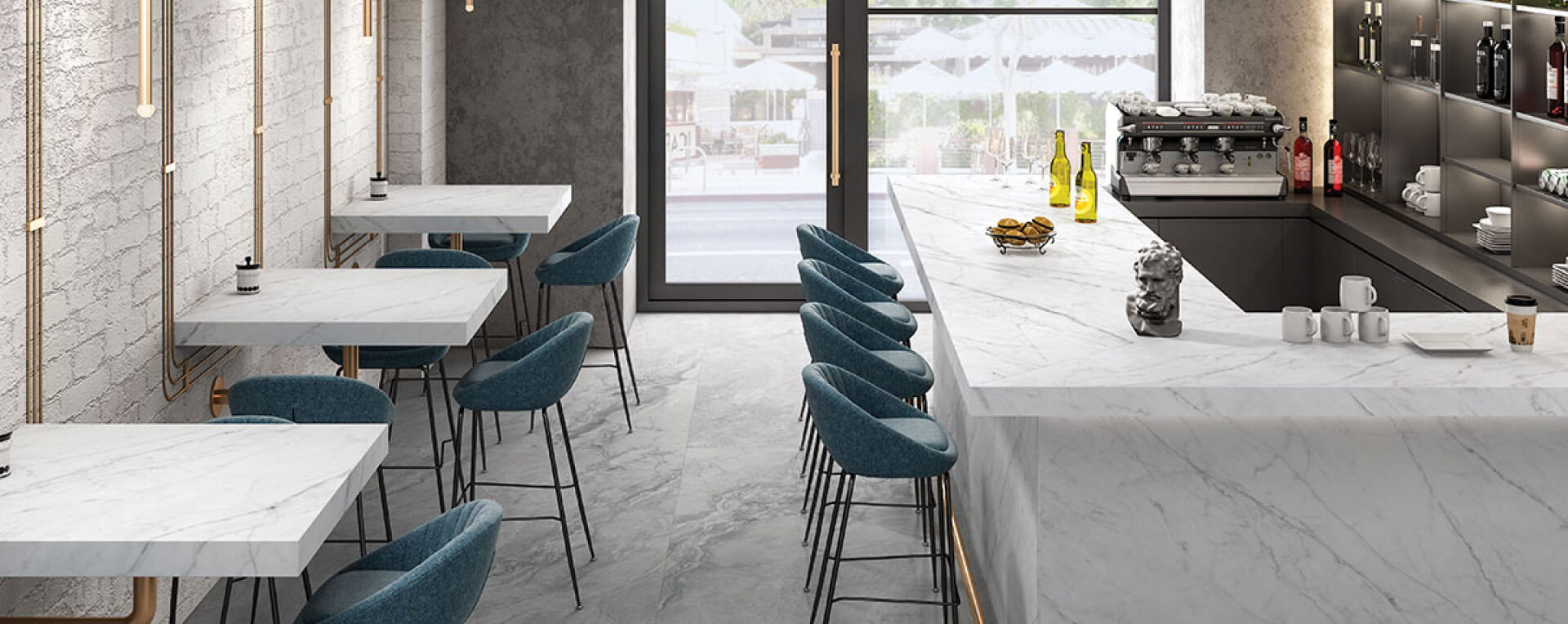
Where two glass panes meet at a 90° angle without a dividing mullion is an architectural choice that dramatically opens up the kitchen. They dissolve the corners of the room, making even a compact kitchen feel expansive, and they capture light from two directions throughout the day. Kitchens with corner windows benefit from surface choices that hold their own without visual clutter. Large format slabs, uninterrupted by heavy grout lines, let the panoramic effect of the window take centre stage.
8. Skylight Over the Kitchen
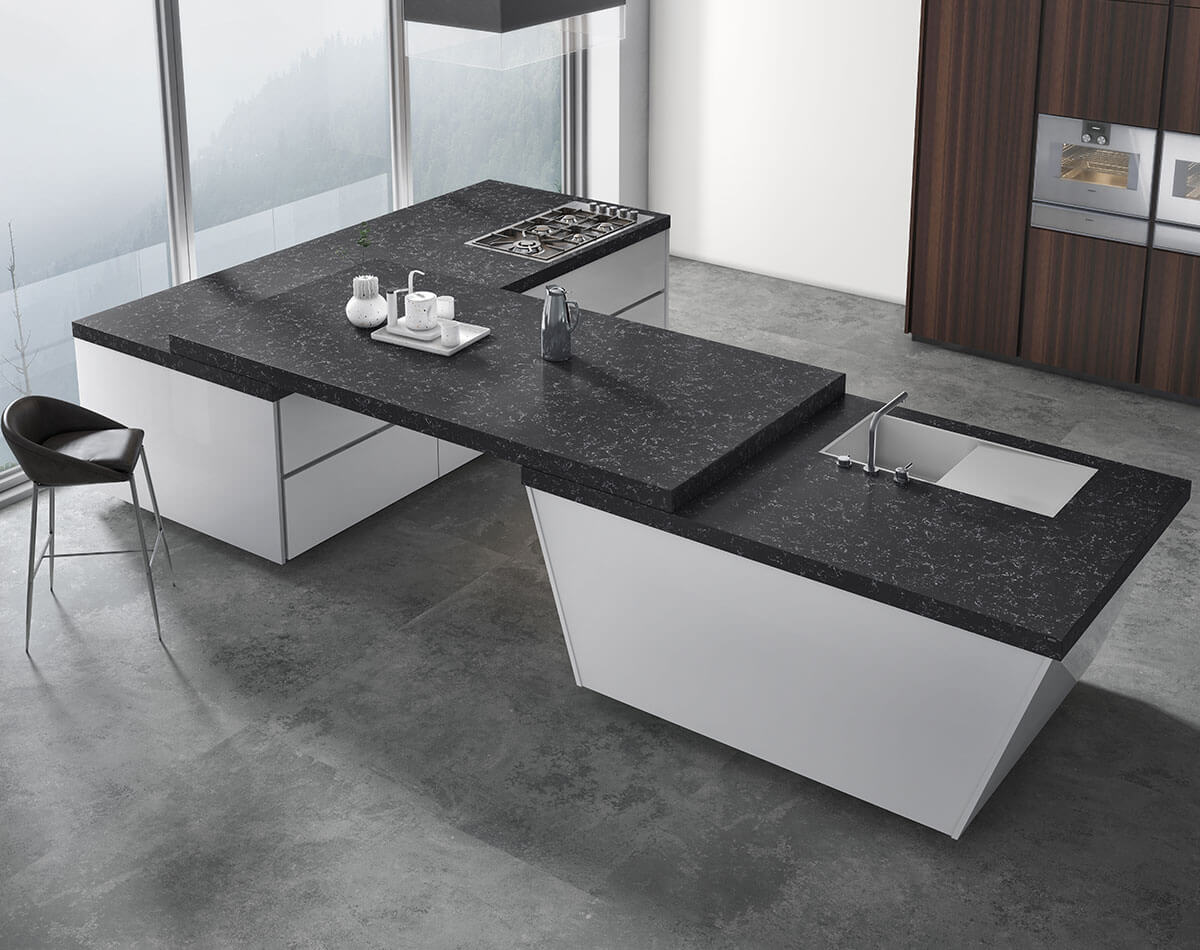
In kitchens where wall space is limited, common in apartment layouts or island-centric designs, a skylight positioned directly over the cooking or prep zone brings daylight in from above. Overhead natural light is unique in that it illuminates the entire room evenly, eliminates the need for task lighting during the day, and gives the ceiling a sense of openness that wall windows can’t replicate.
Also Read: Latest Slab Material Trends for Kitchen Counters & Islands
9. Full-Width Kitchen Window
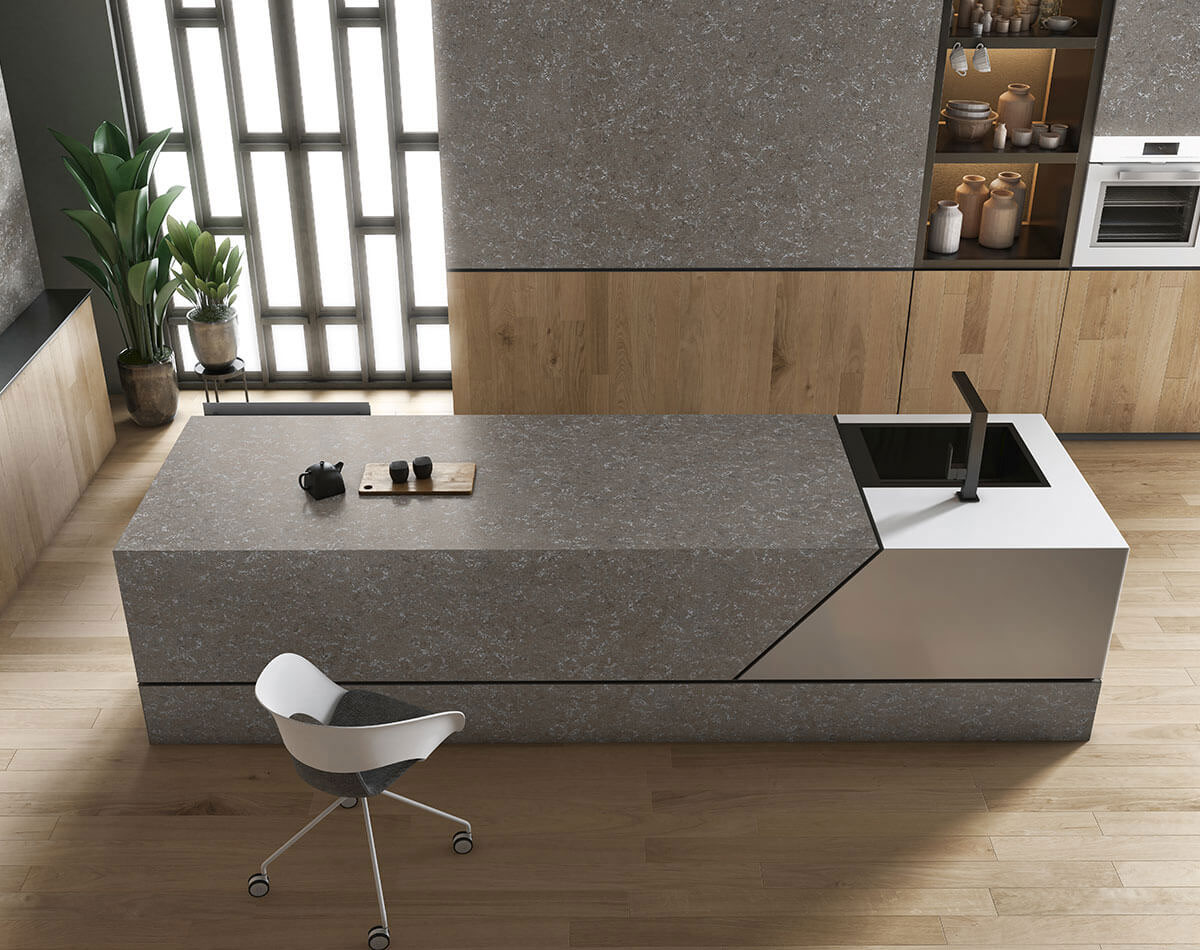
Rather than a single window punctuating the wall, a full-width window, running the entire length of the kitchen wall above the counter, turns the whole workspace into a sunlit zone. They are widely used in modern, minimal kitchens because they remove the visual interruption of wall cabinets above the counter. A continuous Neotra slab in a refined, low-vein reads as calm and expansive under this much light, while a heavily patterned surface can start to feel busy.
10. Kitchen Window with Herb Garden Sill
A kitchen with a window sill becomes a genuinely useful surface, a dedicated spot for potted herbs that catch the light, a place to set a cutting board while prepping, or a landing zone for cooling baked breads. This design works especially well in older or heritage-style homes where thick walls naturally create generous reveals, but can be built into new construction just as easily.
11. Stained Glass Kitchen Window Accent
A small decorative stained glass panel above the main kitchen window adds. Stained-glass inserts can be used more decoratively, adding colour and character to an otherwise plain kitchen wall. These windows filter and tint the light.
12. Kitchen Window with Neotra Splashback Integration
When the backsplash material runs right up to the window frame, uninterrupted by trim or tile joints, the window reads as if it’s set directly into the surface itself, giving the whole wall a tailored, custom look. This is where Neotra’s large-format slabs work; the surface resists heat, splashes, and steam without losing its finish. The result is a kitchen wall that looks deliberately designed around its window.
Also Read: 15 Stunning Kitchen Floor Ideas to Match Your Modern Countertops
How Neotra Surfaces Complete Kitchen Window Designs
Natural light and surface finishes work together to shape the overall look and feel of a kitchen. The way a surface interacts with daylight can influence brightness, texture, and visual comfort throughout the day.
- Matt surfaces absorb and soften light, creating a warm appearance
- Polished surfaces reflect light and help enhance brightness
- Textured surfaces change in appearance as natural light shifts throughout the day
- Engineered solely from natural materials for long-term performance
- Heat-, scratch-, UV-, and frost-resistant for indoor and outdoor kitchen applications
- Non-porous surface that supports easy maintenance and hygiene
- NSF- and IGBC-certified for quality and sustainability standards
- Consider how window placement interacts with surface finishes to achieve the desired kitchen aesthetic and lighting effect