
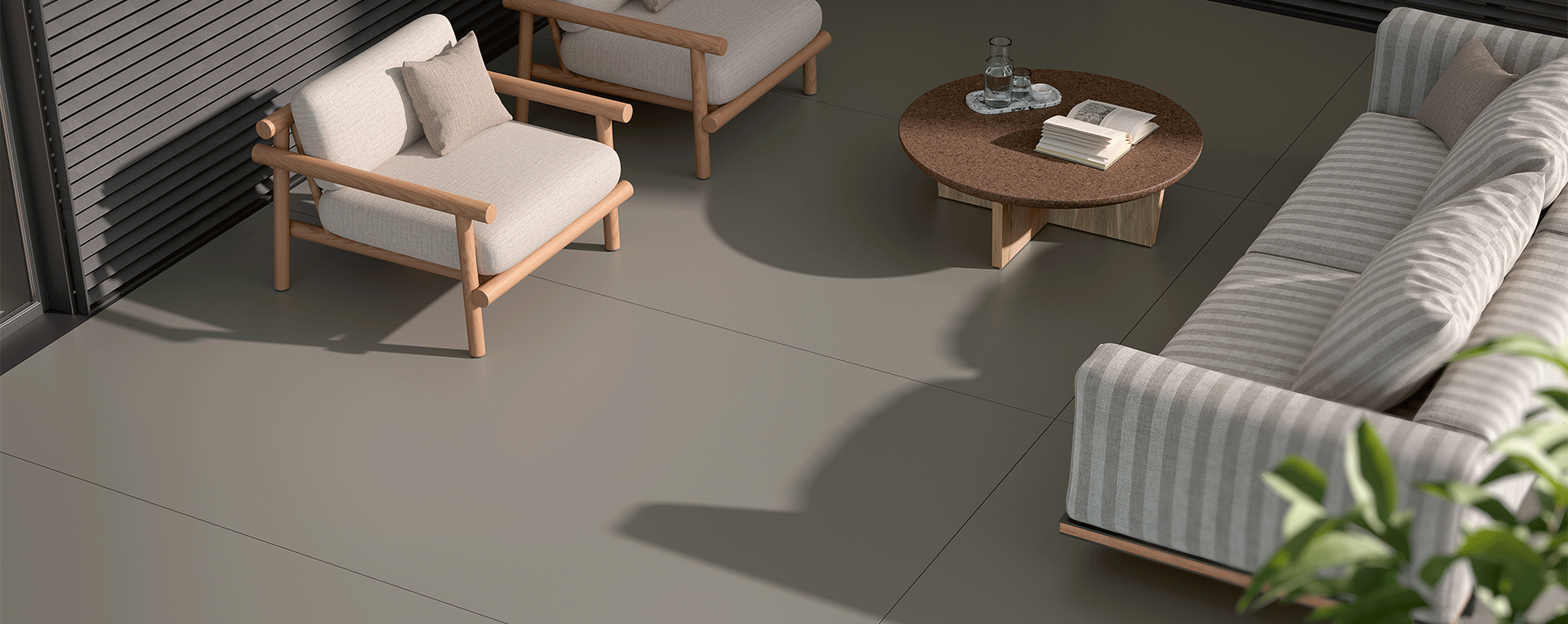
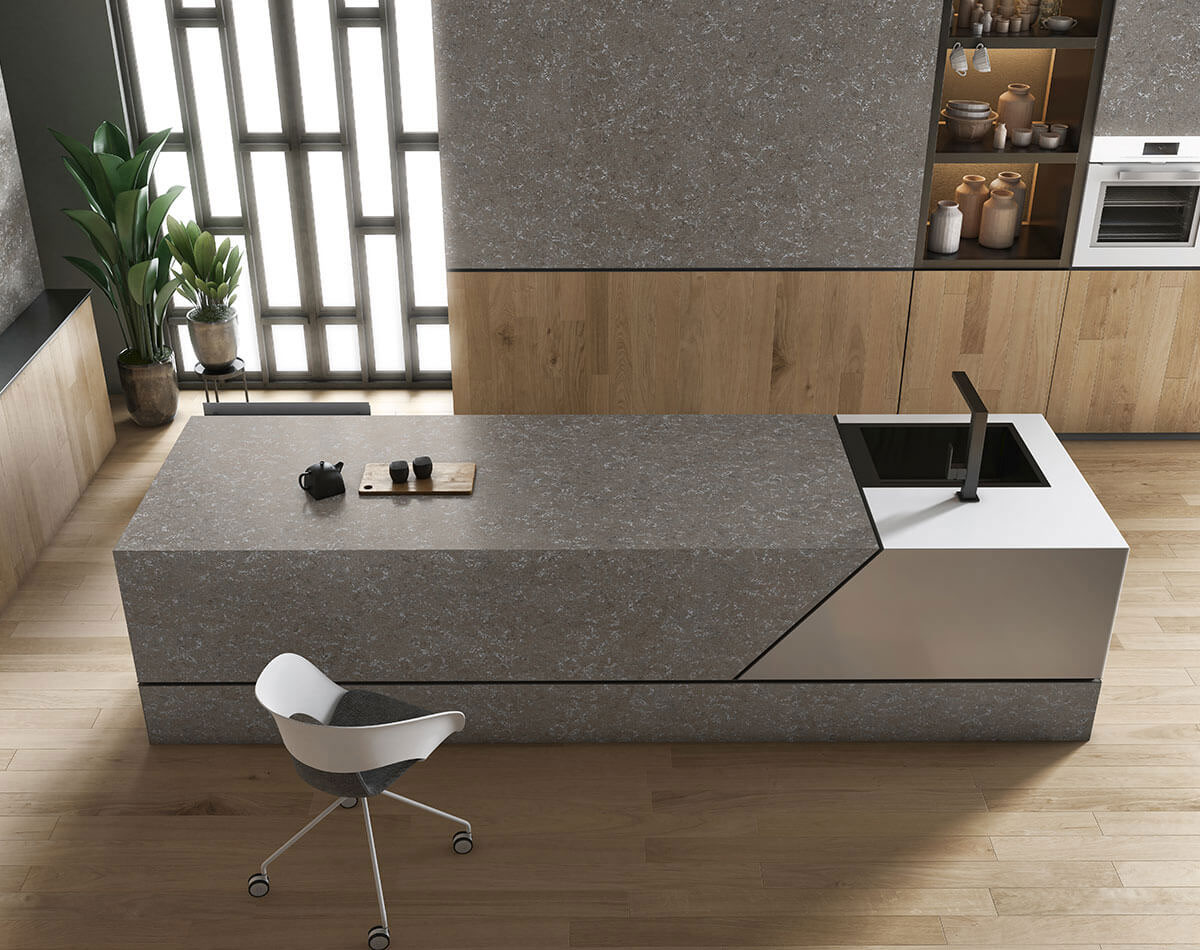
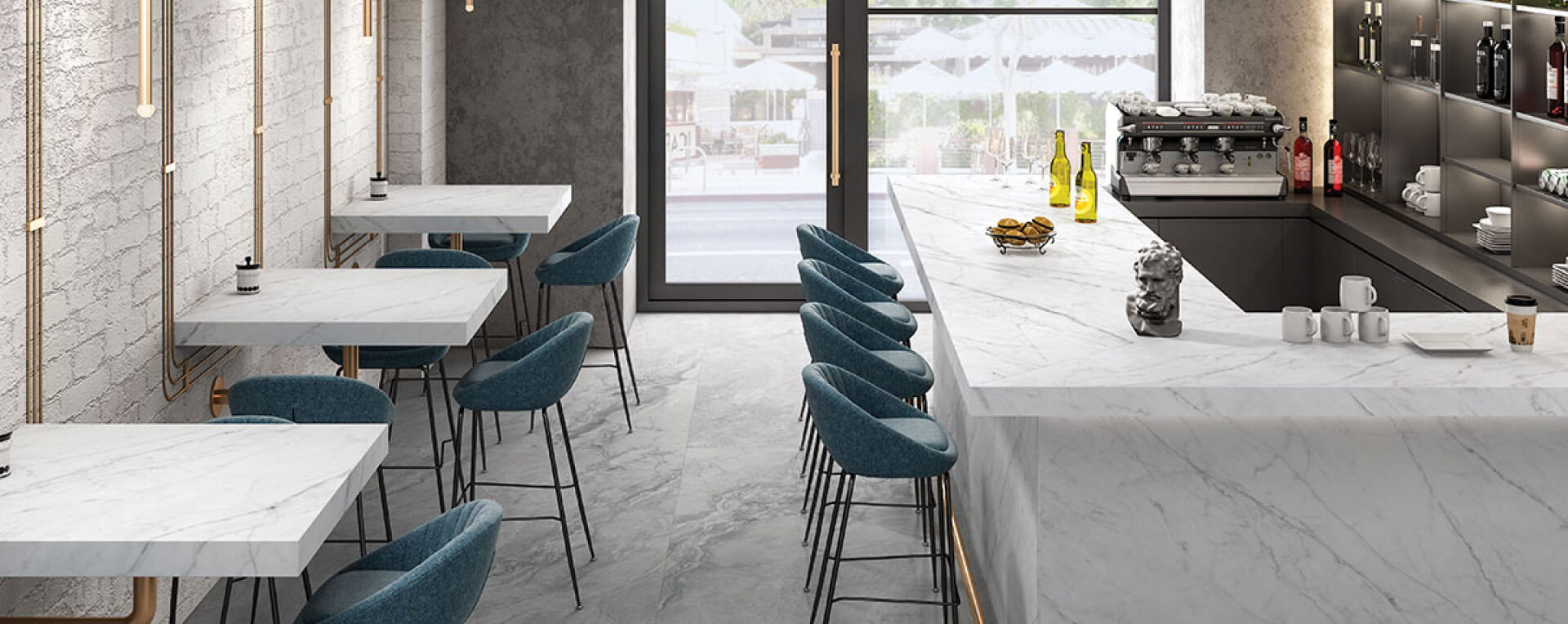
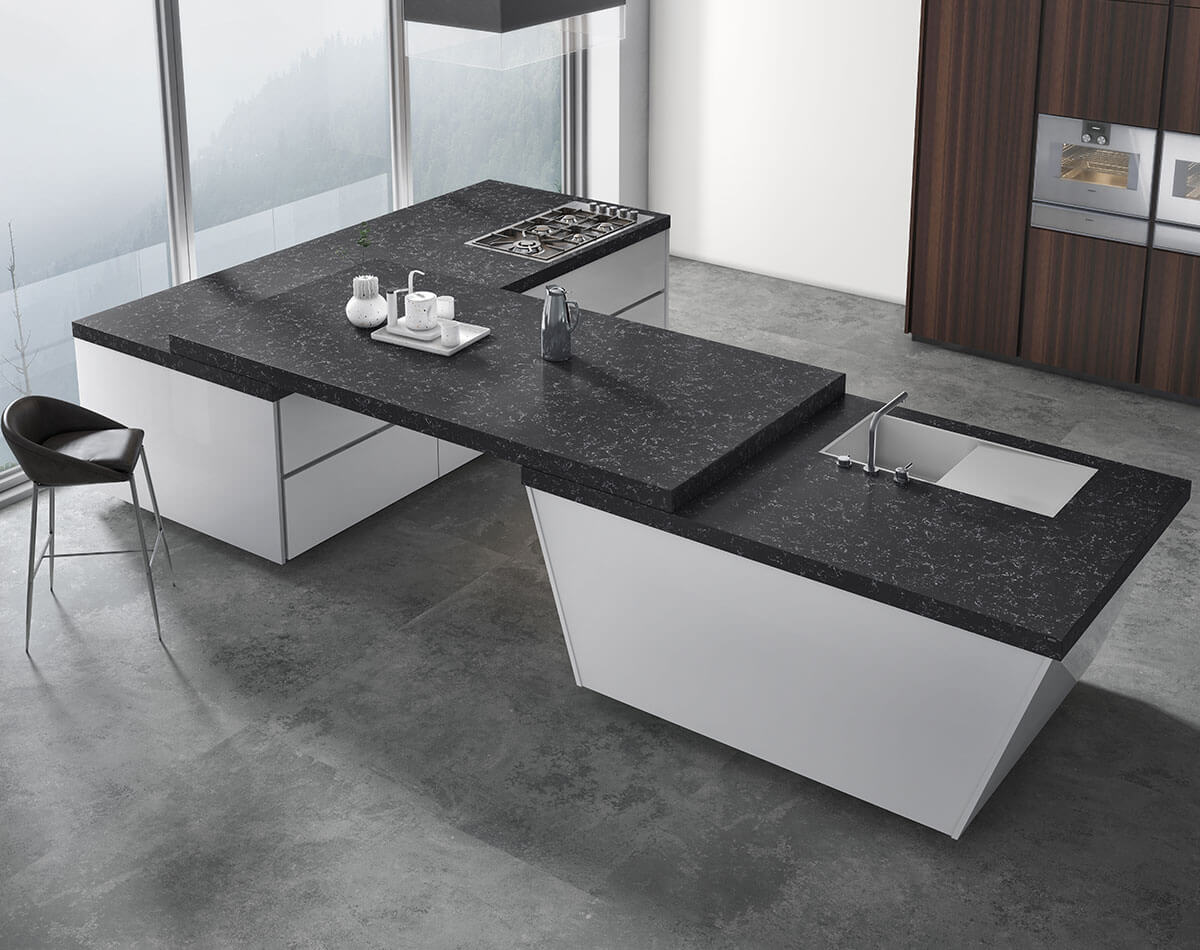

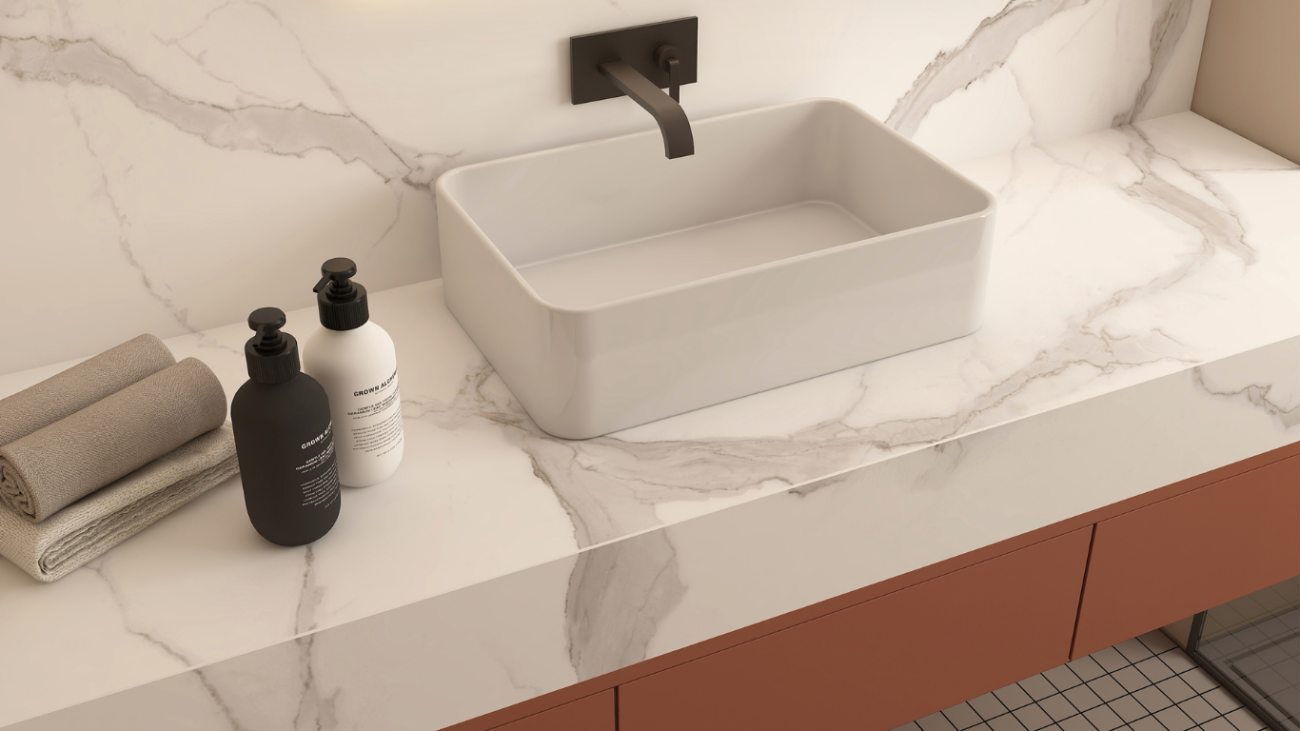
How Vanity Top Design Affects Perceived Bathroom Size
The right vanity top design can visually expand a compact bathroom by improving light flow, continuity, and spatial perception.
- The vanity top sits at eye level and anchors the entire room, so its edge profile, colour, and finish directly influence how spacious the bathroom feels.
- Light, uninterrupted surfaces bounce natural light and visually widen walls, while dark colours, heavy veining, and saturated tones can make a small bathroom feel more compact.
- Thin profiles and seamless basin integration reduce visual clutter, allowing the eye to travel further across the room.
- Reflectivity, tone continuity with walls, and minimal detailing work together to create a cleaner, more open appearance.
- More than a functional surface, the vanity top is one of the most effective spatial design elements for making a small bathroom feel larger.
15 Vanity Top Designs That Make Small Bathrooms Feel Larger
Here are the top 15 bath vanity countertop designs that make small bathrooms feel larger—
1. All-White Seamless Vanity Top
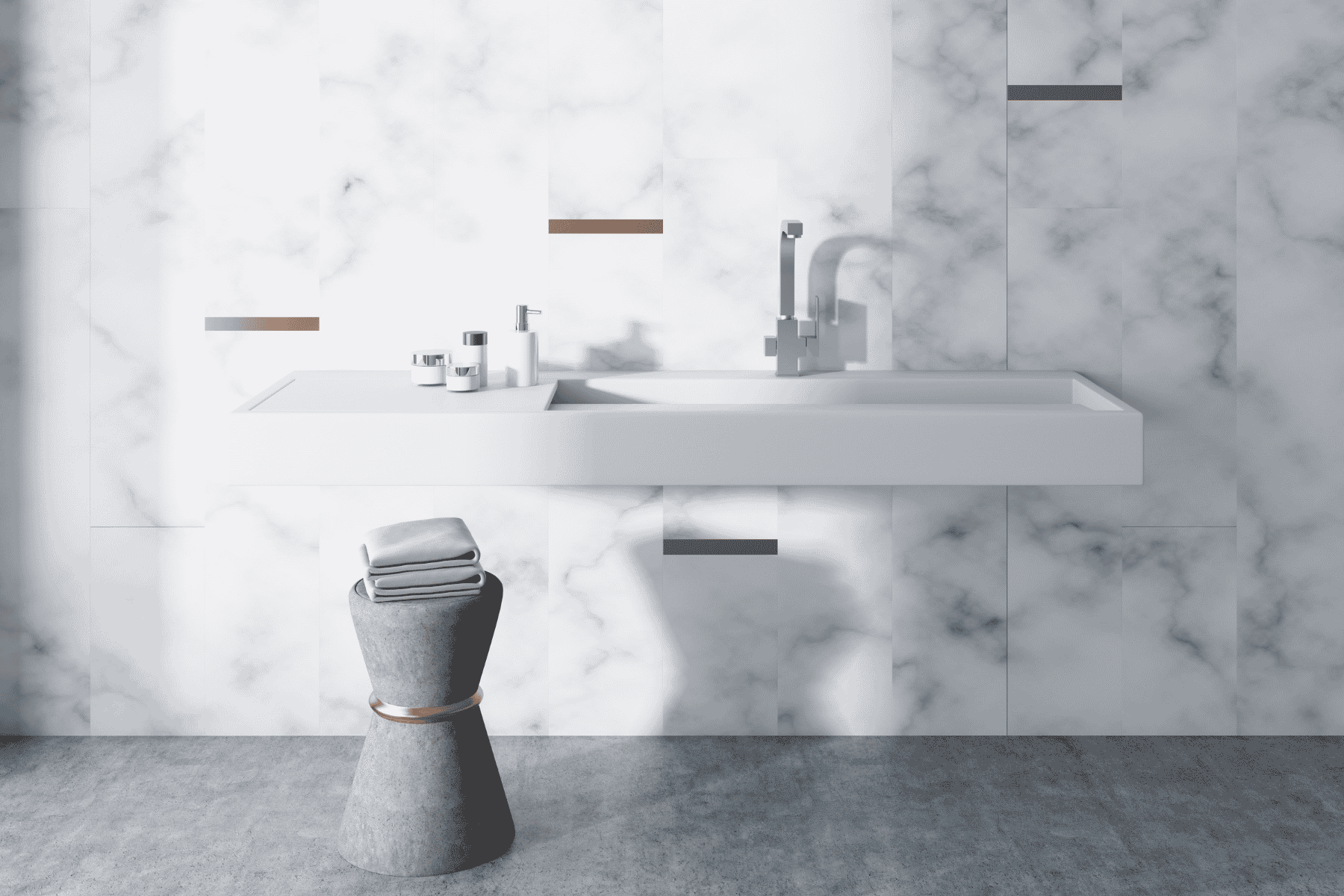
A single unbroken white Neotra surface, free of joints or visible seams, gives a small vanity a quiet, gallery-like calm. With no pattern to interrupt the eye, the top reads as pure volume rather than furniture, bouncing available light back into the room and making the entire wall feel noticeably wider and brighter.
2. Large-Format Slab Vanity Top
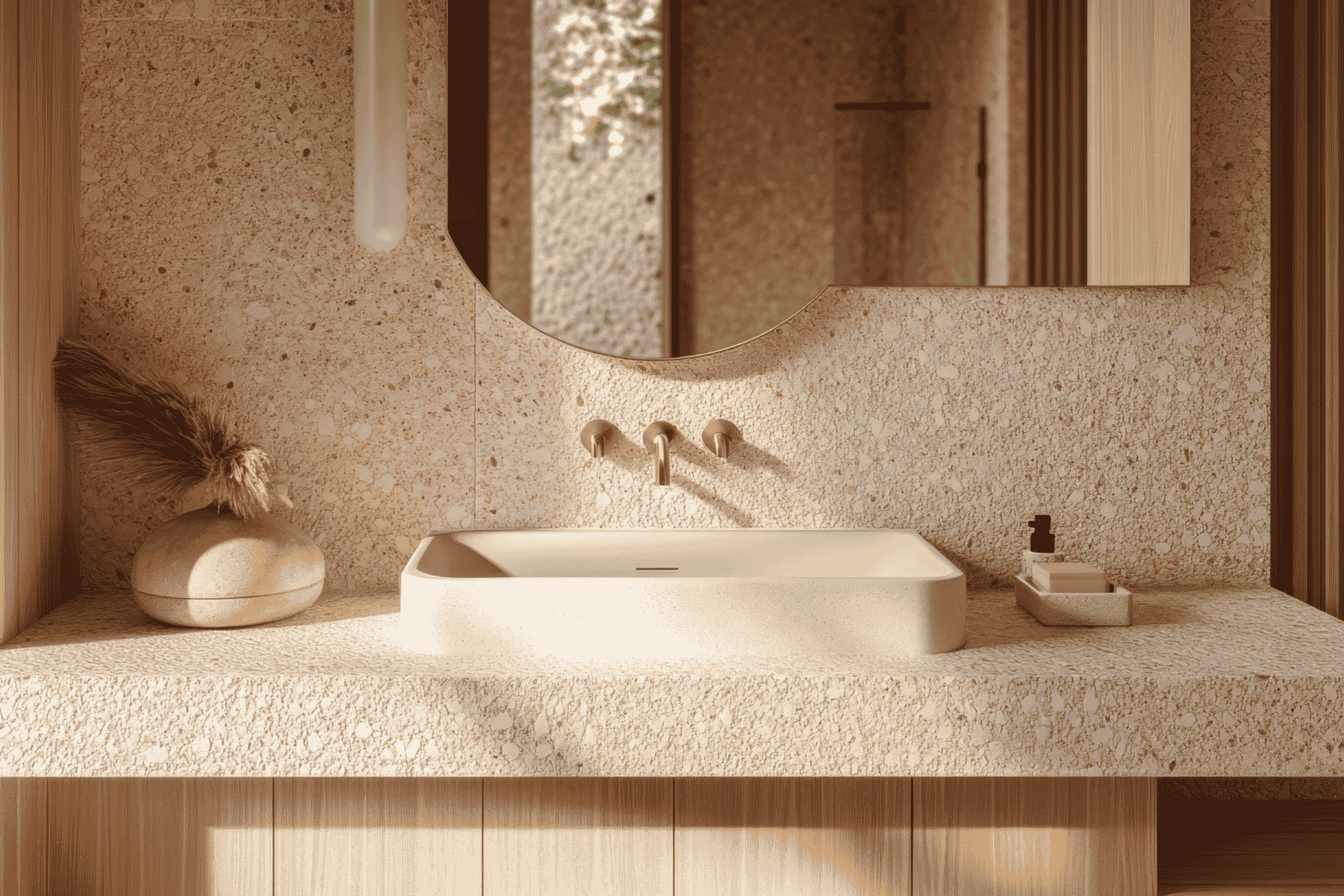
Using a single large-format Neotra slab instead of multiple jointed pieces removes visible grout lines and seams entirely. The continuous surface lets the eye travel across the full bath vanity countertop without interruption, giving even a modest-sized counter the presence and proportion of a far more generous installation.
3. Vanity Top Matching the Wall Surface
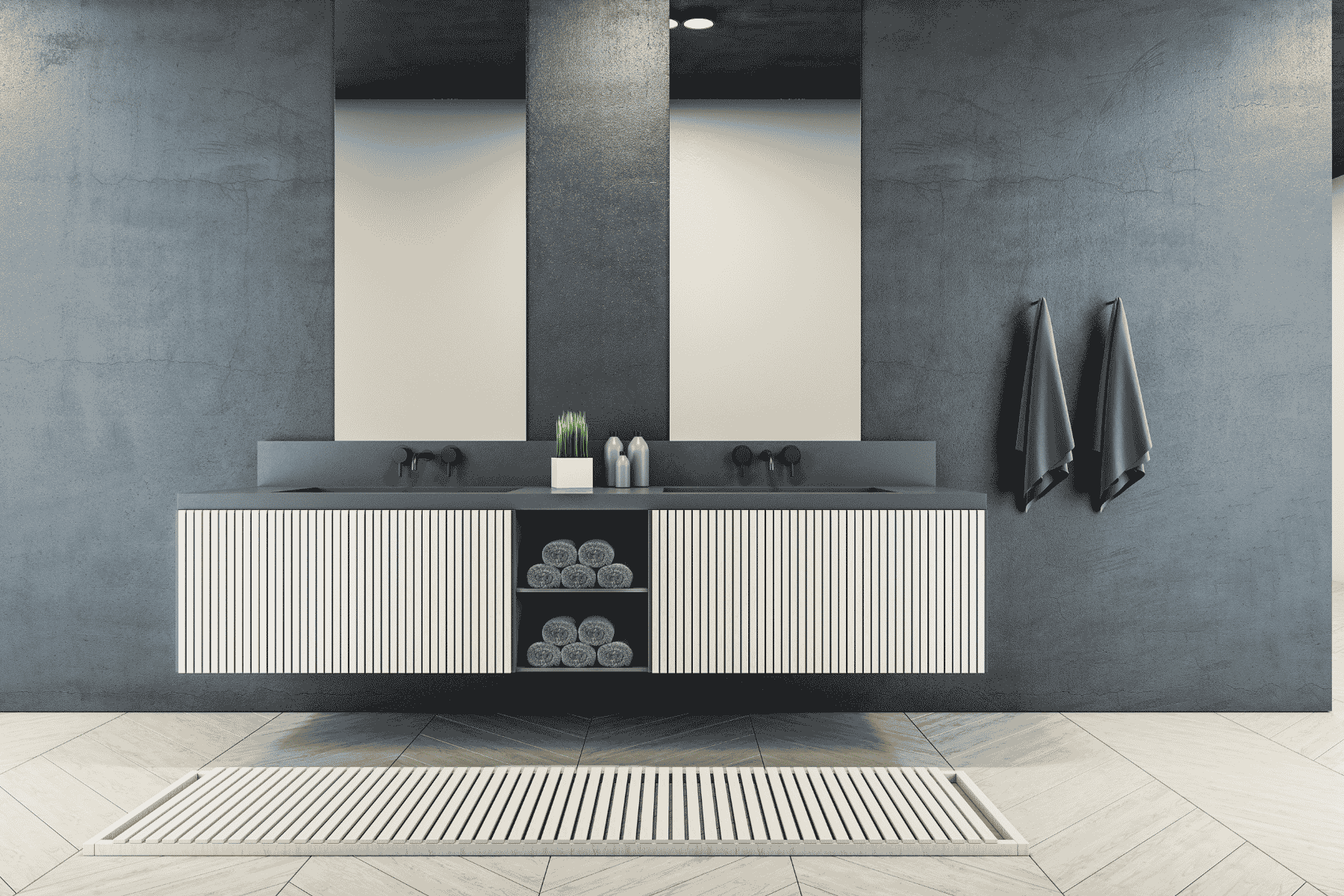
Choosing the same Neotra surface for the vanity top and the wall behind it dissolves the boundary between counter and backdrop. This continuity tricks the eye into reading them as one plane, visually pushing the far edge of the bathroom back and making the whole wall feel deeper.
4. Floating Vanity with Visible Floor Below
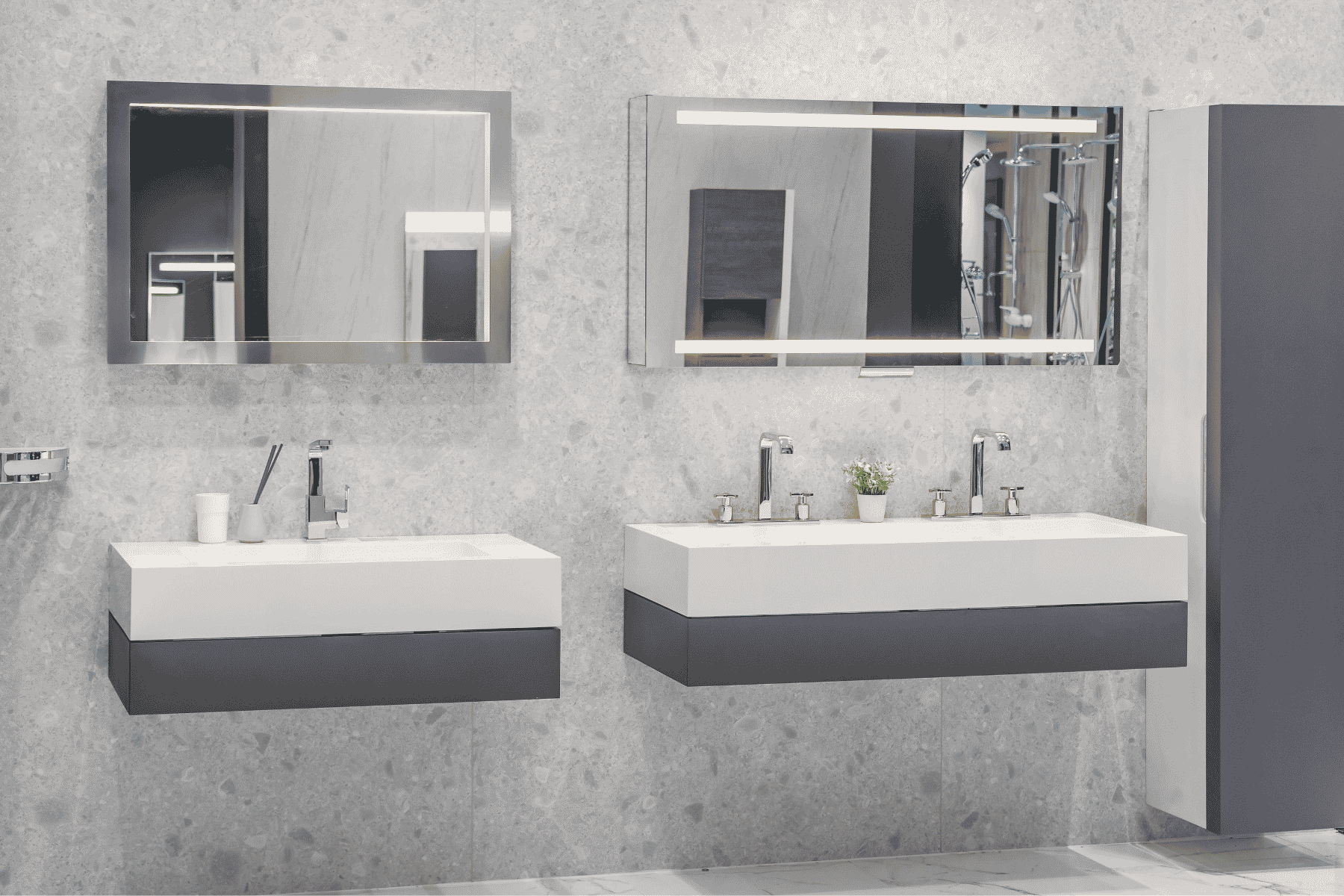
Mounting the vanity and countertop without visible legs or a solid base opens up the floor beneath it, letting sightlines run uninterrupted to the far wall and beyond. This exposed floor space is one of the most effective tricks in small-space design for making a compact bathroom feel lighter, taller, and considerably less boxed in overall.
5. Narrow-Depth Stone Top Vanity
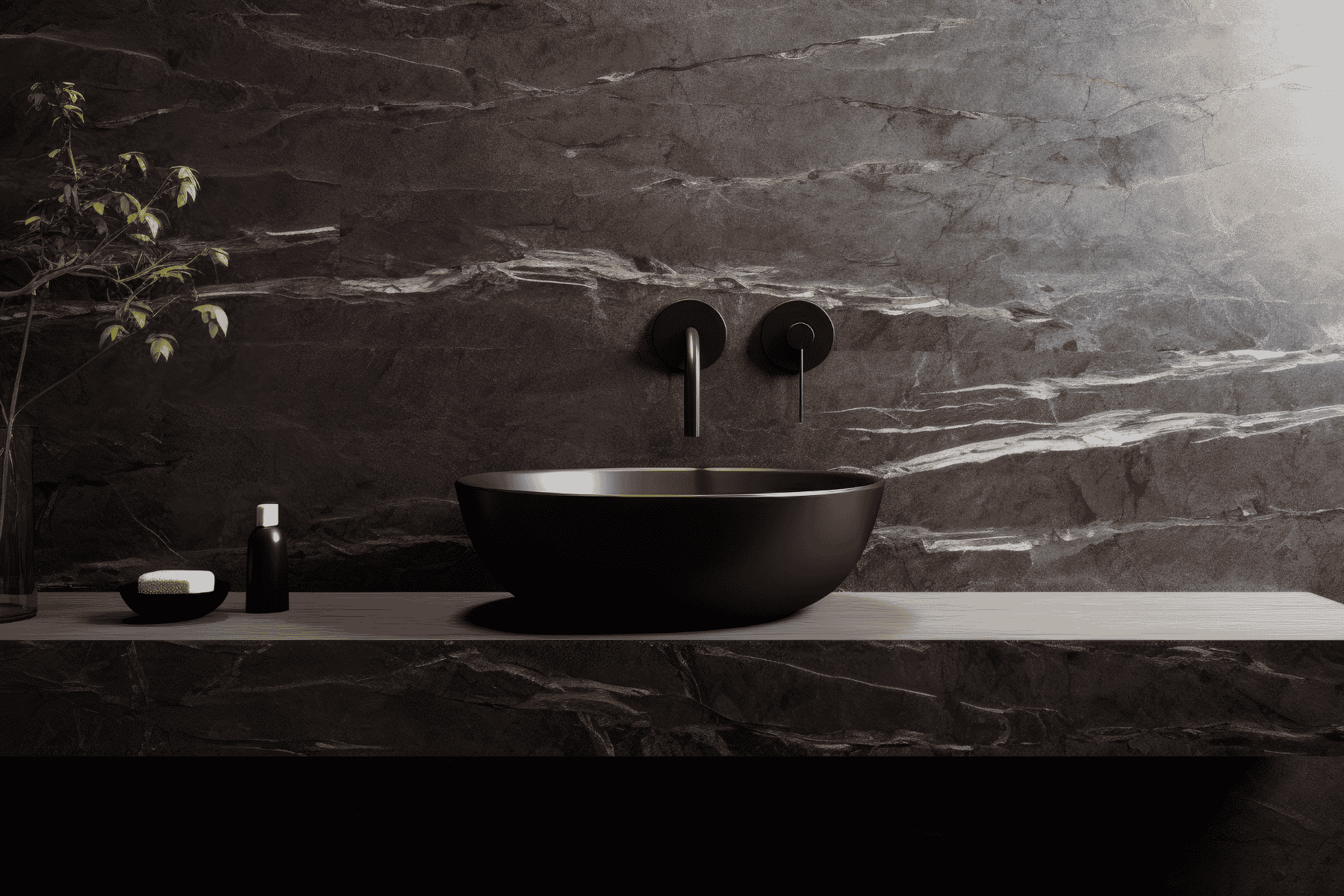
A shallower than standard Neotra vanity top, sized precisely to the room rather than a default depth, frees up crucial floor and circulation space. The slimmer footprint keeps walkways clearer, which does more for the sense of openness in a small bathroom than almost any other single design decision.
6. Integrated Basin and Vanity Slab
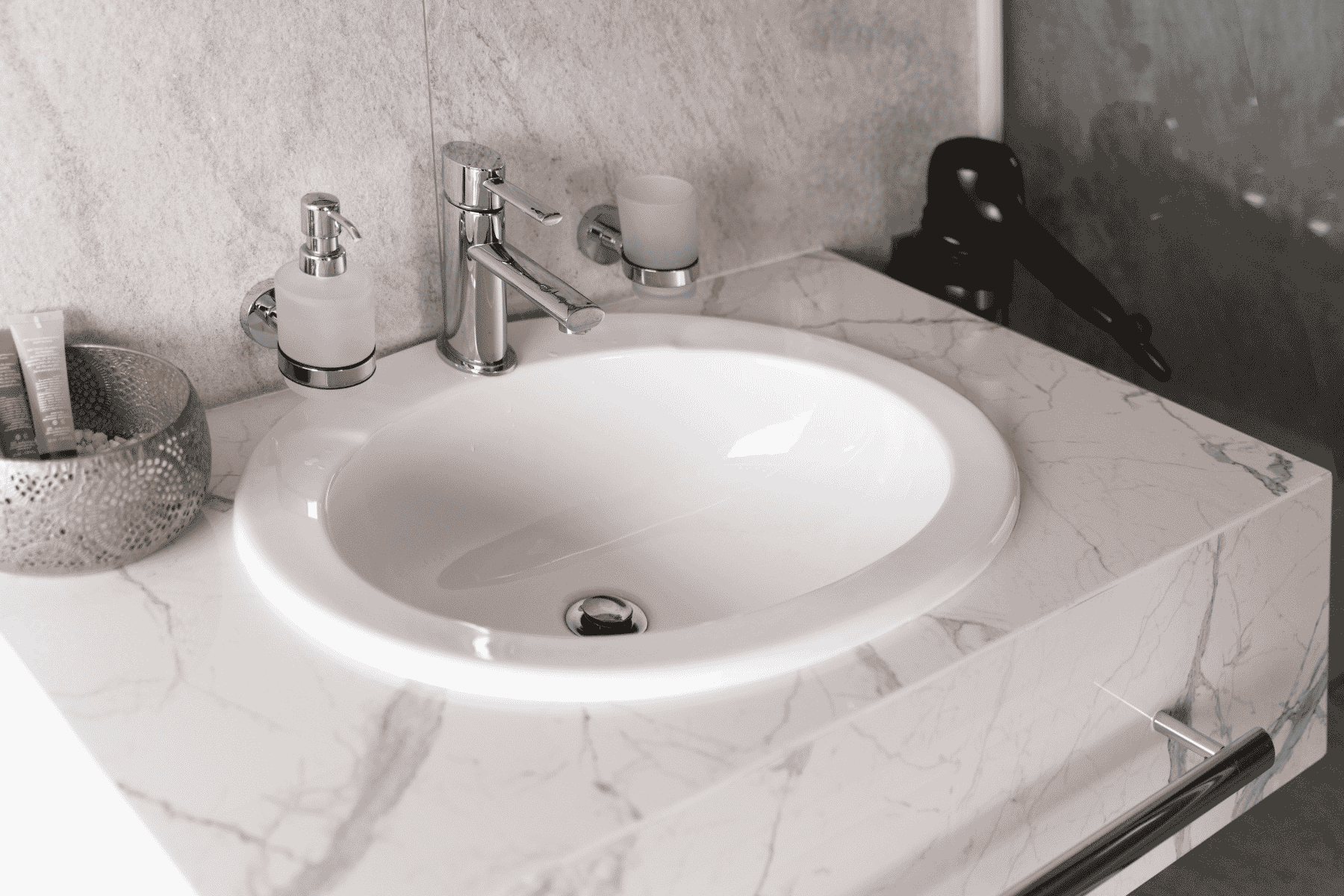
A single Neotra slab in which the basin is formed as part of the same continuous surface removes the visual break of a separately mounted sink. The result feels like one architectural gesture rather than two components, instantly reducing the visual clutter across the whole vanity zone.
Also Read: Top Table Top Basin Design Ideas
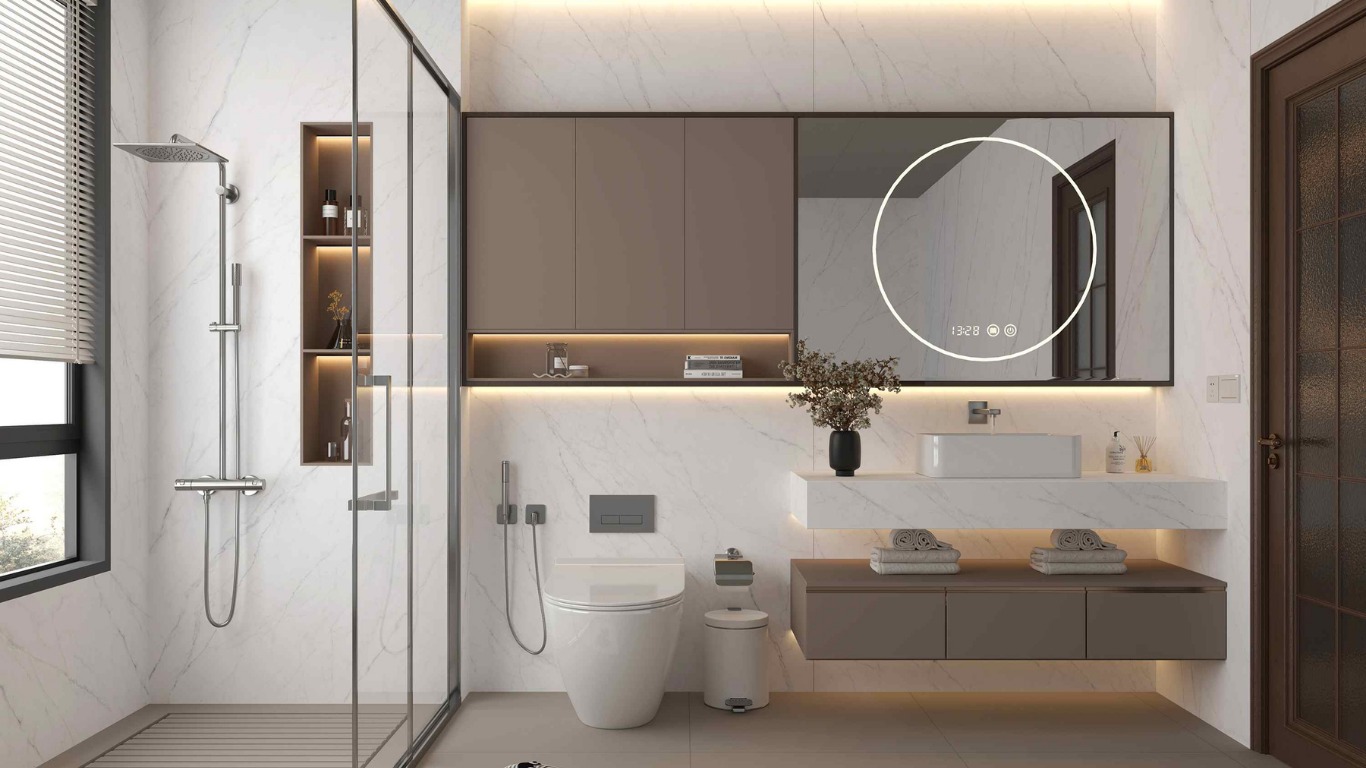
7. Light Marble-Look Vanity Top
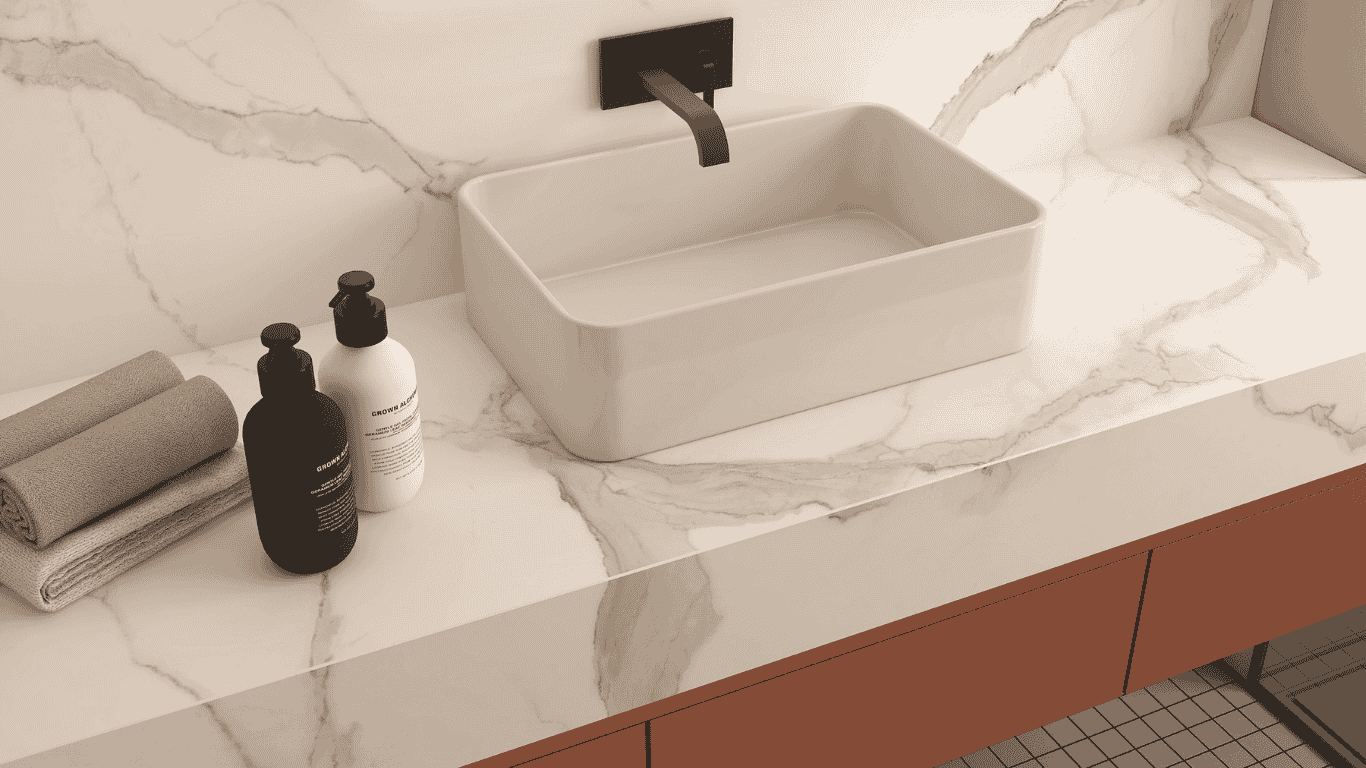
Marble-inspired Neotra slab with soft, restrained veining reflects ambient light beautifully while adding a sense of quiet luxury. The gentle pattern keeps the surface interesting without ever feeling heavy, making it one of the most dependable choices for opening up a compact bathroom.
8. Vessel Basin on a Thin Stone Slab
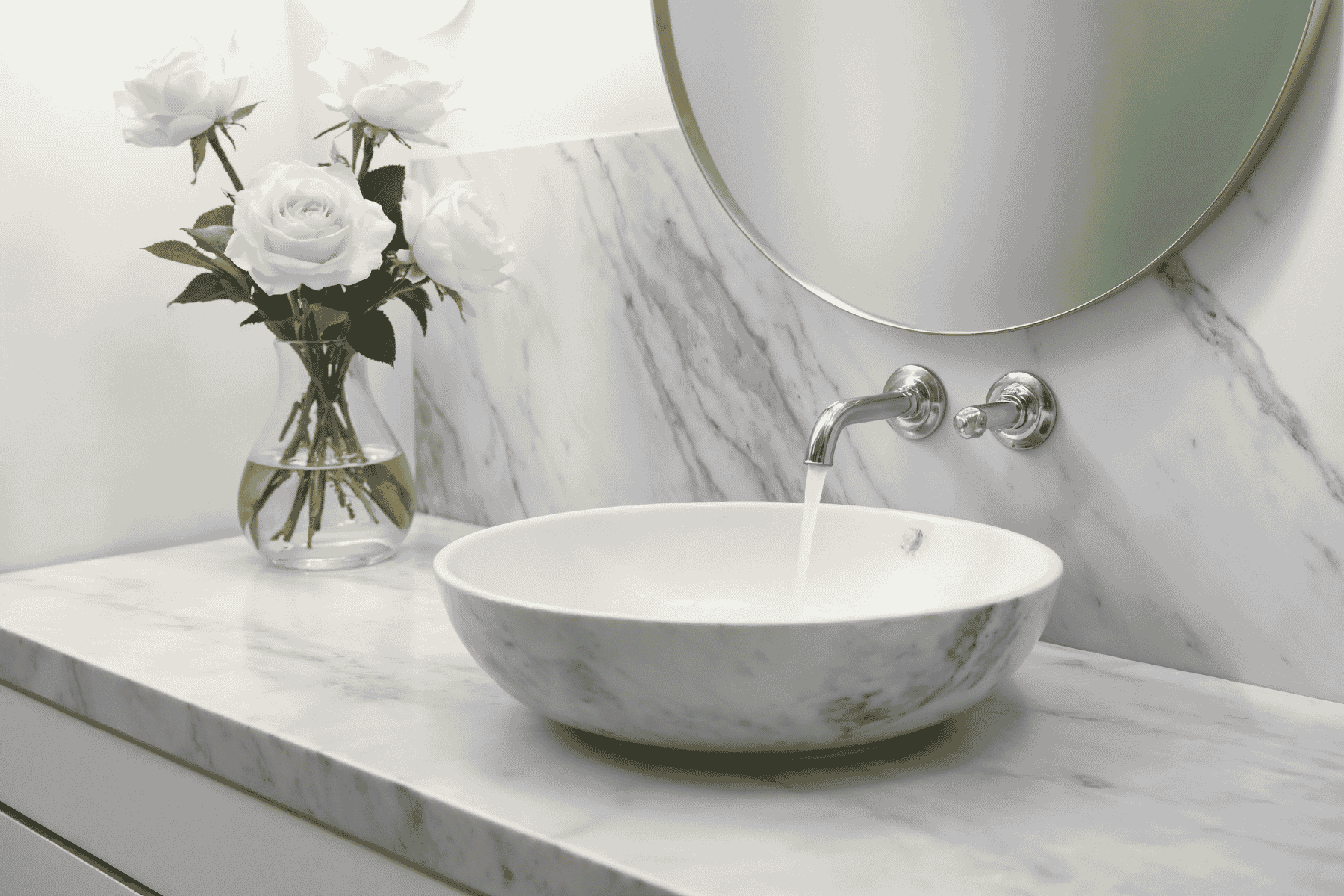
Setting a vessel basin countertop atop a slim Neotra slab keeps the counter itself visually light, since the basin sits above the surface rather than cutting into it. The slender slab beneath reads almost like a shelf, giving the whole composition a sculptural, uncluttered lightness.
Also Read: Top 10 Bathroom Countertop Designs
9. Vanity Top with Backlit Mirror Above
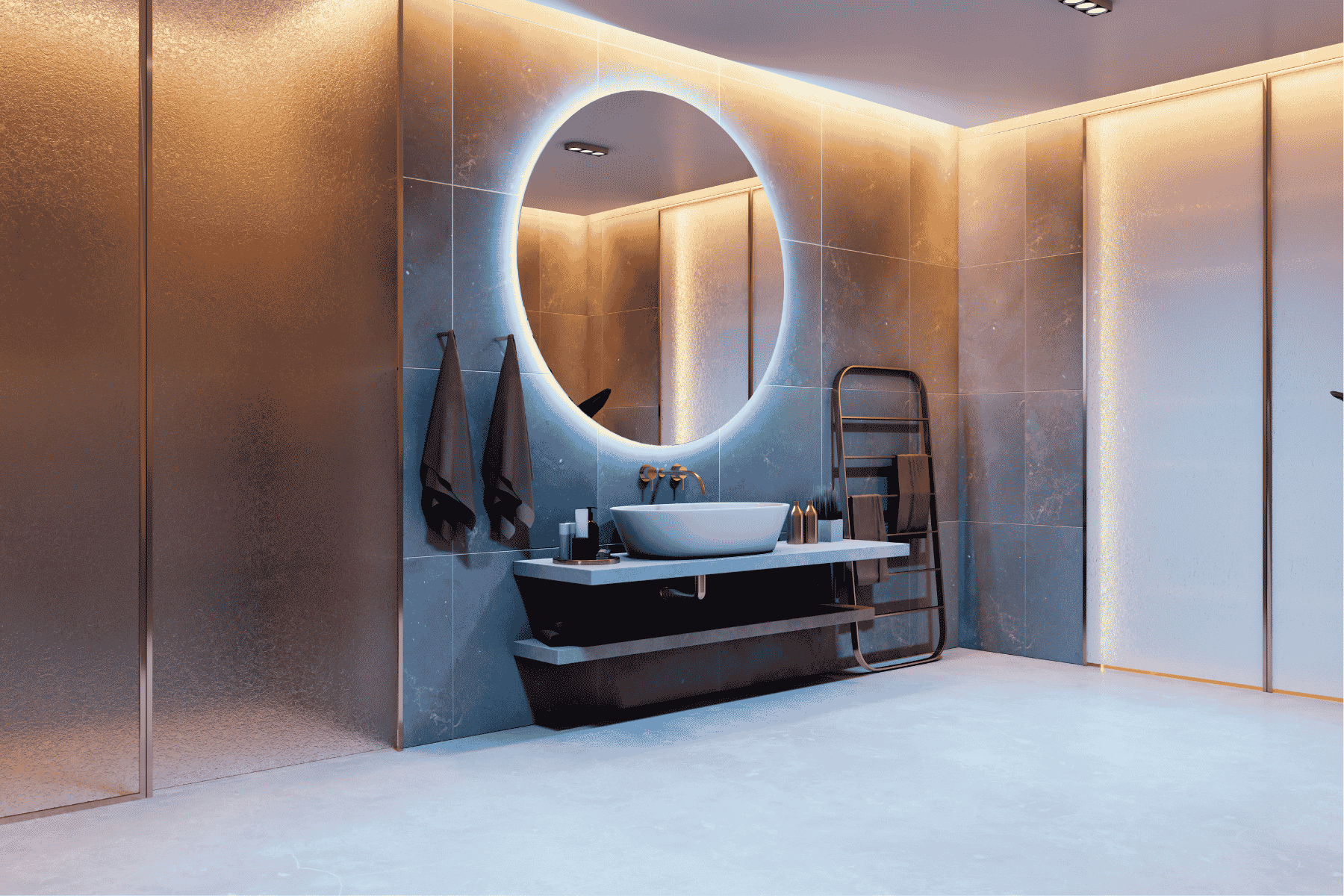
The backlit mirror reflects the room, and the vanity surface doubles in perceived size. Sizing the mirror to match the exact width of the vanity top creates a unified vertical block rather than two visually competing elements. This alignment brings order to the wall, and the shared width makes the entire vanity zone feel more deliberately considered and spacious.
10. Pale Warm-Tone Vanity in Pastelli Collection
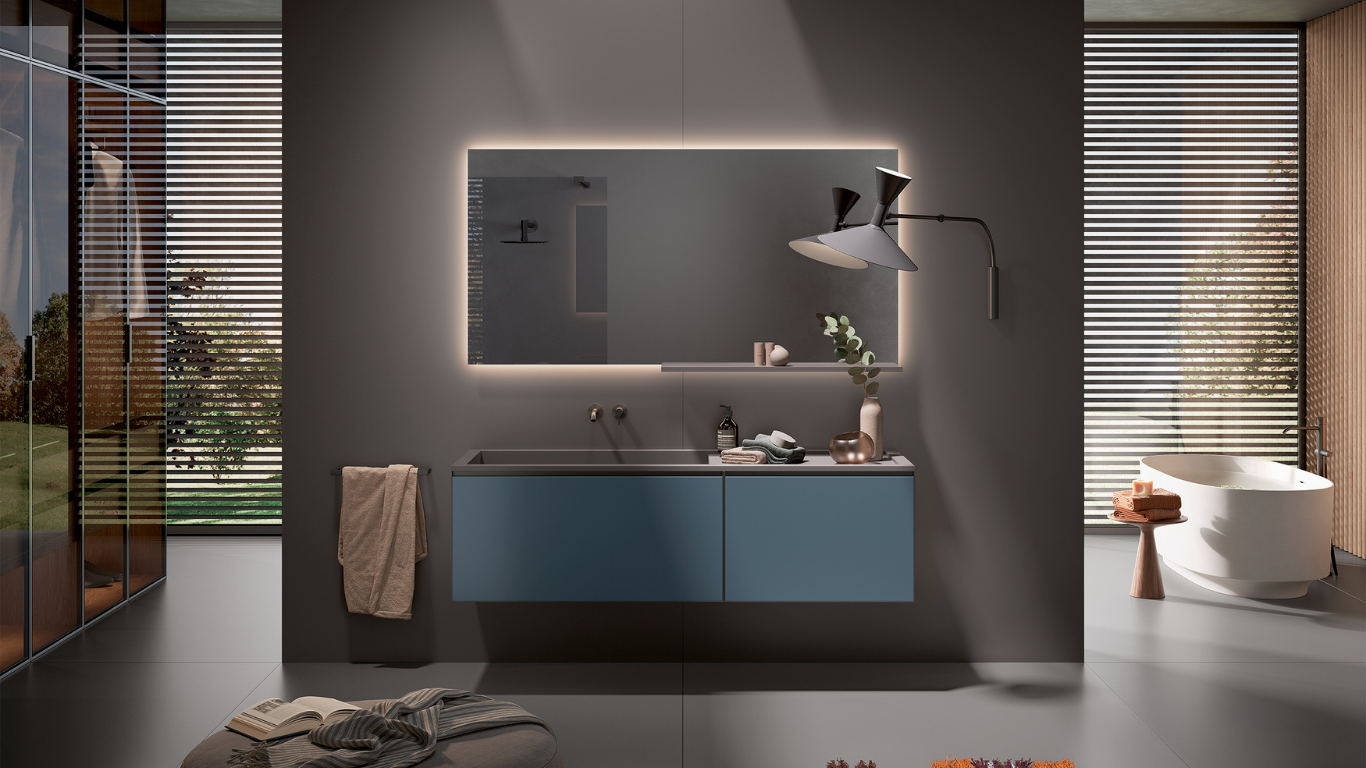
A warm, muted shade from our Pastelli collection, such as Fango, brings gentle depth to a small vanity without introducing pattern or visual weight. The soft, solid tone feels inviting rather than cold, while still keeping the surface calm enough to let the room breathe.
11. Countertop Extending Beyond the Cabinet Edge
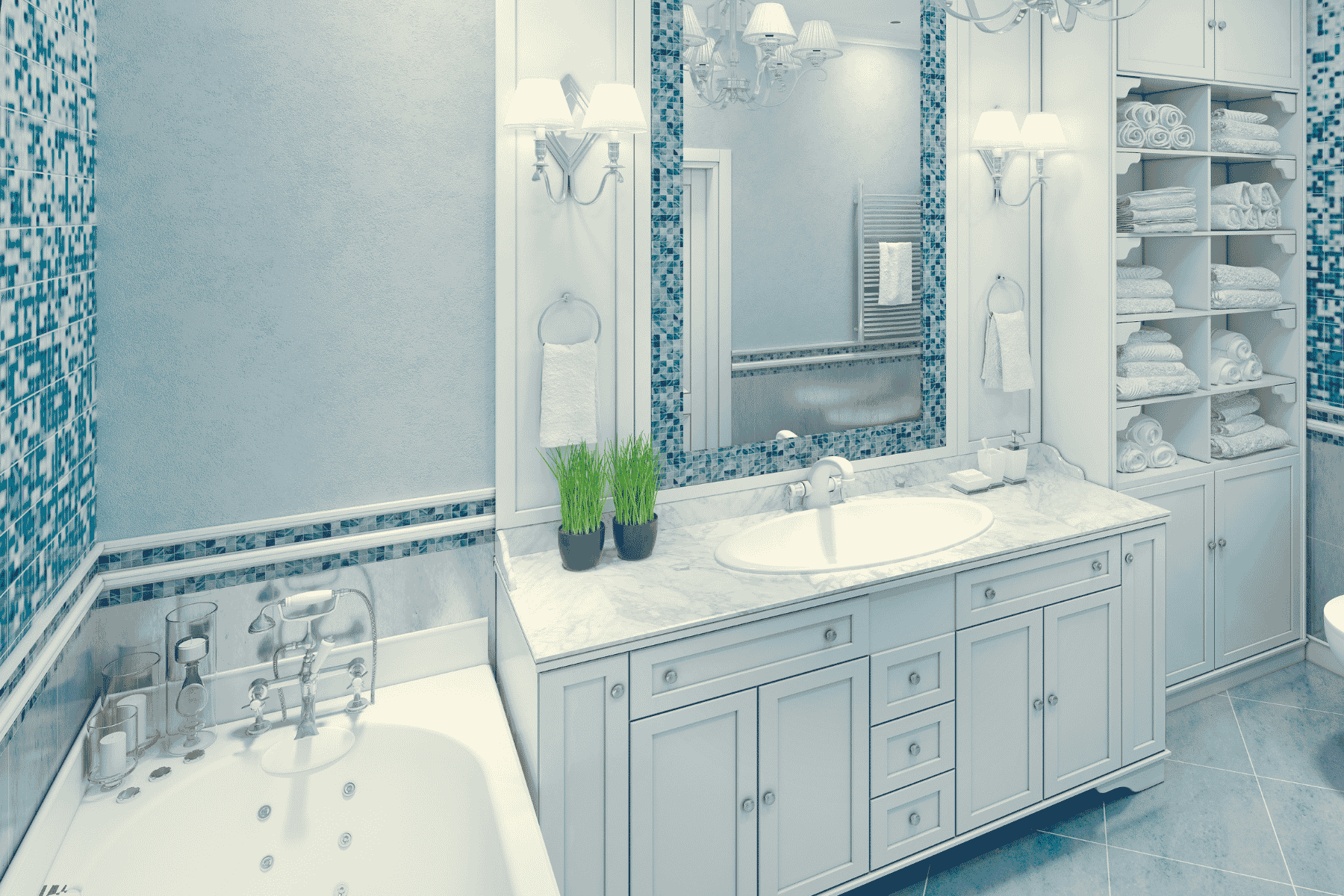
Letting the Neotra vanity top overhang the cabinet slightly on one or both sides creates a subtle floating effect above the base. This small gap between the counter and cabinetry catches light and shadow, making the vanity appear thinner and the surround space feel more generous.
12. Recessed Vanity Niche with Stone Slab Top
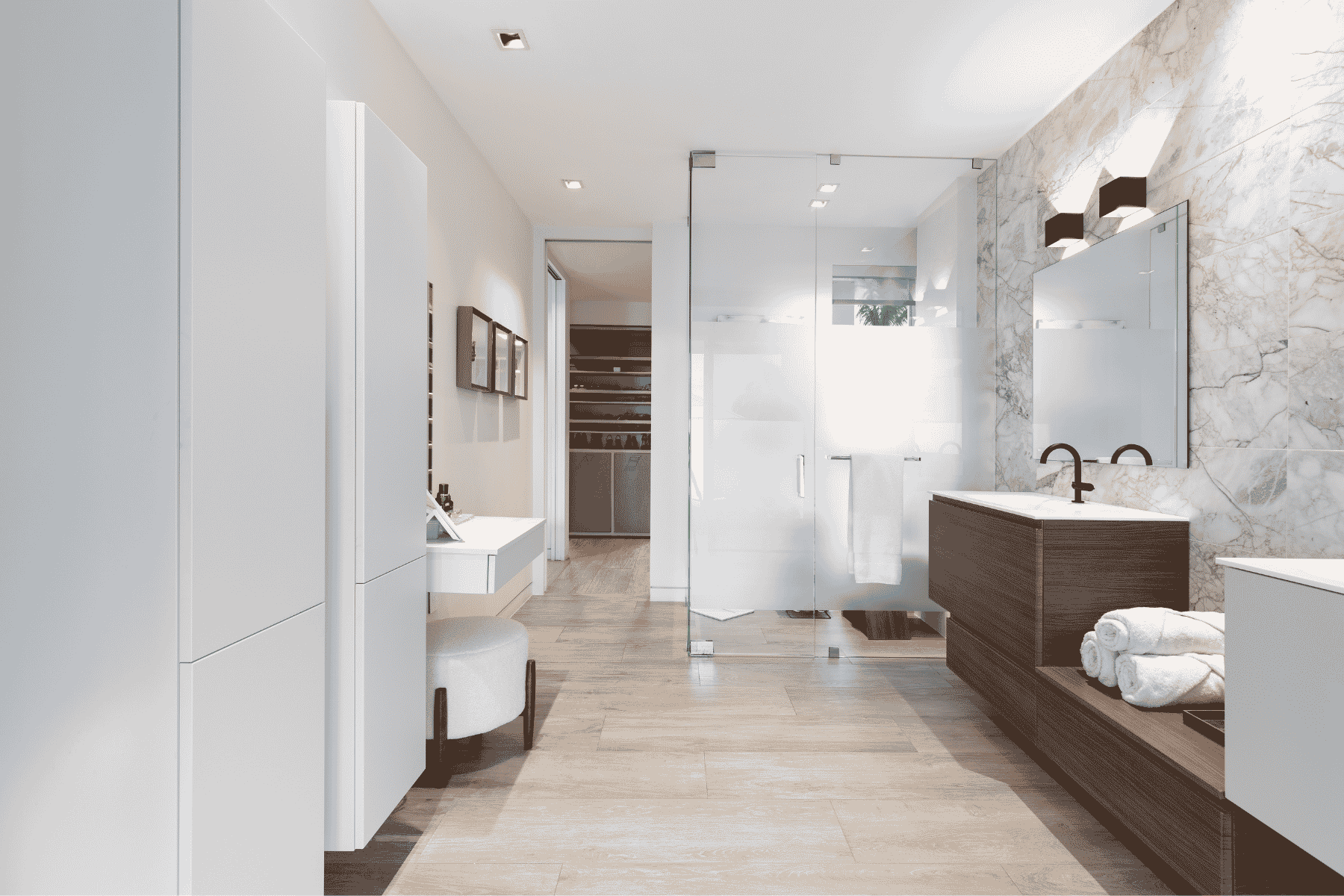
Building a slim recessed niche into the same Neotra surface as the vanity top, rather than adding a separate shelf, keeps everyday storage invisible until it’s actually needed. This reduces visible objects on the counter, which remains one of the simplest ways to make a small vanity area feel calmer and larger.
13. Corner Vanity with Stone Surface Top
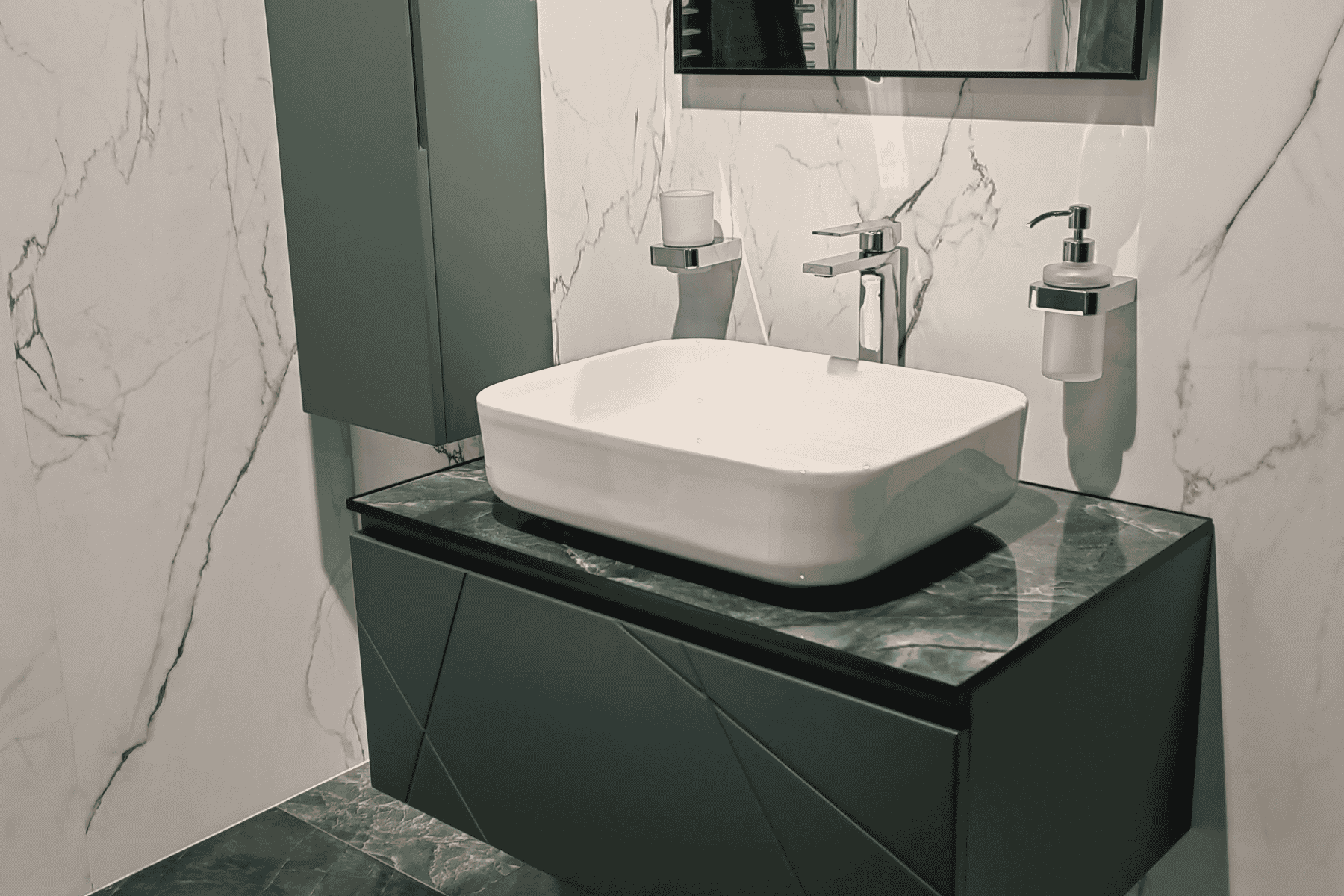
Fitting a shaped Neotra top into an underused corner frees up the main wall entirely, keeping sightlines to the far end of the bathroom completely clear. This layout is particularly effective in awkward or narrow bathrooms where a conventional straight run would dominate the room, supporting a contemporary bathroom design.
14. Two-Basin Vanity with Single Slab Top
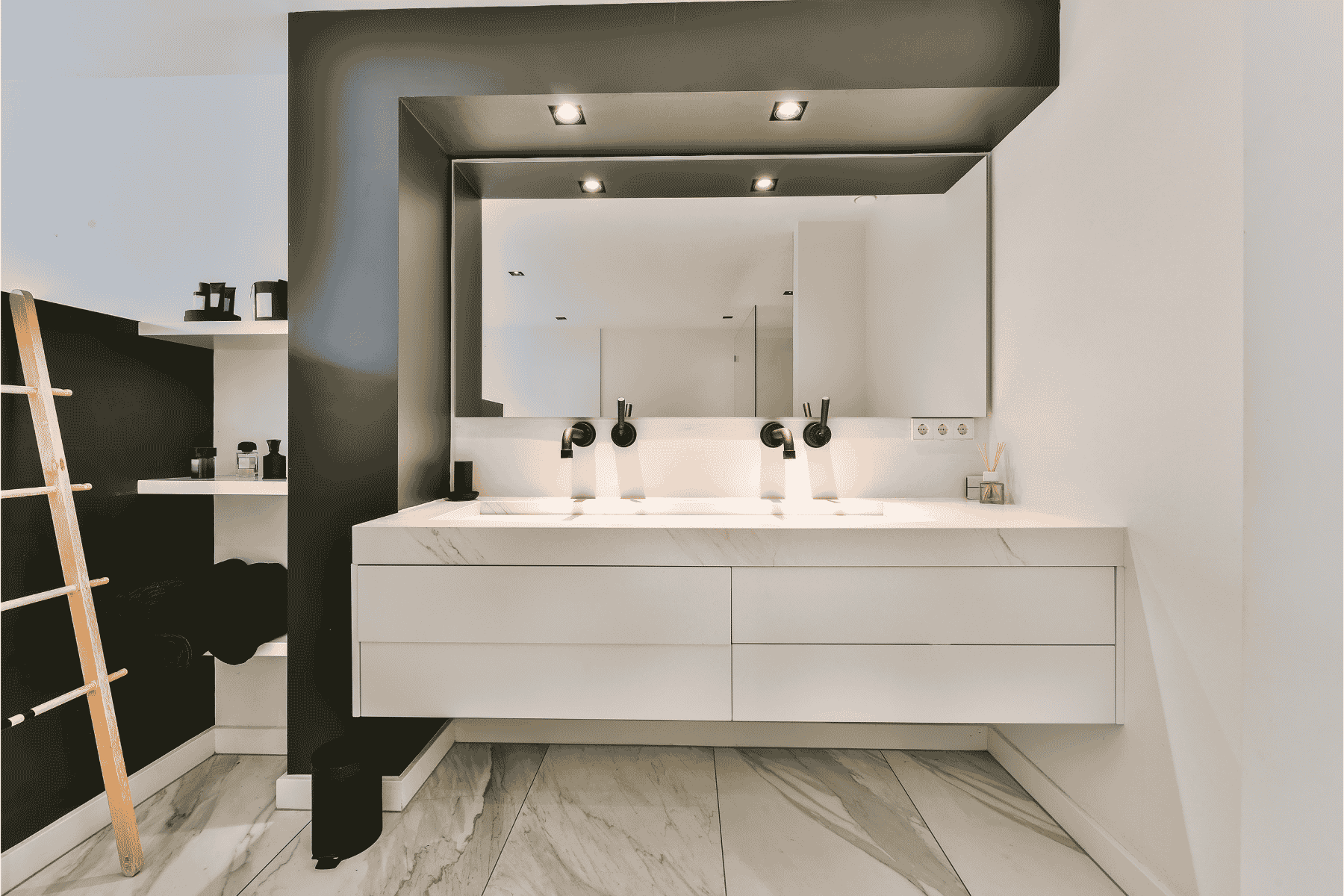
Spanning two basins with one continuous Neotra slab, rather than two separate tops, keeps the composition visually unified even in a busy shared bathroom. The single surface reads as one calm plane, preventing the vanity from feeling fragmented or overly detailed in a compact space.
15. Concrete-Look Vanity in a Light Tone
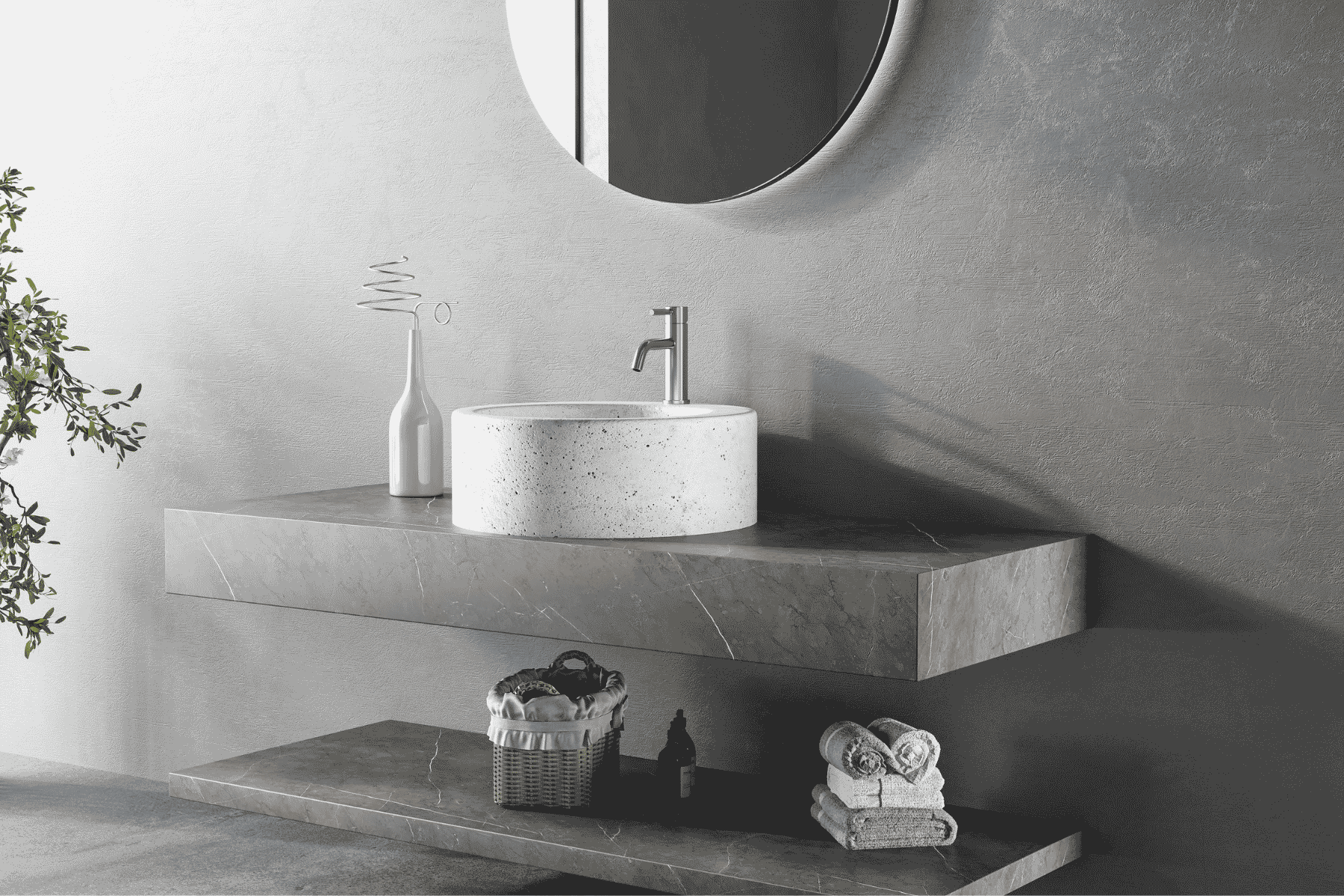
A muted concrete-inspired Neotra slab offers a calm, uniform backdrop with no competing patterns to distract the eye. Its understated texture suits pared-back bathrooms where the goal is quiet continuity between wall, floor, and counter, letting the architecture rather than the surface define the room’s real sense of space.
Also Read: Why Advanced Surfaces Are the Future of Bathroom Design
Why Neotra Is the Best Surface for Small Bathroom Vanity Tops
Small bathrooms need high-performance surfaces that maximise space, simplify maintenance, and support durable, design-focused vanity top installations.
- Non-porous, low-maintenance surface resists moisture, staining, and daily wear, making it ideal for bathrooms with frequent use.
- Available in marble-look, stone-look, concrete-look, wood-look, and solid-colour finishes, giving designers flexibility to create visually larger, more refined bathrooms.
- Slim profiles and seamless basin countertop integration help reduce visual clutter while enhancing a clean, modern appearance.
- Large-format surfaces with consistent colour and pattern create uninterrupted vanity tops that improve the sense of openness in compact spaces.
- Delivers the design freedom of larger bathrooms without compromising durability, everyday performance, or long-term reliability.