

Design Principles for Small Bathroom Vanities
In compact bathrooms, vanities must balance form and function. Prioritise shallow depth units and wall-mounted vanities to free floor space and create visual enlargement. Opt for integrated basins and slim countertops; engineered slabs offer durability without heaviness. Use vertical storage, tall mirrored cabinets and open shelving above the vanity to keep essentials accessible while minimising footprint. Choose light, reflective finishes or large-format tile backsplashes to visually expand the room. Pull-out drawers and soft-close organisers improve usability in tight spaces. Maintain clear circulation by positioning the vanity to allow at least 600 mm clearance in front. Streamline hardware and select low-profile taps to reduce visual clutter while reinforcing a premium, modern aesthetic.
12 Vanity Designs for Small Bathrooms
Here are the top 12 vanity designs for small bathrooms—
1. Wall-Mounted Vanity for Small Bathroom
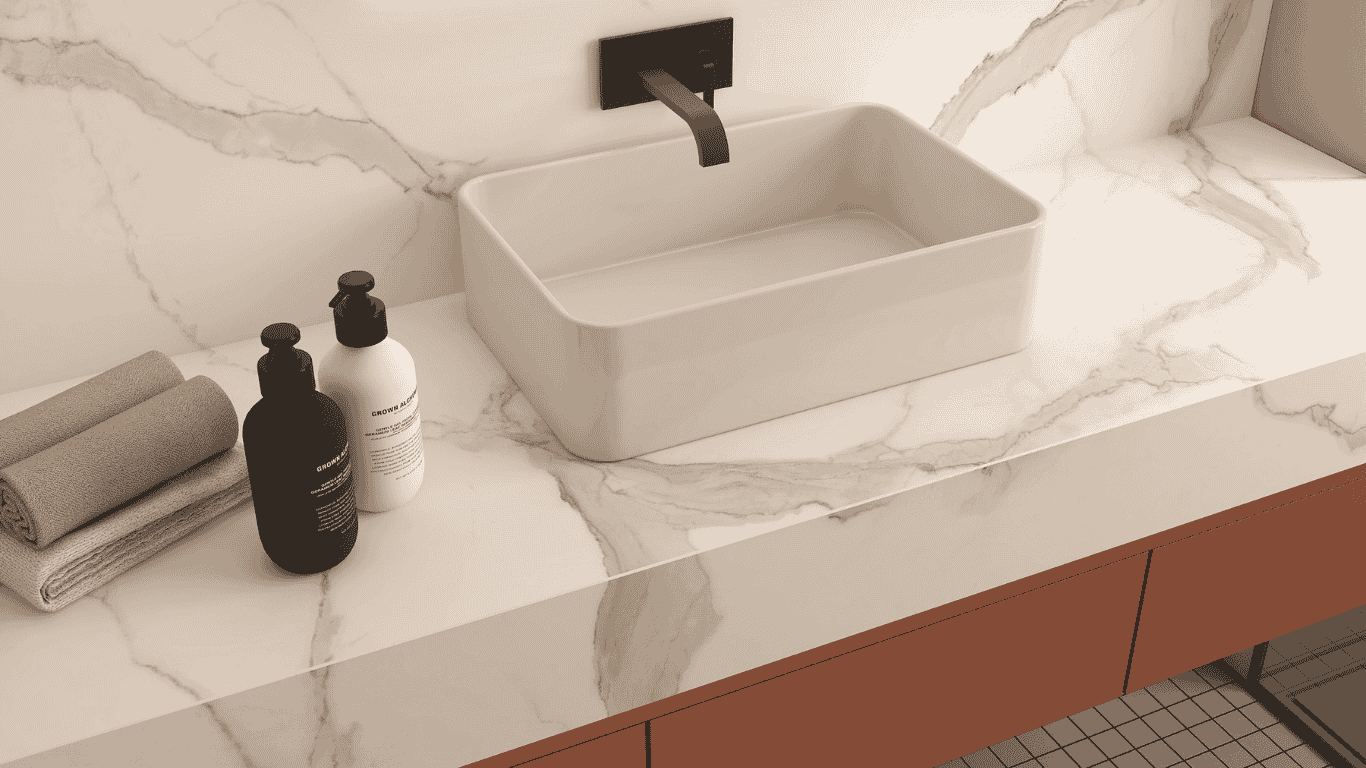
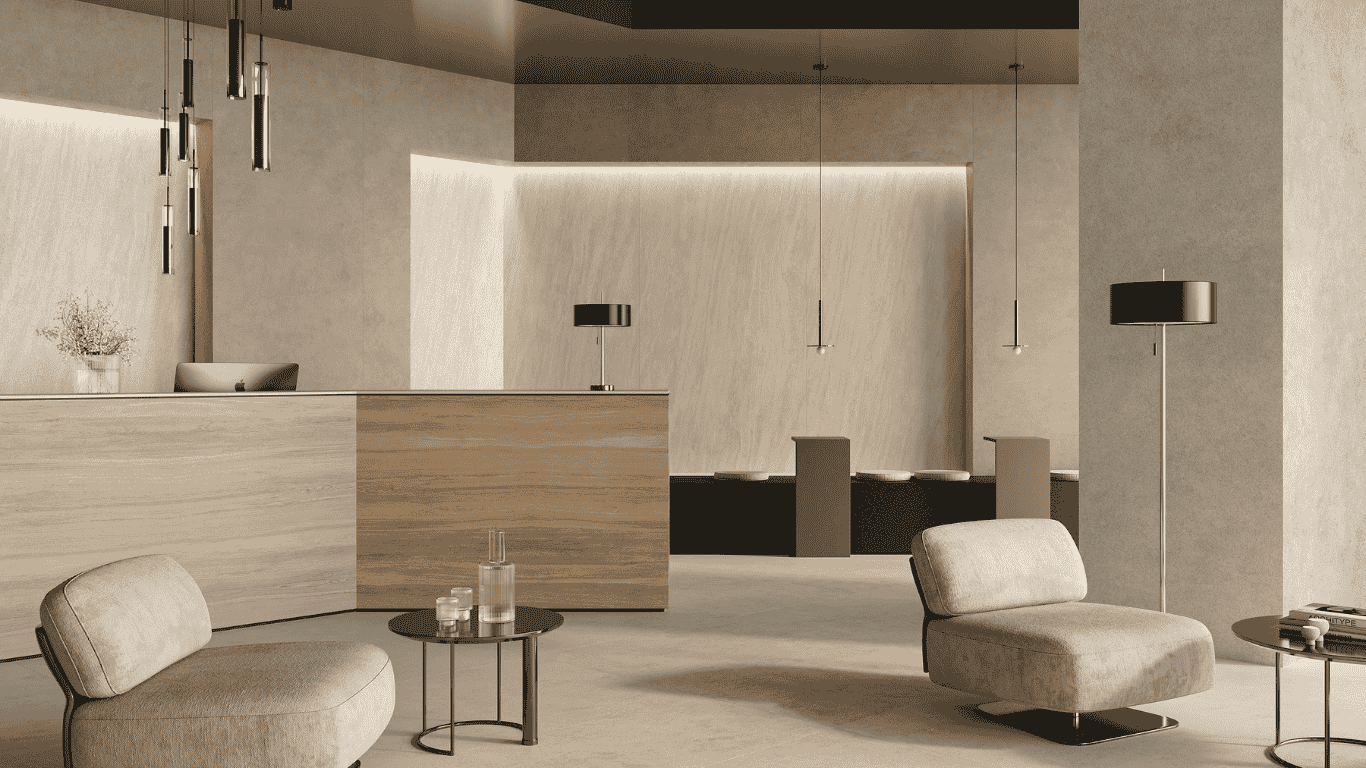
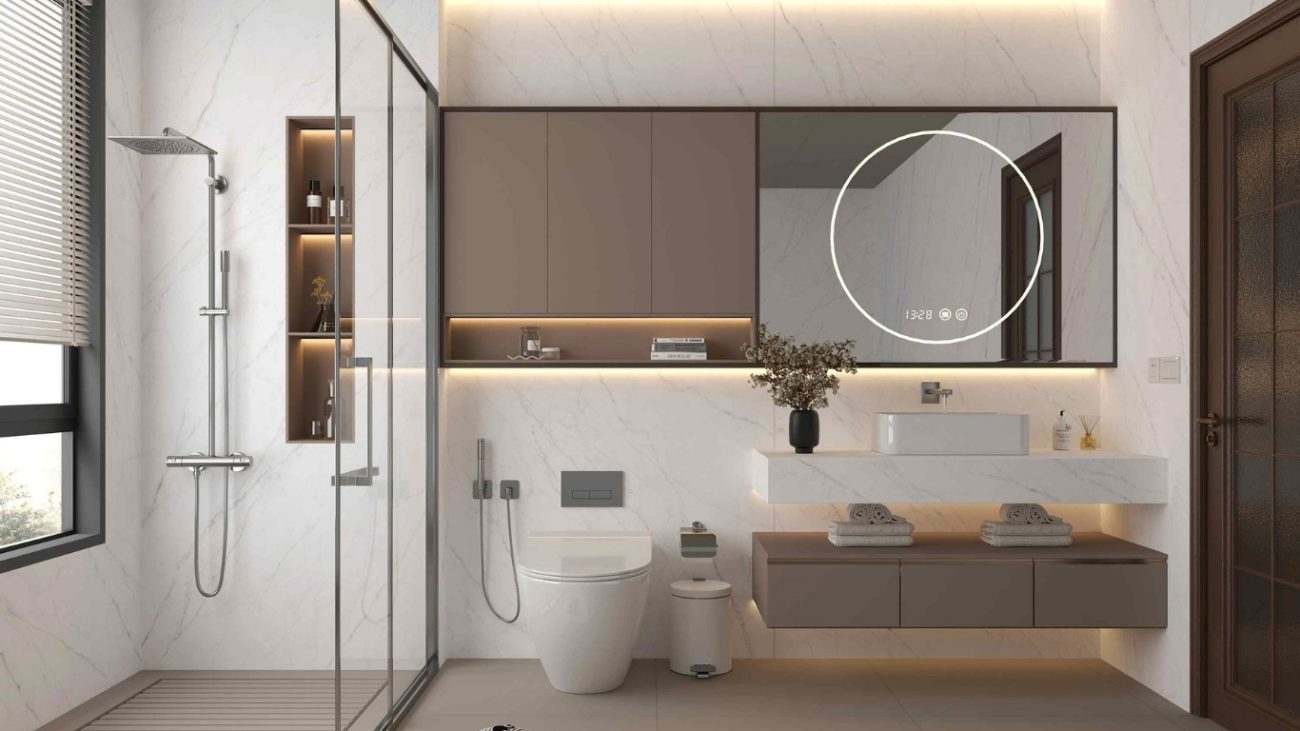
Wall mounted vanity for a small bathroom, leaving the floor visible, you achieve genuine storage below the countertop and the powerful visual illusion of a larger floor area. Exposed flooring, especially in light, large-format slabs, tricks the eye into reading the room as bigger than it actually is. The Spa collection is a natural fit; the calm, inspired palette and large-format slab format minimise visual separation, letting the floating vanity breathe within the space. Pair with a wall-mounted vanity for a small bathroom to keep every surface line uninterrupted and clean.
2. Narrow-Depth Vanity (300mm)
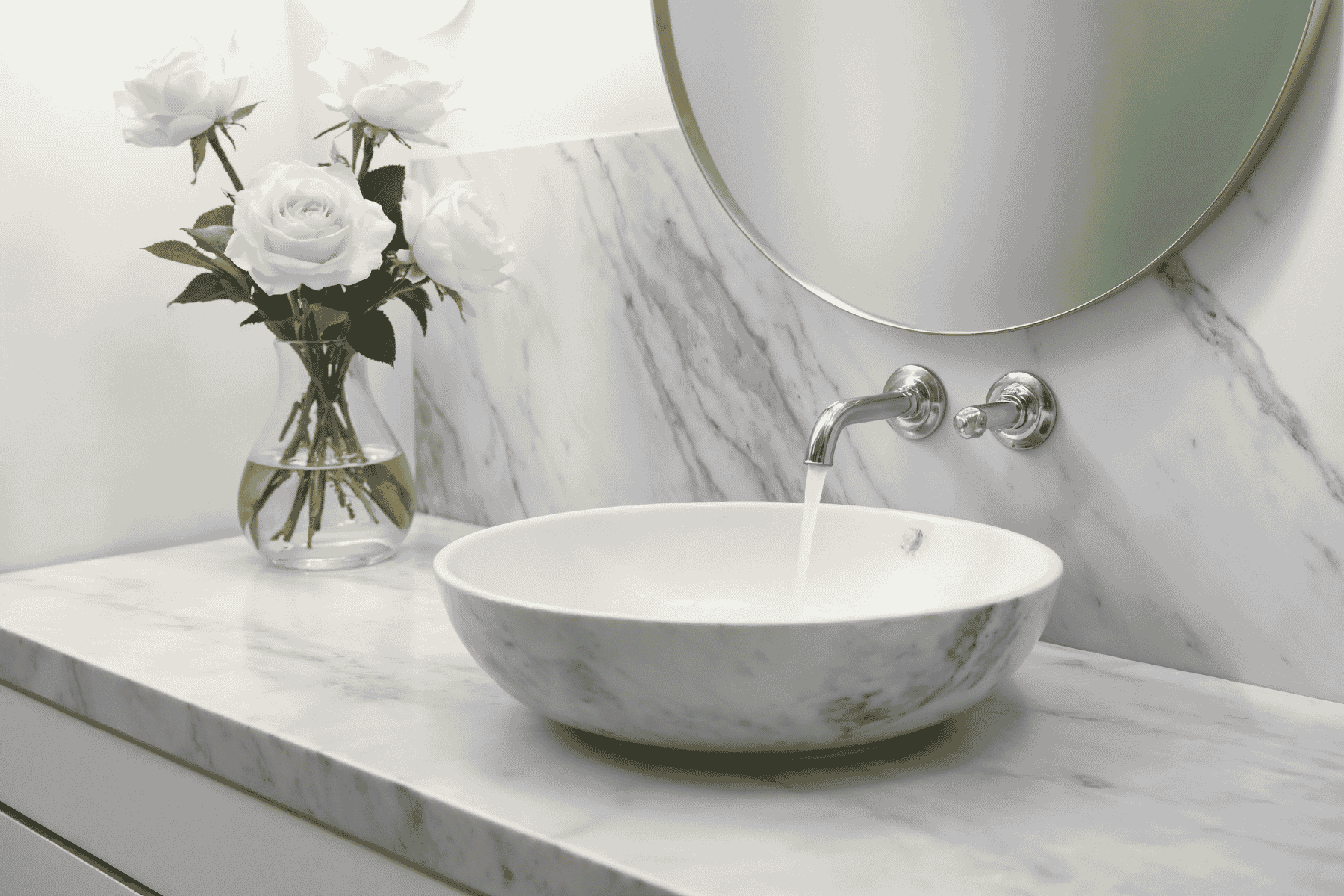
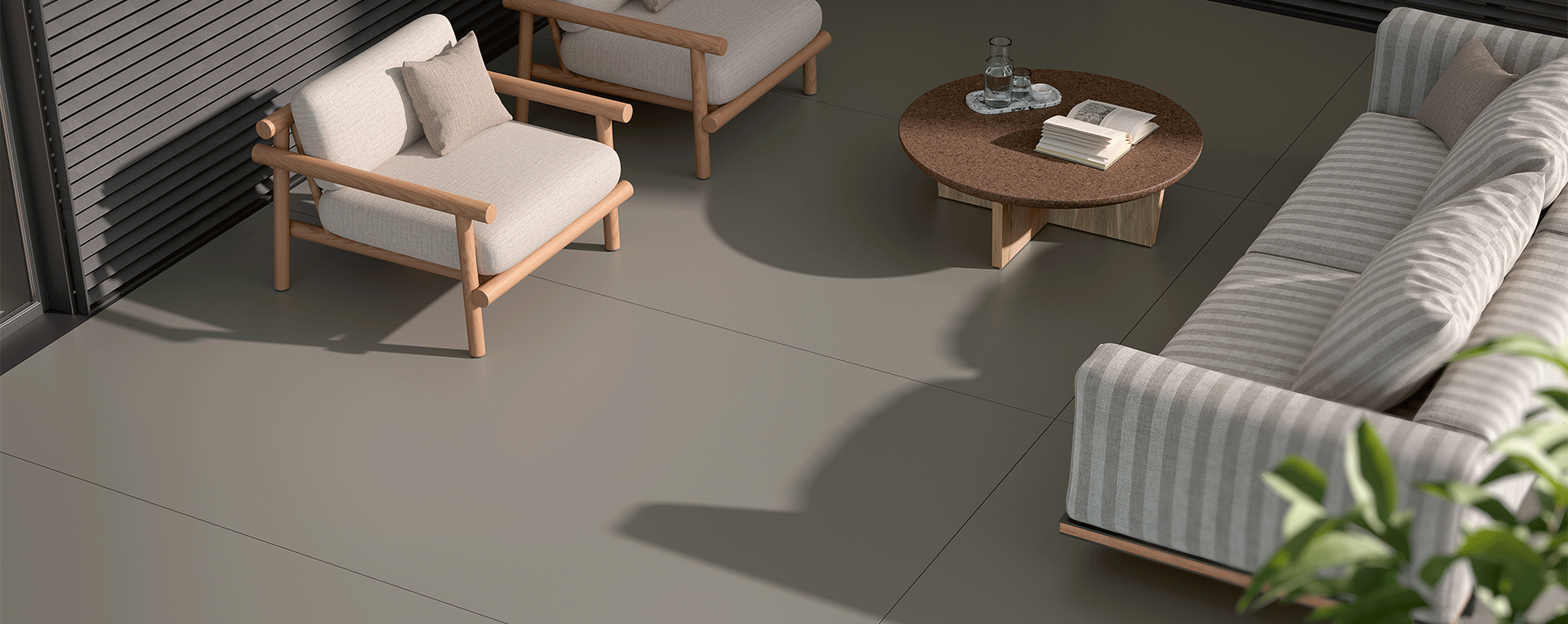
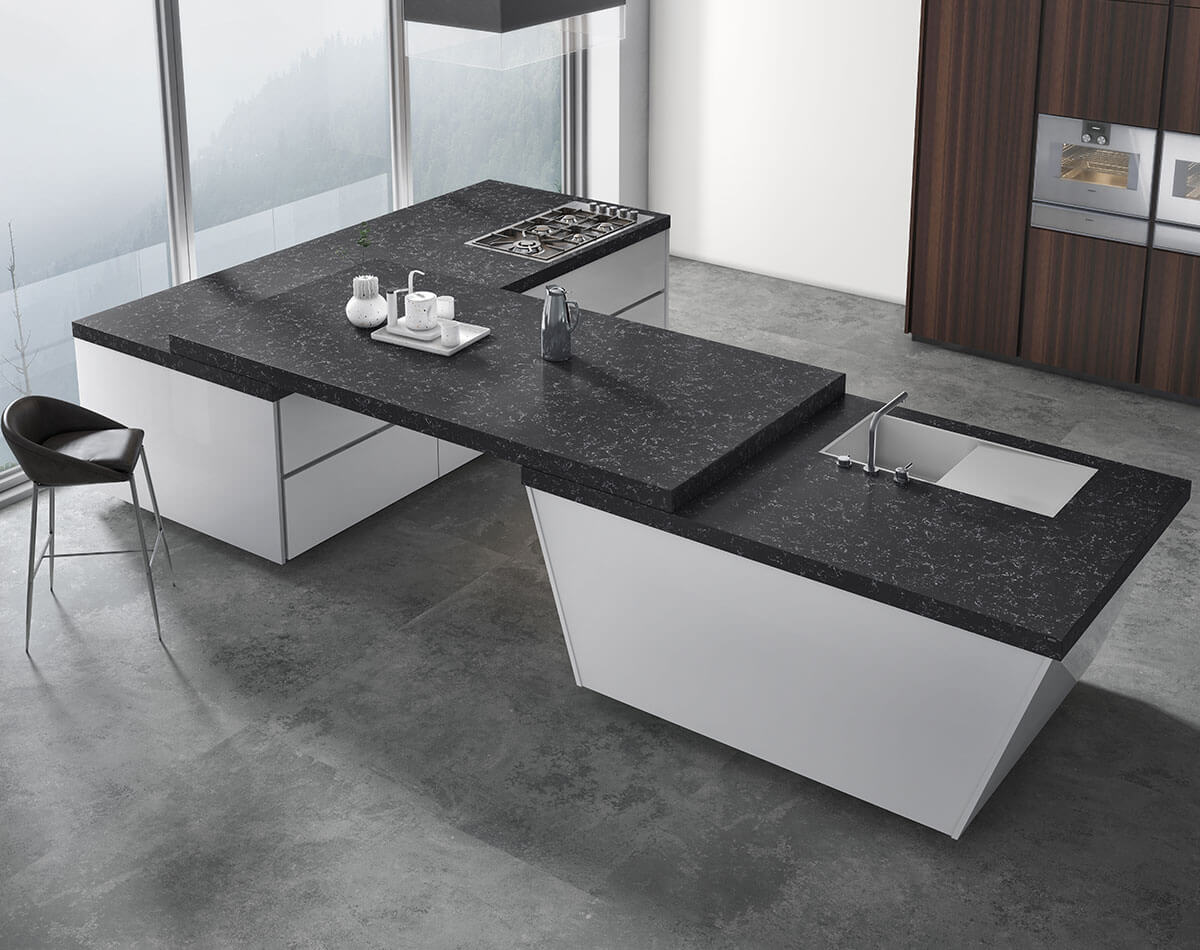
Narrow-depth vanities come around 300 mm deep, which can be a transformation in a bathroom where the door clears the vanity by only a few cm. The Pastelli collection, with its softly toned muted palette, grounds a narrow vanity without competing while adding a gentle warmth that keeps the room feeling clean.
3. Corner Vanity Unit
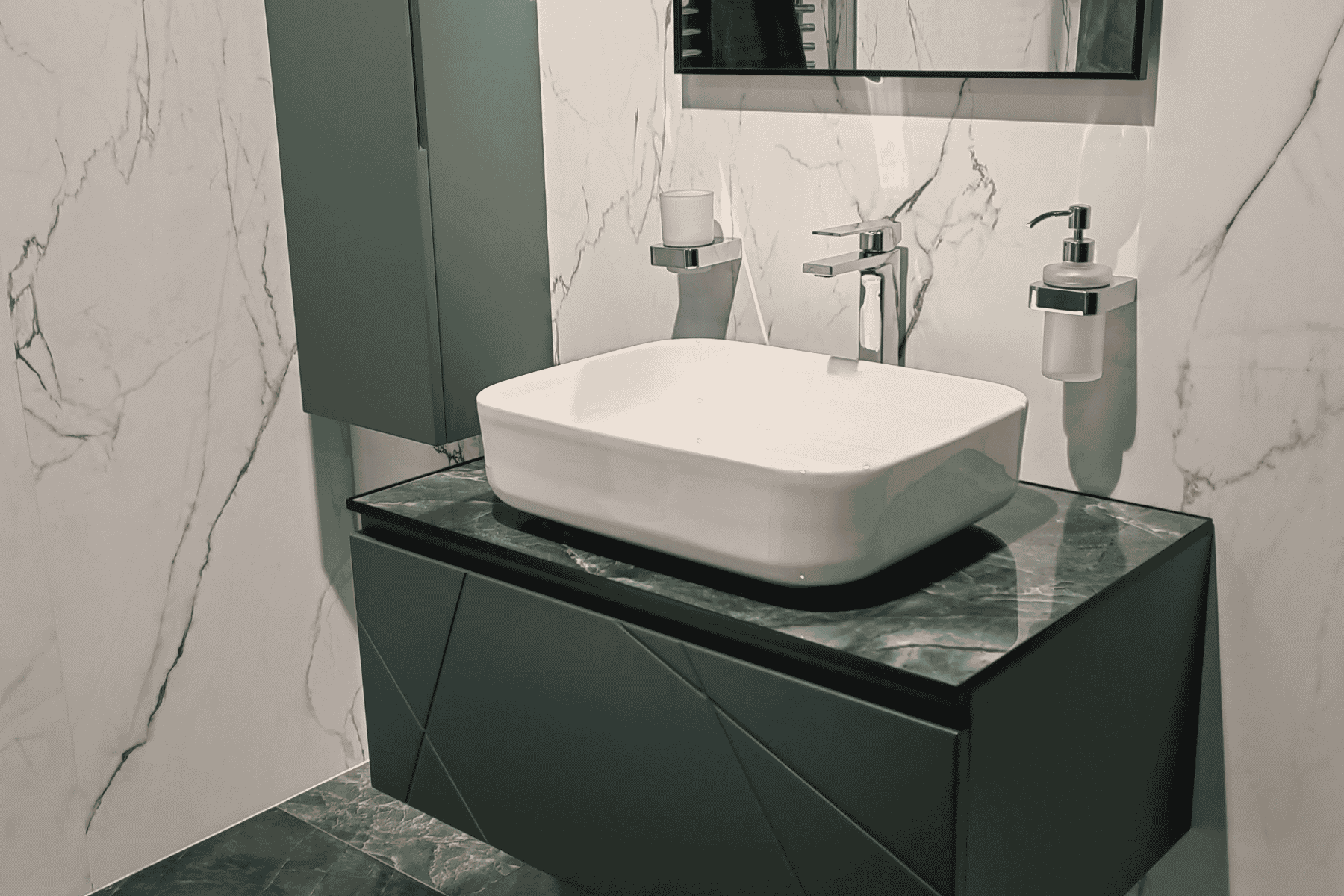
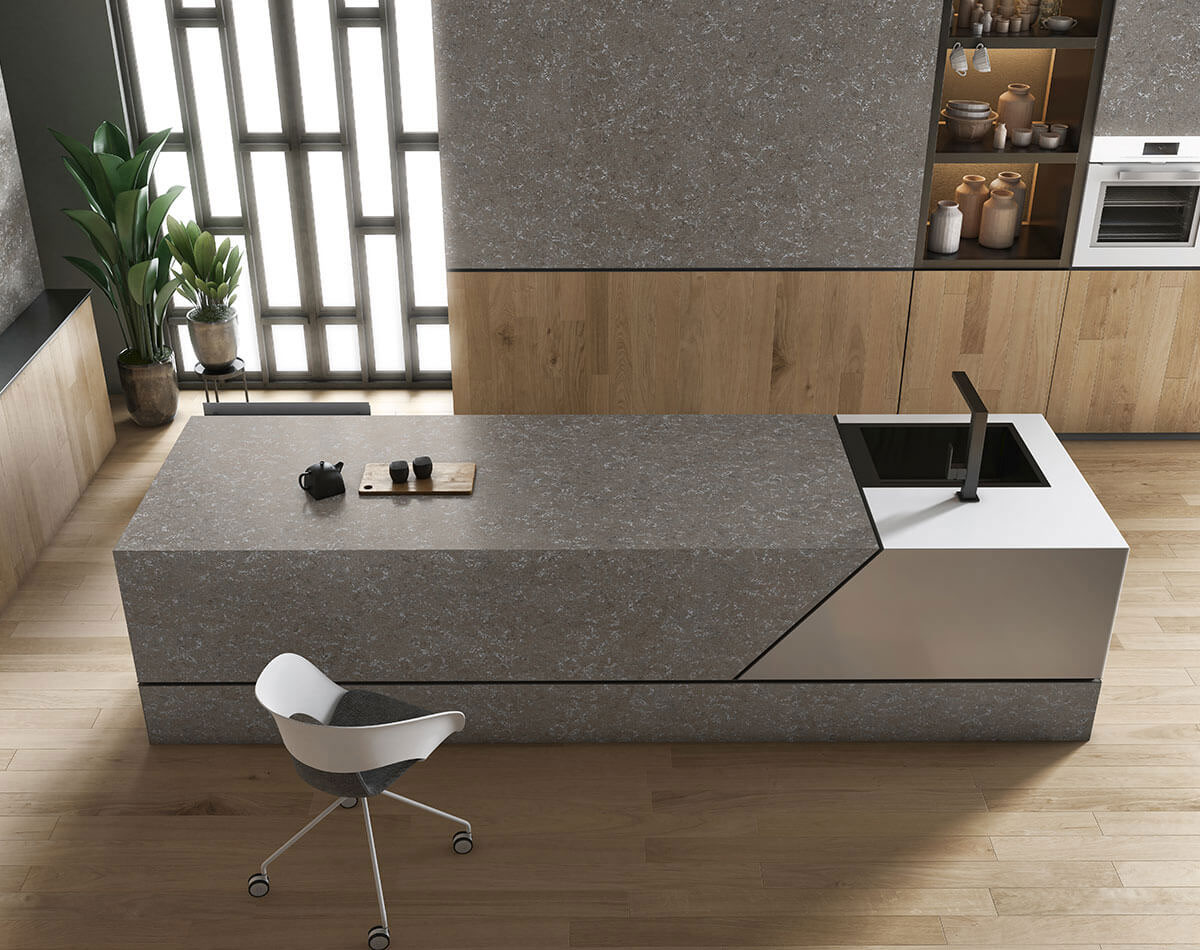
Corners are the underused real estate in any bathroom. A corner vanity tucks neatly into the junction of two walls, freeing up the primary space for other essentials such as a mirror cabinet. These units are typically triangular or L-shaped and work best in bathrooms where the door opens toward the centre rather than along a wall. The Accordi collection has concrete-inspired textures that add depth without visual weight, making the corner feel intentional rather than incidental.
4. Pedestal Basin with Surface Shelf
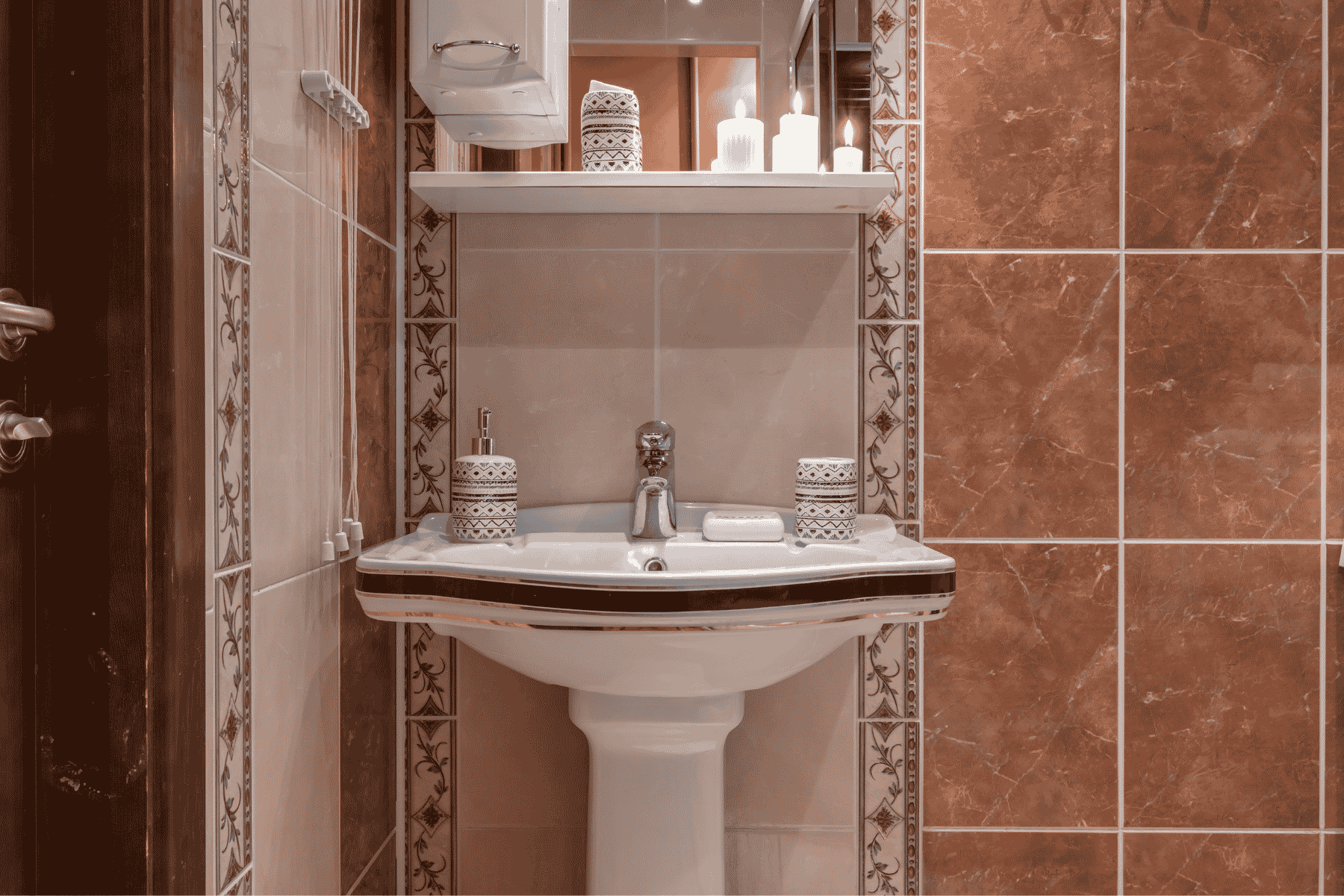
This classic basin takes up almost no floor space and carries an inherent elegance. Its traditional weakness and zero storage can be addressed elegantly with a slim shelf attached to the wall directly above or beside it or a narrow open shelf unit that wraps around the pedestal column.
5. Mirrored Cabinet Vanity
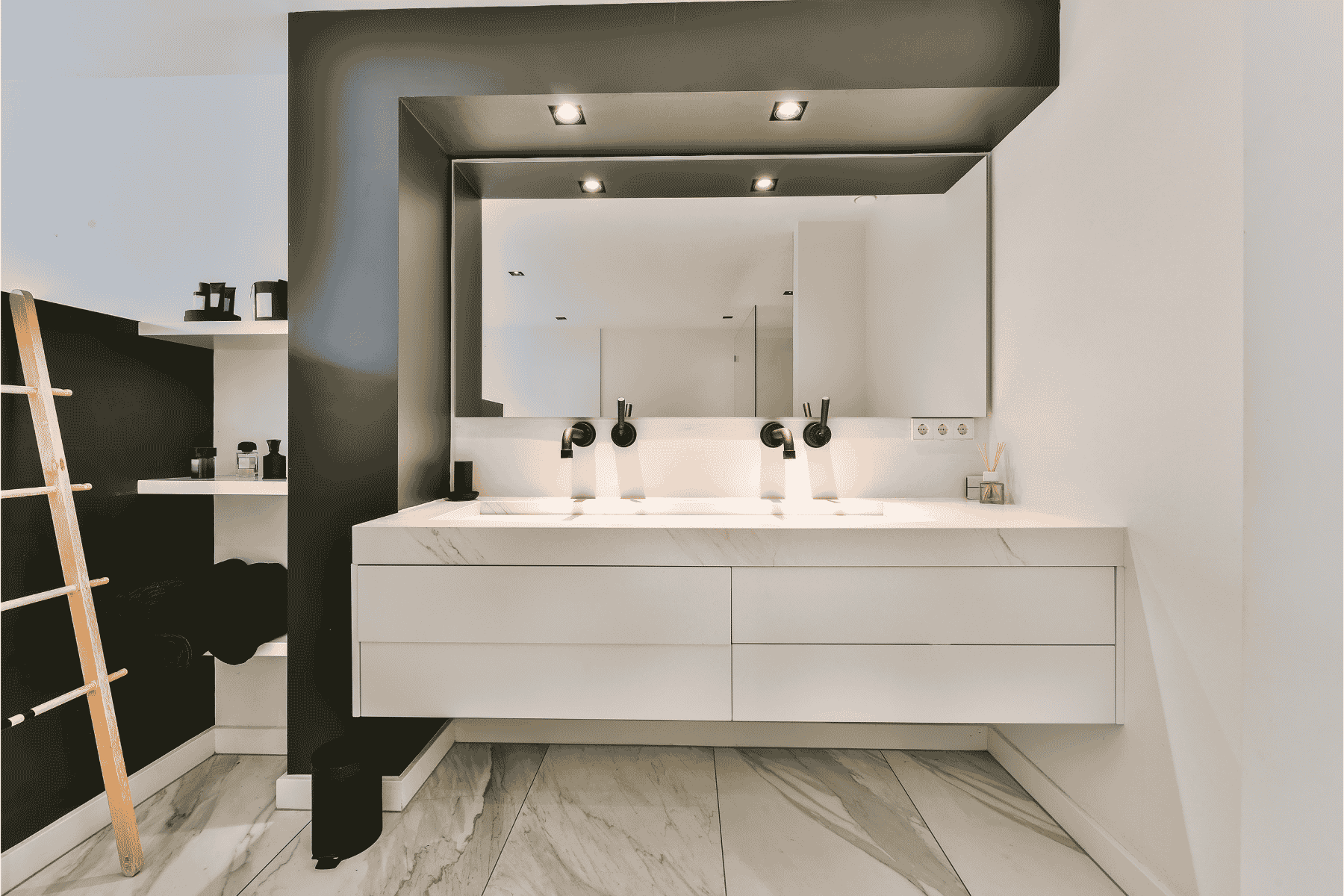
The mirrored cabinet is the space’s double agent of bathroom countertop design. In a small bathroom where a separate mirror and a medicine cabinet would each claim their own space, the mirrored vanity cabinet does both in one footprint. The Spa collection’s grain-like finish looks striking when paired with a mirrored cabinet vanity, amplifying both depth and perceived depth.
6. Integrated Basin and Vanity in One Slab
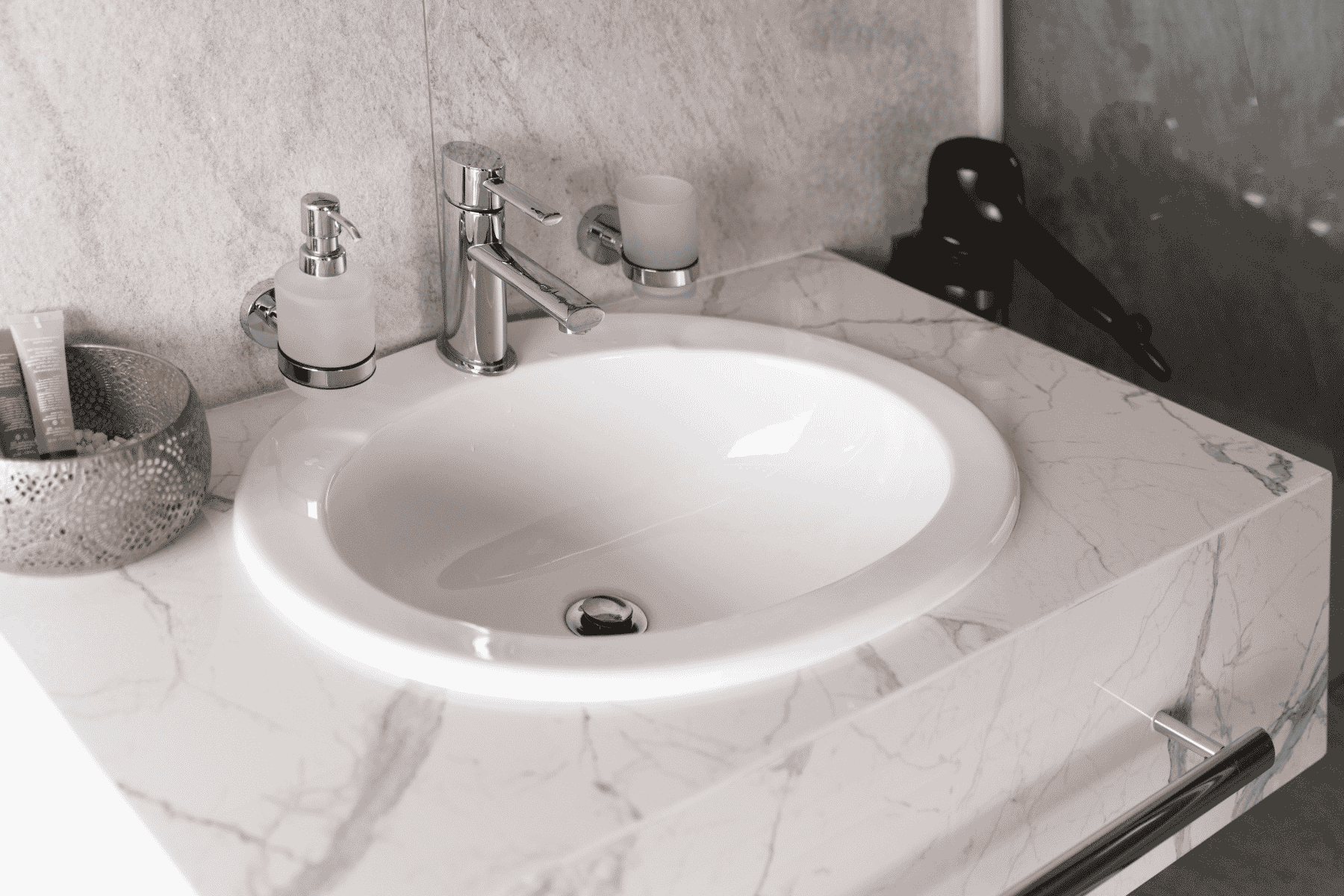
A Neotra surface with an integral basin brings an architectural quality to a small bathroom that belies its size. Works particularly well in long, narrow bathrooms where a traditional vanity cabinet would feel like a blockage. The Accordi collection has a wood-look surface that adds interest at ground level without demanding attention, letting the vessel basin remain the focal point it is designed to be.
Also Read: Top 10 Bathroom Countertop Designs for Modern Bathrooms
7. Open Shelf Below Basin
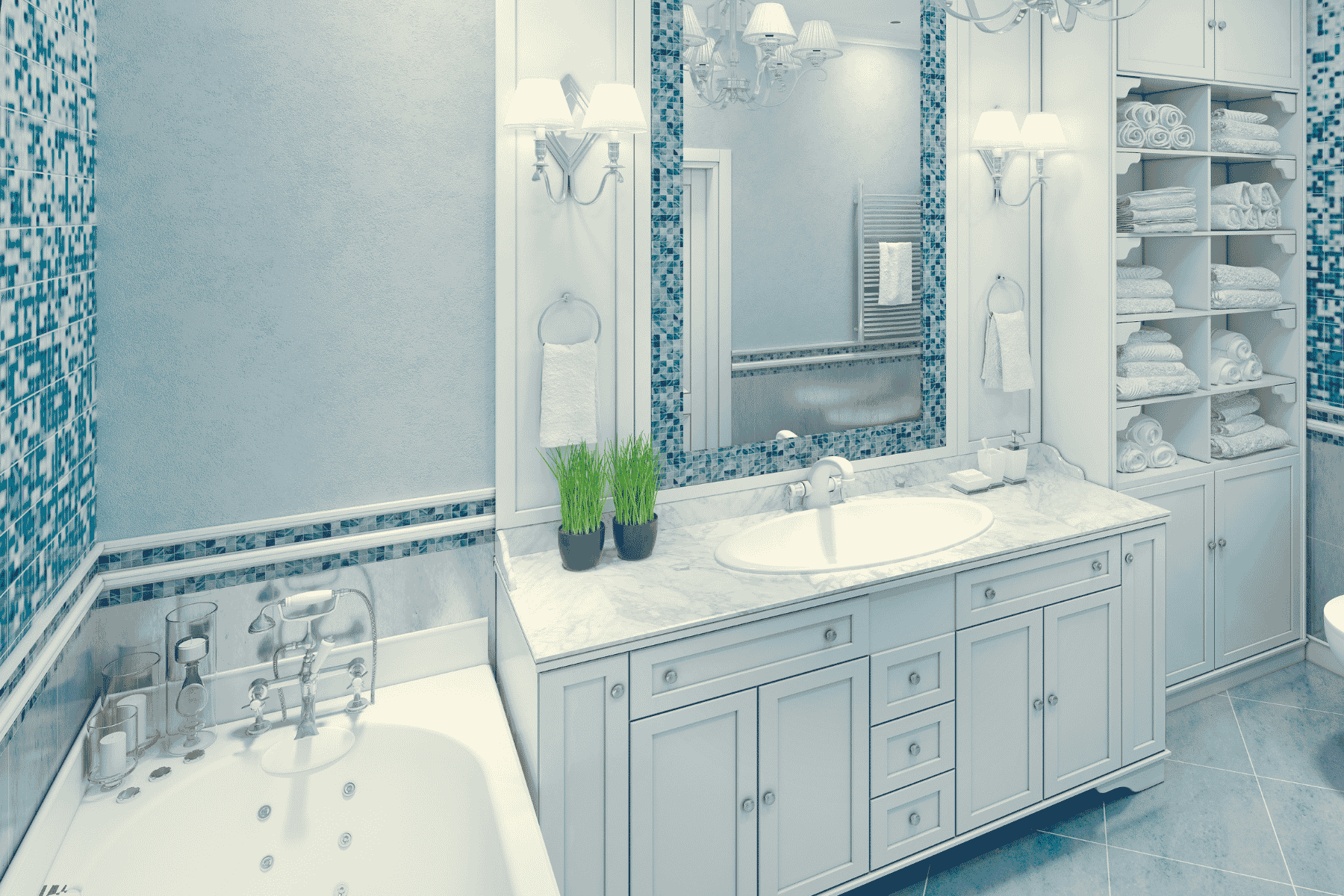
When storage is not a need, open-shelf vanity cabinet doors for visible shelving and the effect on perceived spaces are significant. Without solid cabinet fronts blocking the view, the eye travels past the vanity rather than stopping at it. For the floors and lower walls, our Pastell collection in a warm cream or soft grey provides a composed and contemporary anchor for the open, airy visual of an open-shelf vanity.
8. Single-Drawer Slim Vanity
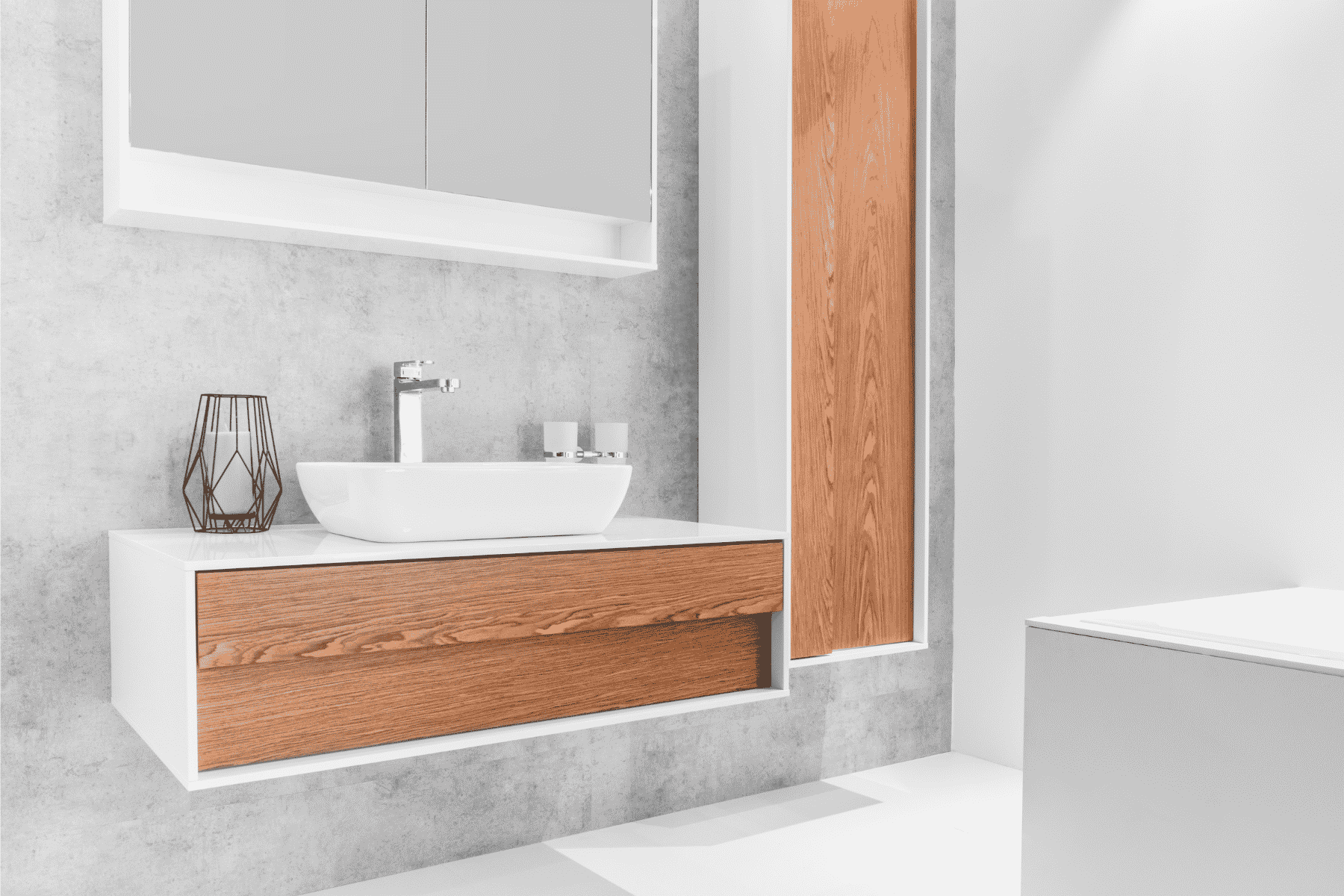
A wall-hung unit with a minimal profile, well-organised drawer, and a vanity countertop deep enough for a basin and a few essentials. Ideal for en-suites, bathrooms, or powder rooms where the priority is to keep the floor and walls as open as possible. The Spa collection on the feature wall offers the tranquil surface that transforms a minimal vanity from functional necessity into a quiet design statement.
9. Vanity with Towel Rail Integration
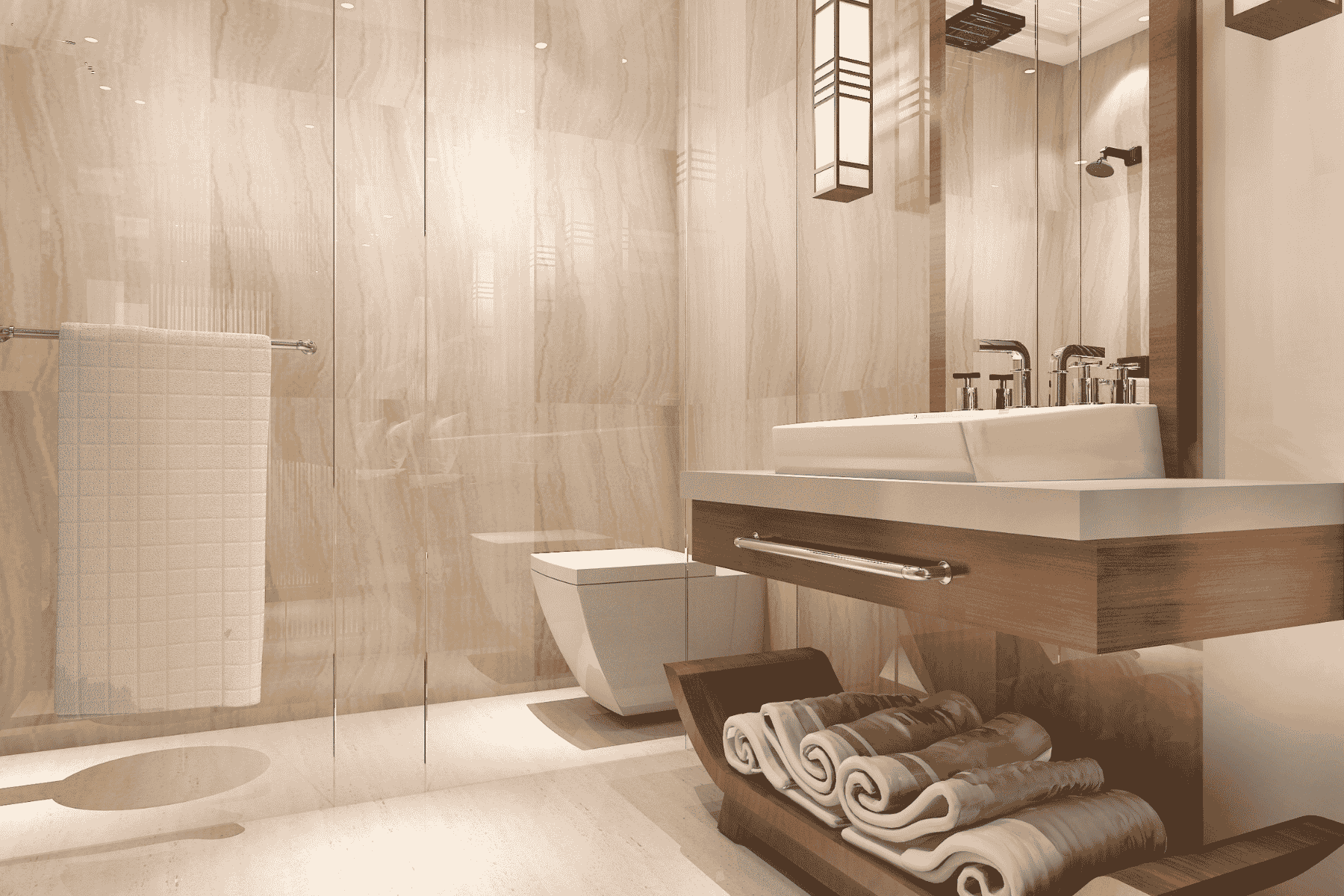
Some of the smartest space-saving vanity designs come with integrated towel rails built directly into the sides or doors of the unit, eliminating the need for a separate towel rail on the wall. Slab the full height of the wall behind and beside the vanity using the Accordi collection, whose structured surface can add a personality-driven touch to what might otherwise be a utilitarian zone.
10. All-White Compact Vanity
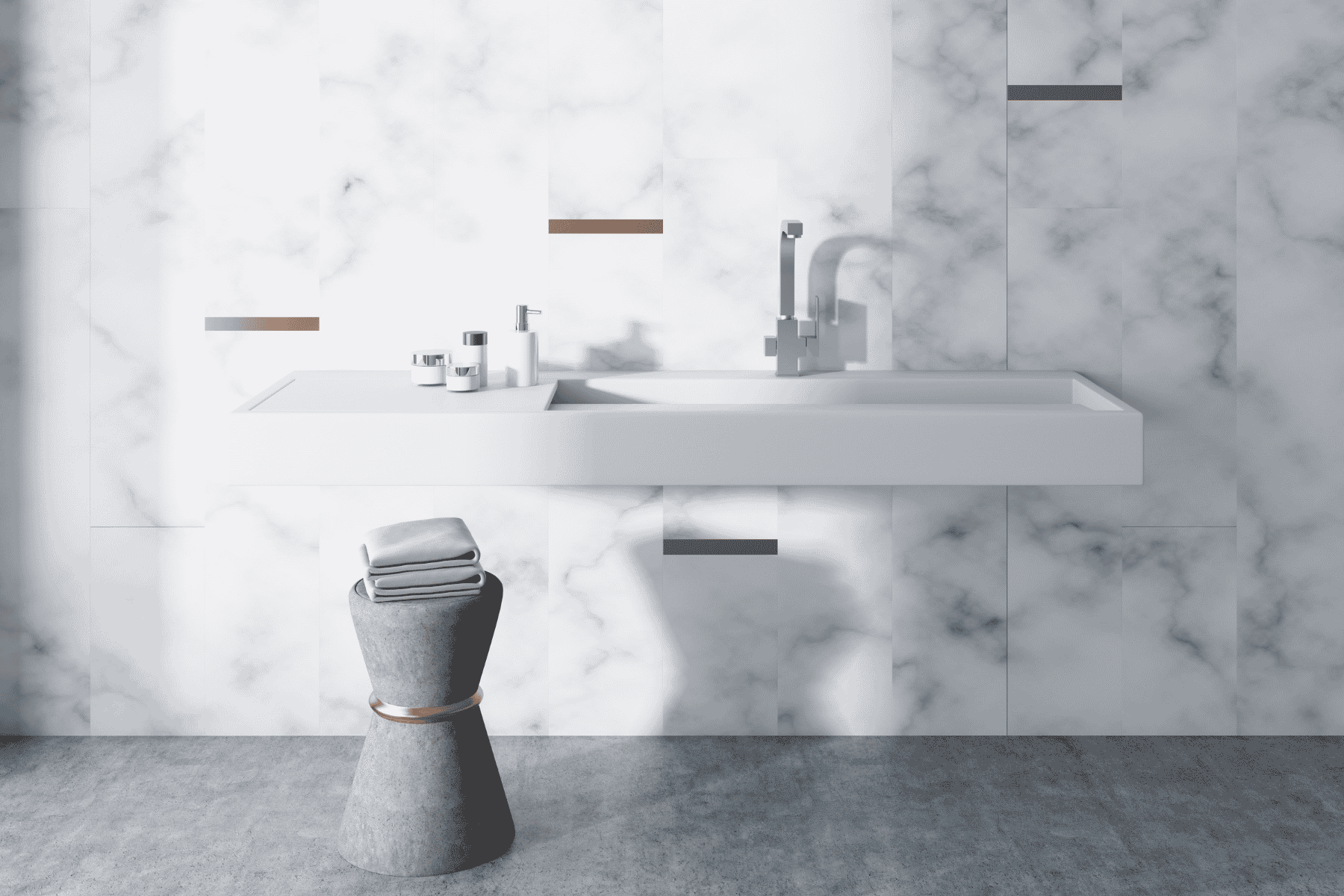
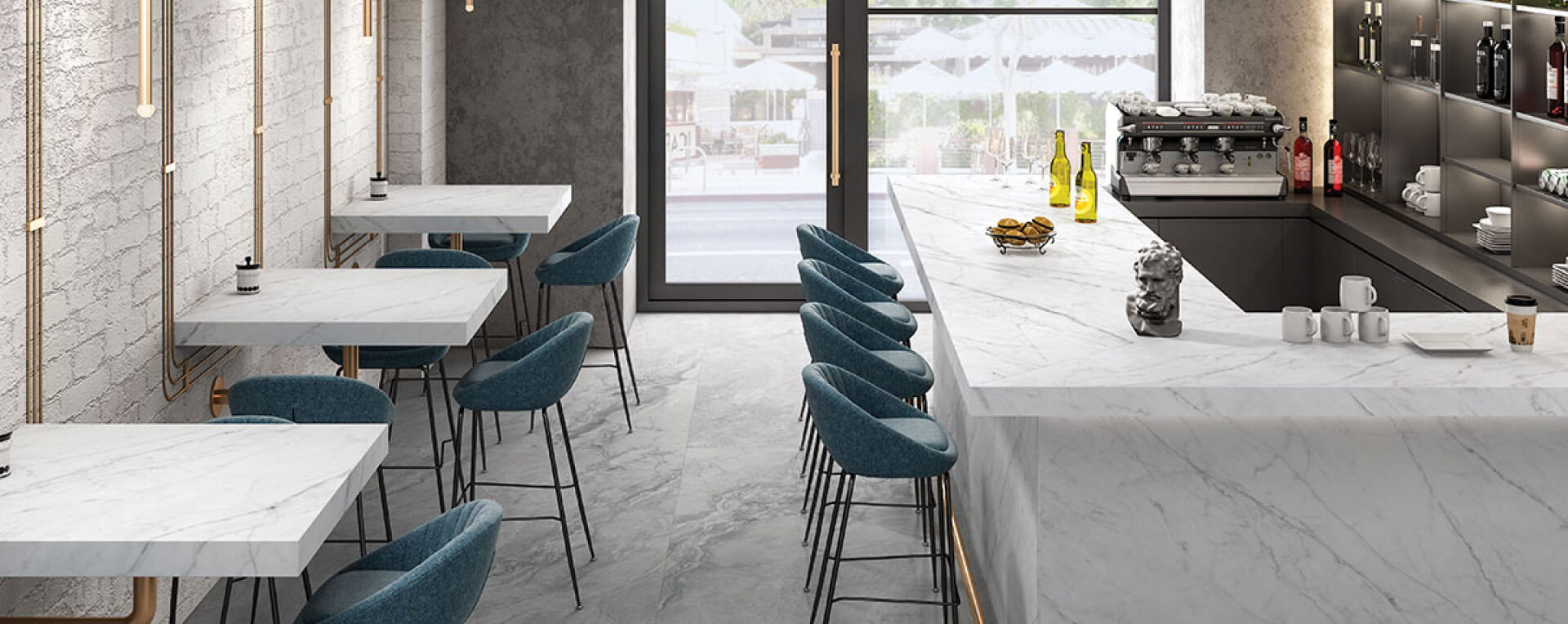
An all-white vanity is one of the oldest space-expanding tricks in interior design. White reflects light, reduces visual mass, and blurs the boundary between the vanity and wall behind it, making the unit appear to recede rather than project into the room. Our Accordi collection offers a tonal and structured surface that reads as distinctly textural without introducing competing colour, keeping the all-white vanity as the visual anchor while the surface around it adds dimensionality.
Also Read: Top 5 Contemporary Bathroom Design Trends You Need to Know
11. Recessed or Semi-recessed Vanity Niche
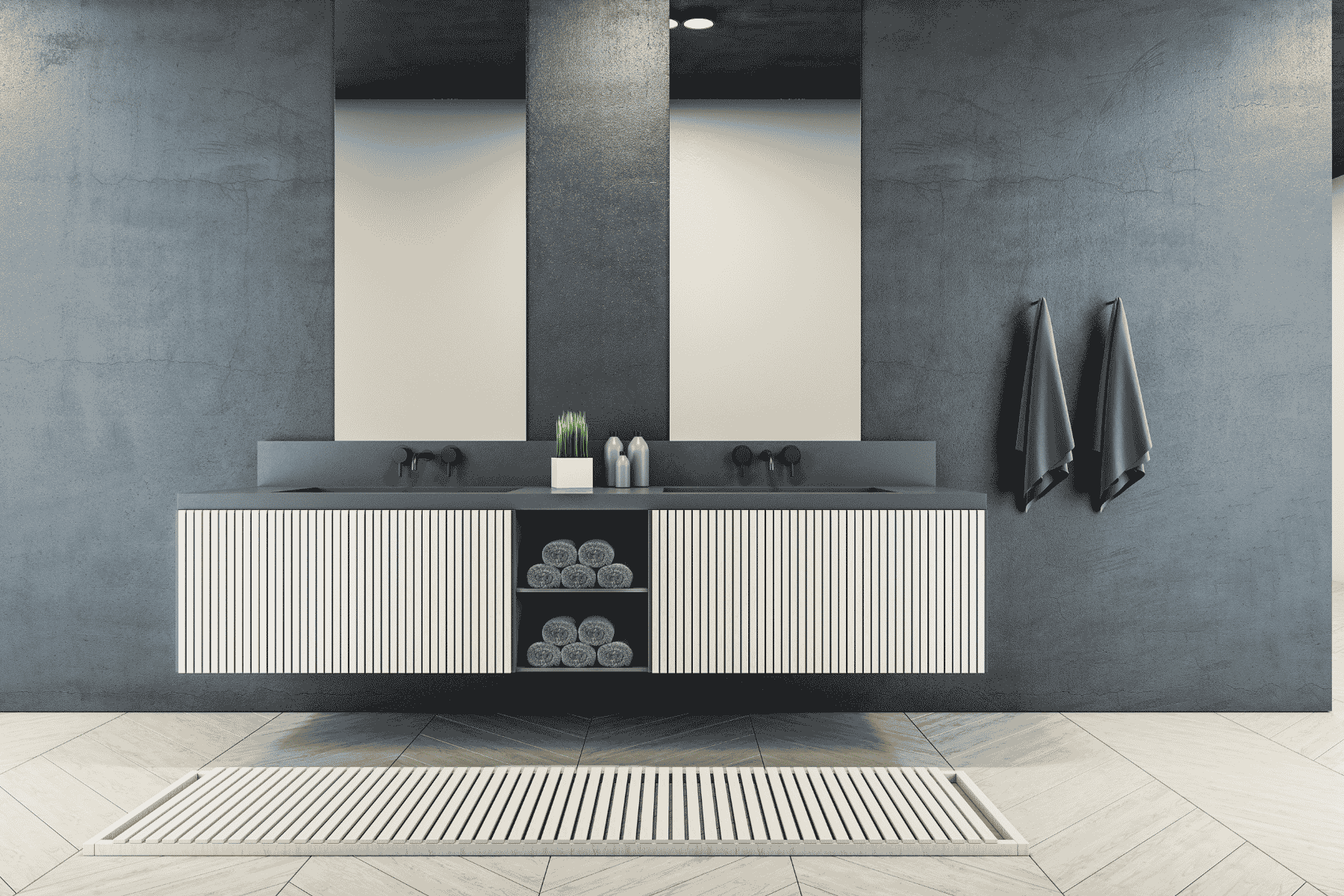
A recessed basin sits partially or fully into a countertop that itself sits within a lowered or built-in vanity unit, reducing the projection into the room. A semi-recessed offers the best of both worlds; the basin still has visible character above the counter, but the lower profile means the vanity’s depth can be reduced significantly. Our Inemensa collection, with luxurious and modern design, creates a refined backdrop that makes a semi-recessed basin feel like a deliberate architectural choice.
12. Vessel Basin on Floating Neotra Slab
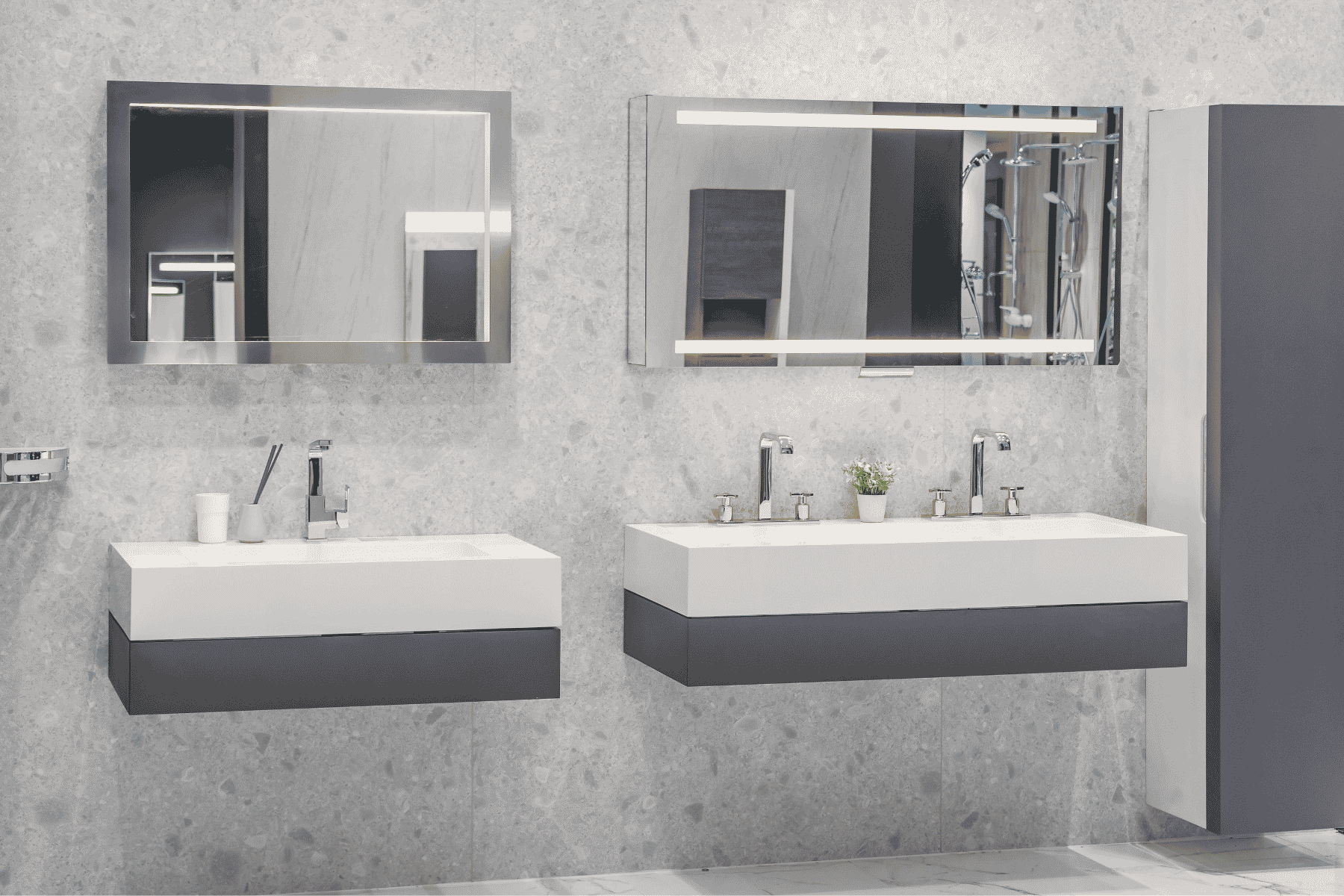
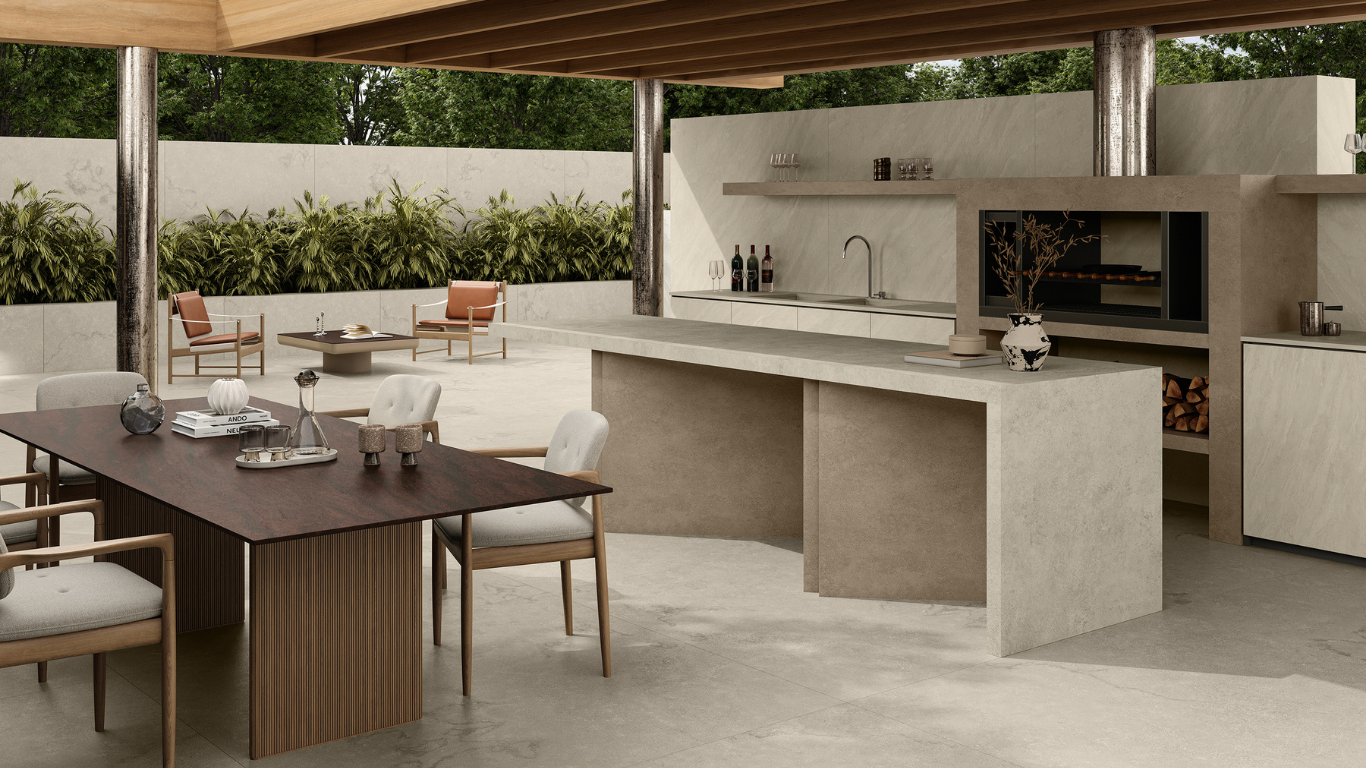
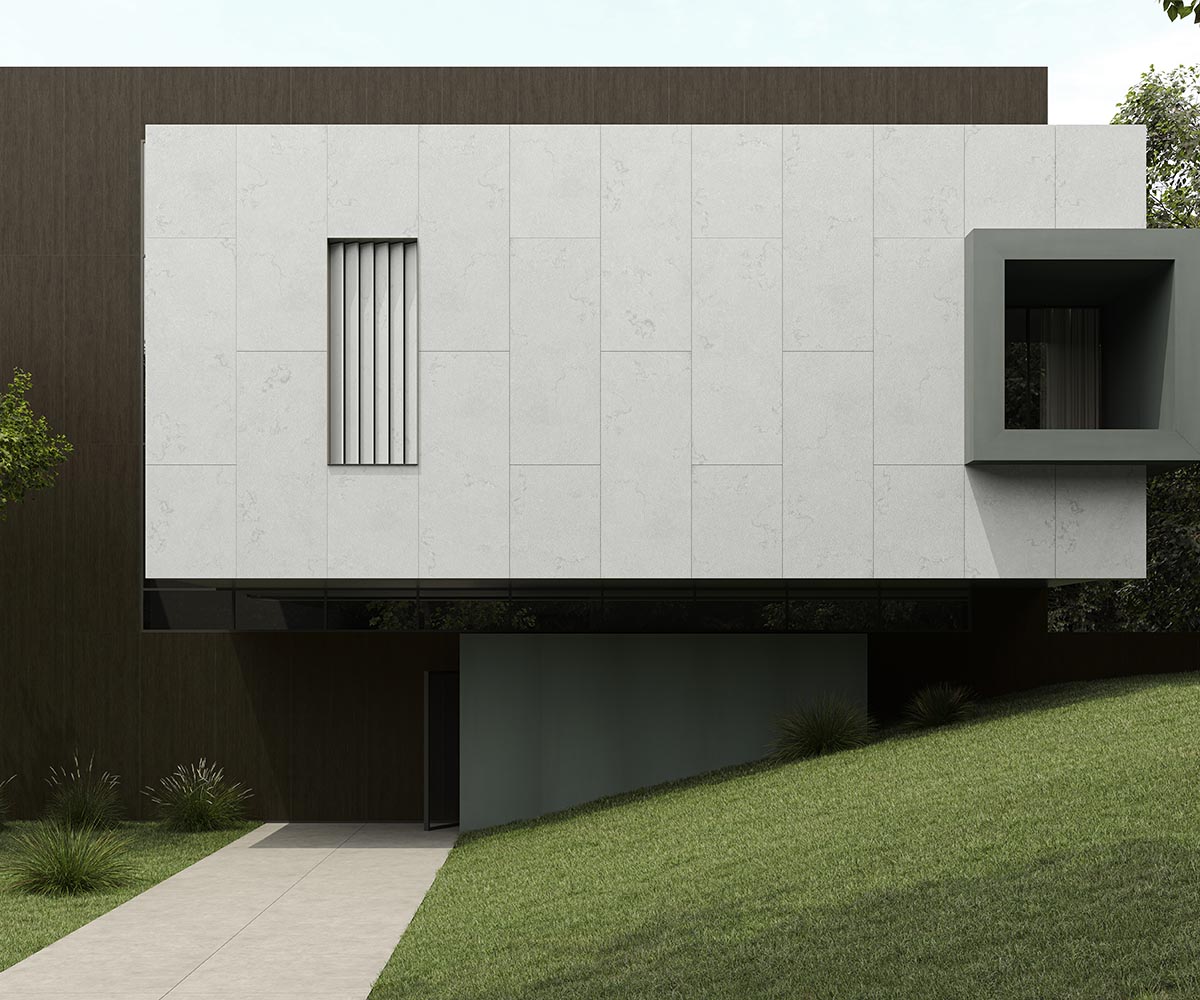
A vessel basin mounted directly on a Neotra surface fixed to the wall with no visible support structure beneath creates a vanity that feels less like furniture and more like architecture. The slab serves simultaneously as a countertop, display surface, and shelf with the vessel basin. Our engineered surface technology includes exceptionally strong, large-format, and resistant-to-heat, moisture, UV, frost, and daily wear without requiring the bulk of a traditional vanity body to support it. The Inmensa collection offers marble-look slabs; the Spa collection offers a granular look; and the Pastelli collection offers slabs in varied colours, while the Accordi collection offers wood, concrete, and stone-look slabs.
Why Neotra Surfaces Are Ideal for Small Bathroom Vanities
A vanity design performs best when paired with surfaces that enhance both functionality and visual space. In small bathrooms, wall and floor surfaces influence how spacious, bright, and cohesive the room feels.
- Light-coloured surfaces help make compact bathrooms feel larger and brighter
- Continuous surfaces create a seamless and unified appearance
- Available across the Accordi, Pastelli, Spa, and Inemnsa collections
- Engineered solely from minerals and sintered at extremely high temperatures
- Non-porous surfaces resist moisture, stains, and everyday wear
- Scratch-, heat-, and moisture-resistant for long-term bathroom performance
- Require minimal maintenance with no regular sealing requirements
- Maintain their appearance and surface integrity for years, combining practicality with refined aesthetics