

Comparing Two Modern Kitchen Surfaces
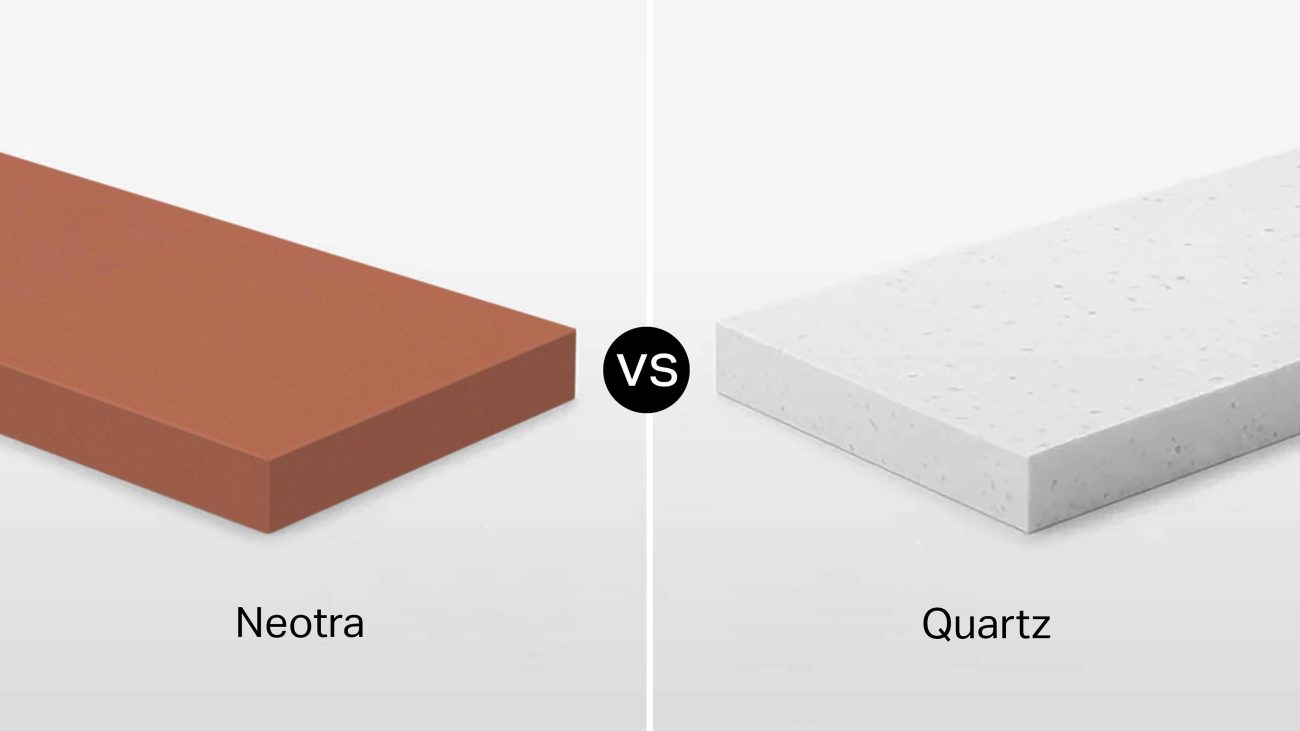
Neotra vs Quartz – At a Glance
Neotra comes with advanced minerals that outperform quartz in sustainability and heat resistance, making it ideal for high-traffic modern kitchens.
| Feature | Neotra | Quartz |
| Composition | Made solely of minerals | 90-95% crystals of quartz + resins |
| Heat Resistant | Exceptional as they are, fired up to 1200°C during preparation | Good, but prone to scorching |
| Stain Resistant | Non-porous and seamless, and hence superior to stains | Excellent |
| Durability | High impact and scratch resistant, do not harbour dirt and bacteria | High scratch resistance |
| Thickness options | 5.5 mm, 12mm, and 20mm | Typically 12mm and 20mm |
| Maintenance | Easy to clean, and no sealing is required | Wipe clean, and no sealing is required |
| Best for | Luxury kitchens, bedrooms, and commercial spaces are suitable for all spaces | Budget-friendly uniform looks |
Key Factors That Matter in Kitchens
Durability in Daily Use
Kitchens endure heat, cuts, spills, and heavy use, so surface selection depends on durability and safety.
- Heat resistance: Modern cooking involves hot spots straight from the stove, and quartz can lead to damage under direct flame, while Neotra retains heat without marks. Stain resistance is crucial, too. Both are non-porous, but Neotra’s slabs prevent bacterial traps better than quartz’s visible seams. UV stability prevents fading in sunlit kitchens, where Neotra excels over quartz.
- Scratch resistance: Quartz resists scratches from knives but chips on edges, while Neotra’s dense mineral can handle daily abuse, which is ideal for busy Indian households with frequent chopping and grinding. Hygiene matters, and thus, Neotra’s antimicrobial properties inhibit bacterial growth, surpassing quartz’s resin-heavy formula.
Also Read: Top 5 Durable Stones for Kitchen Slabs in Indian Homes
Design Versatility
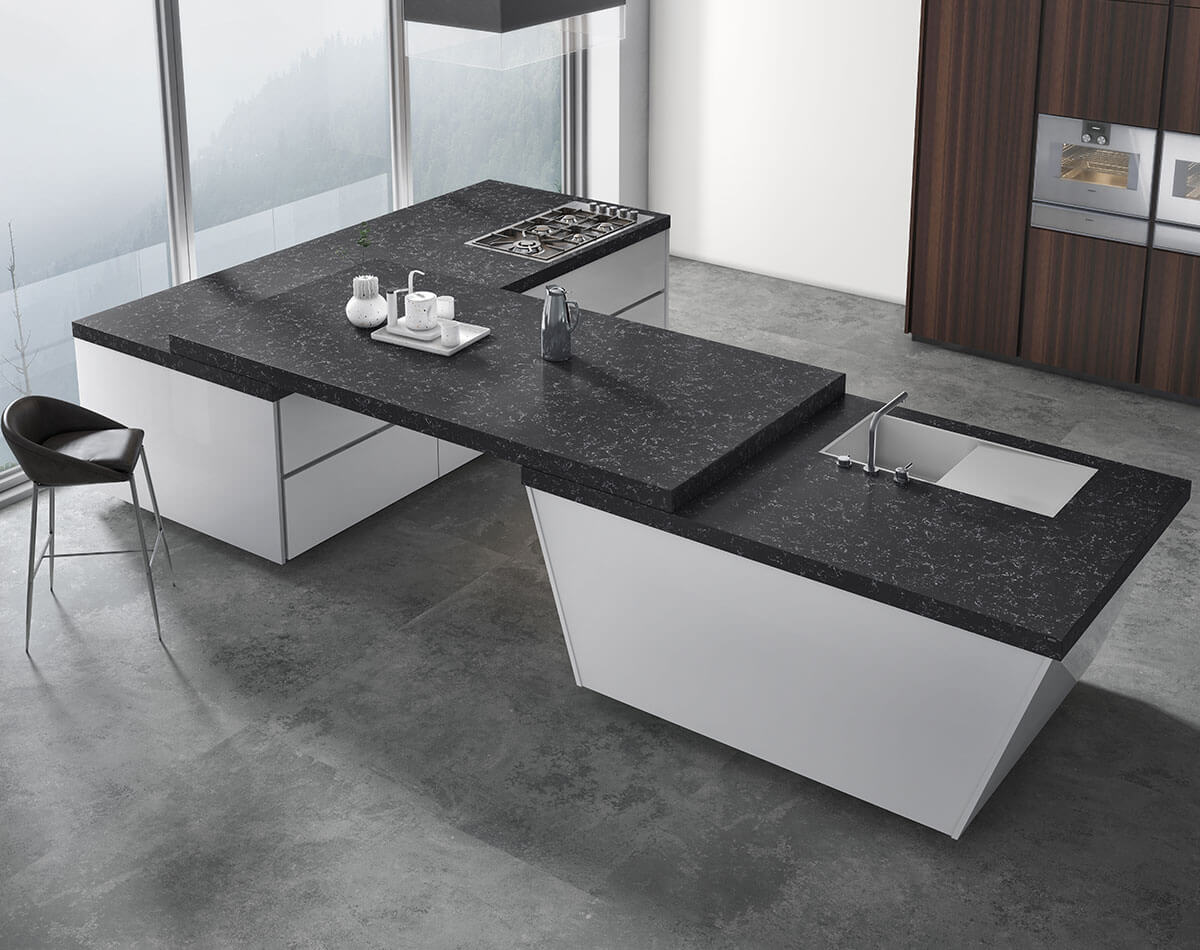
Design versatility turns counters into statement pieces, and Neotra outshines quartz here. Quartz offers colours and subtle patterns, but its uniform resin-bound crystal limits realism. Neotra is an engineered surface that replicates marble, wood, granite, or concrete with veins and depth.
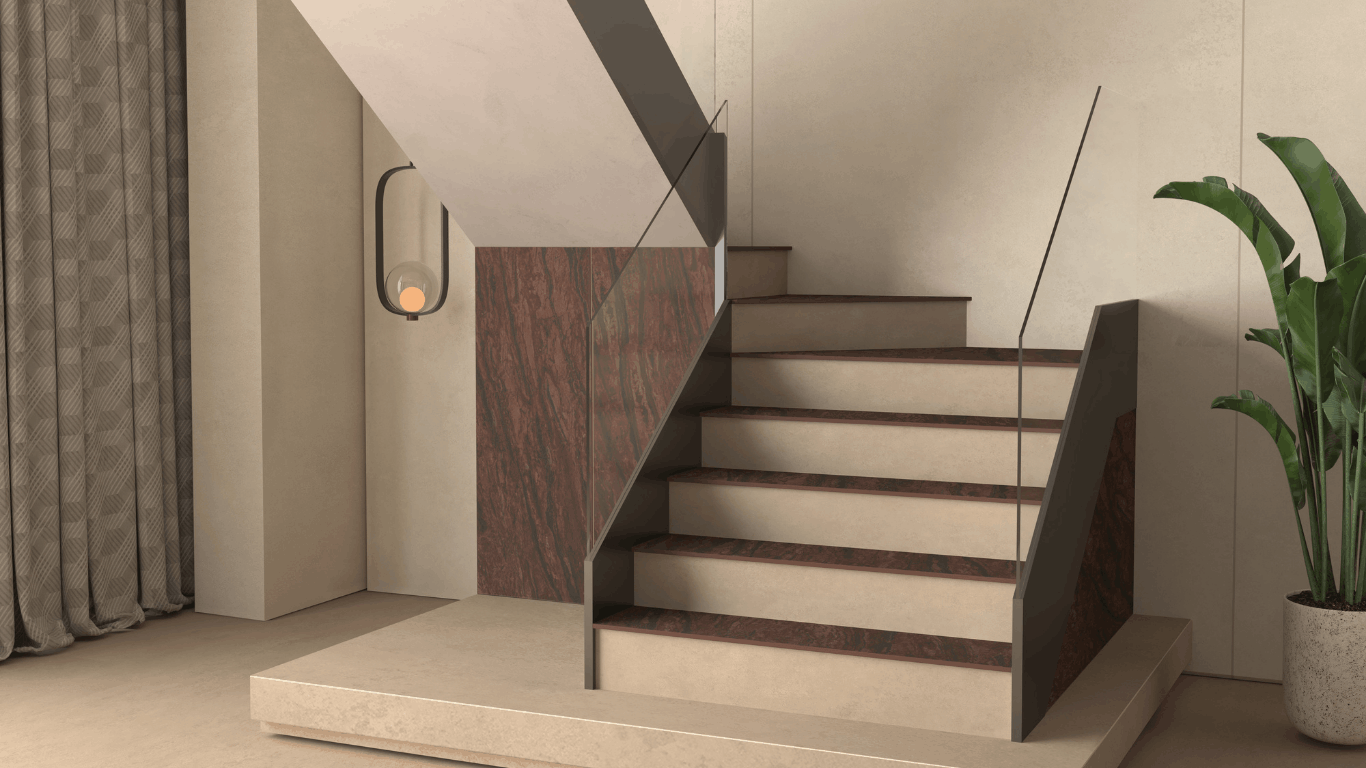
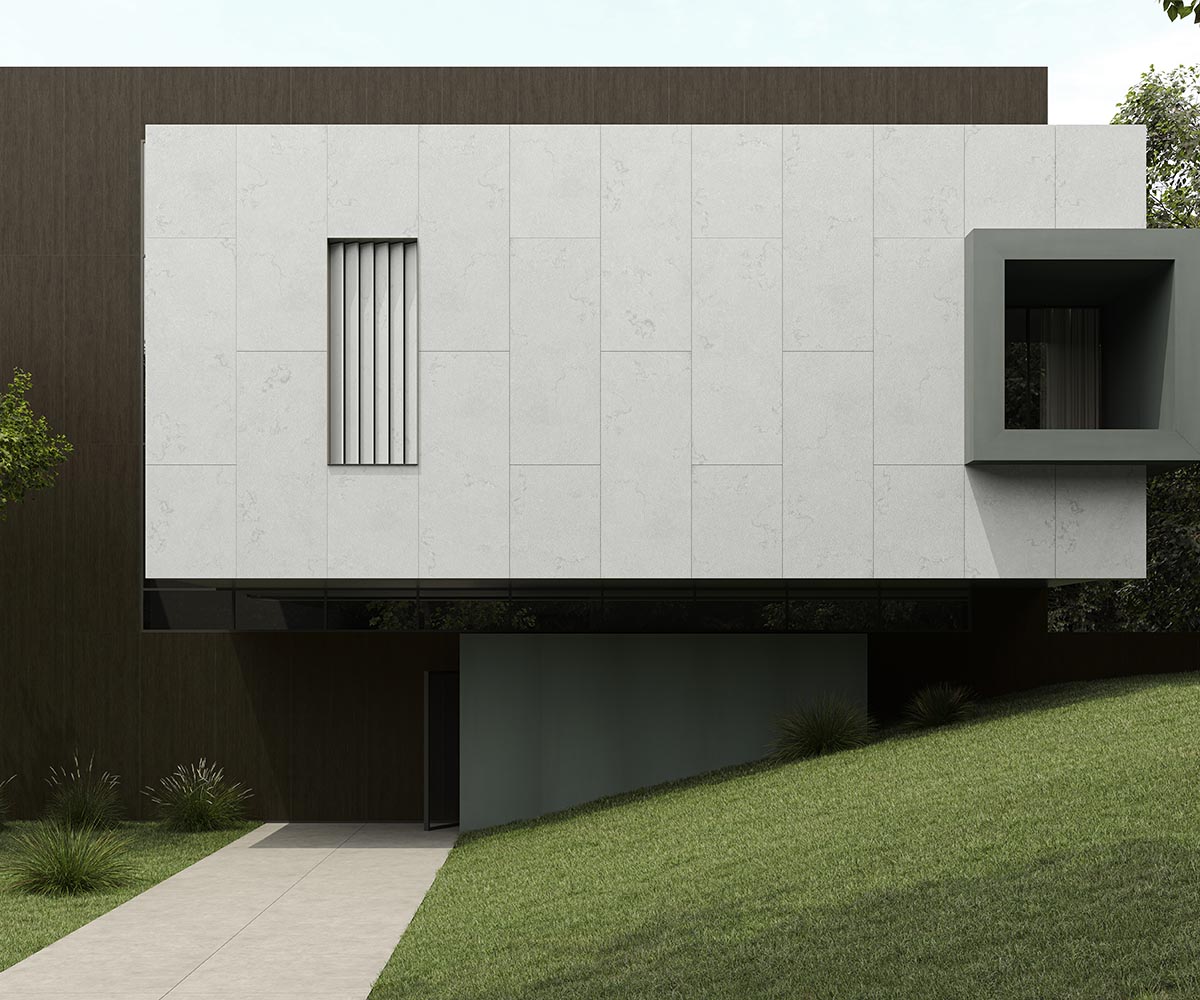
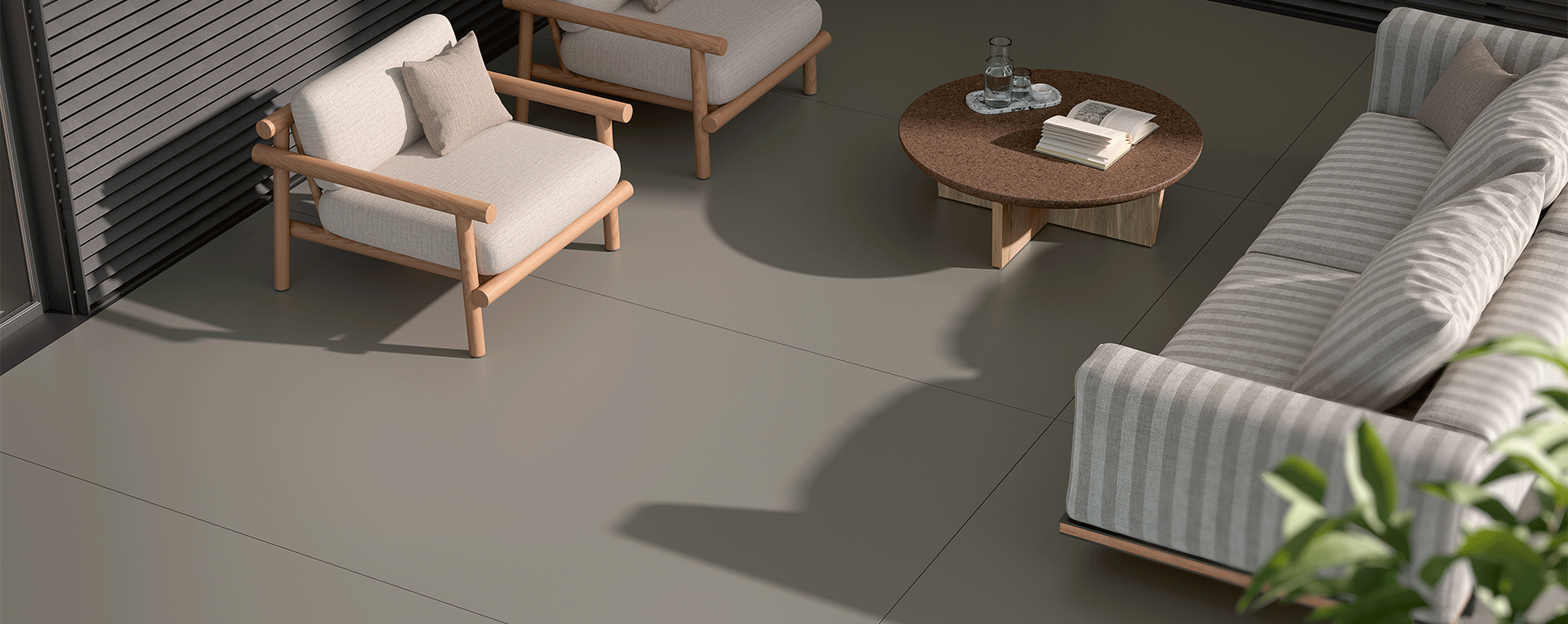
- Seamless wall/floor integration with the Accordi collection – Neotra’s Accordi slabs span large surfaces without joints, unlike quartz’s smaller formats needing seams that disrupt flow. The edge profile varies endlessly. Neotra supports borders for the thickness illusion in slim profiles.
- Pastel shades from the Pastelli collection – The purest, flawless design with Pastelli top-notch finishes and refined details, enhanced by the bright colour of the slab, which is non-staining and non-absorbent. The perfect thickness and format for any kind of application.
- Wellness-inspired tones from the SPA Collection – A perfect blend of superior quality and advanced technology on a granular surface. The SPA Collection is resistant to high temperatures and requires low maintenance effort, as it is liquid-repellent, easy to mould, and scratch-resistant.
- Large slab visual impact from the Inmensa Collection – The Inmensa Collection features luxurious veins in the slabs. Elevate the look of your living spaces with large slabs that are incredibly pleasant to touch, yet resistant to stains and scratches.
Maintenance & Cleaning
Low-maintenance surfaces save time in a fast-paced kitchen; both Neotra and quartz need no sealing. Wipe Neotra slabs with a microfibre cloth and neutral soap; the non-porous nature eliminates bacteria instantly, outperforming quartz, where resin pores harbour germs over time. Neotra’s hardness resists scratches from wool and steel, unlike quartz. Quartz chips from trivets, while Neotra endures direct heat from pans, reducing replacement needs. Neotra suits hygiene-focused homes and retains its form for decades, unlike quartz, which may haze from overuse. For commercial kitchens, Neotra withstands daily use without cracking. Choose based on lifestyle: Neotra for hands-off luxury and quartz for basic needs.
Sustainability & Material Impact
Sustainability shapes kitchen choices, and Neotra leads sustainability. Composed solely of natural minerals, Neotra slabs may be recycled into new material. Quartz mining scars landscapes with high-energy resin binding. Neotra surfaces are IGBC-certified, meaning they conserve energy and water as well as are environmentally responsible. Neotra’s plants are close to the destination site and have a highly sustainable production cycle. In kitchens, sustainability extends to durability. Neotra’s longevity reduces replacements, conserving resources; quartz lasts less than Neotra slabs. Our slabs are fully recyclable, homogeneous and totally inert materials. Opt for Neotra for kitchens that nurture the planet.
Also Read: How Neotra Redefines Luxury with Modern Stone Surface Designs
Where Neotra Shines in Kitchen Applications
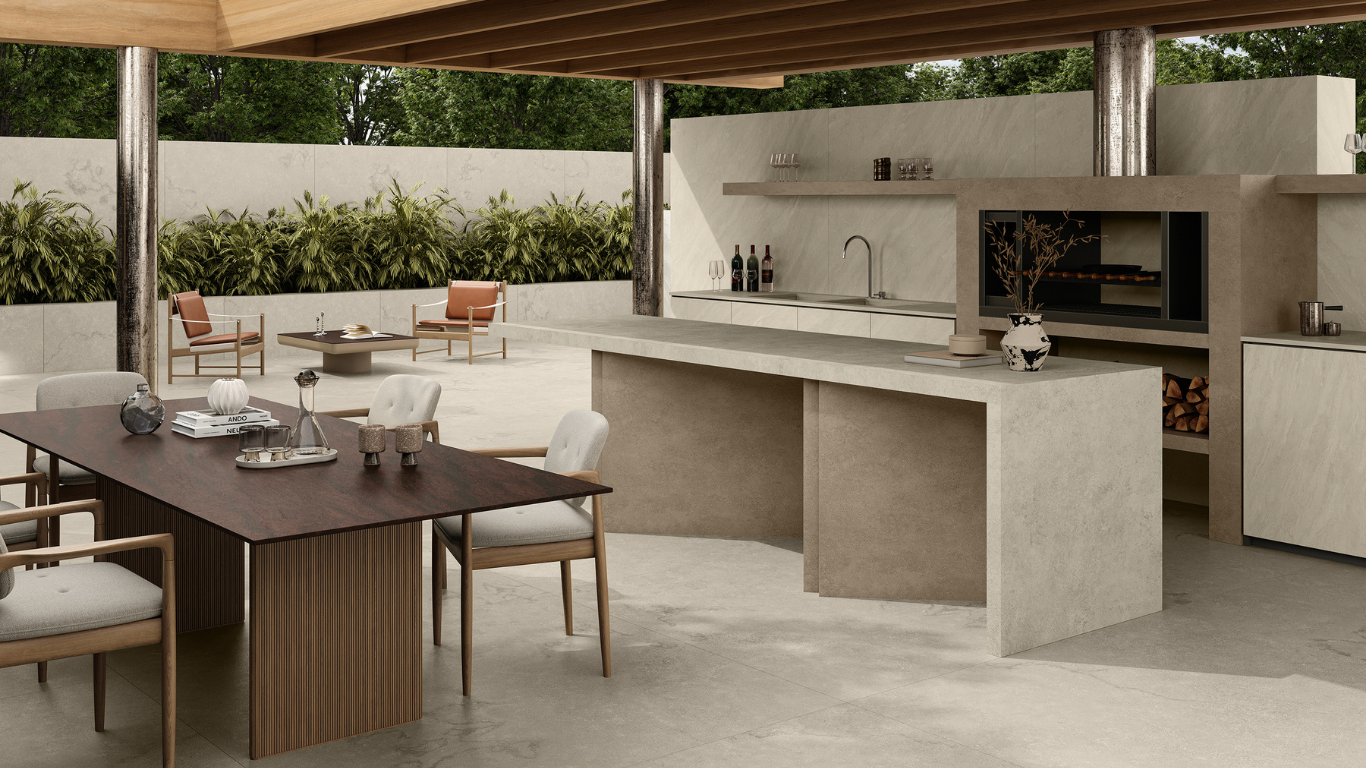
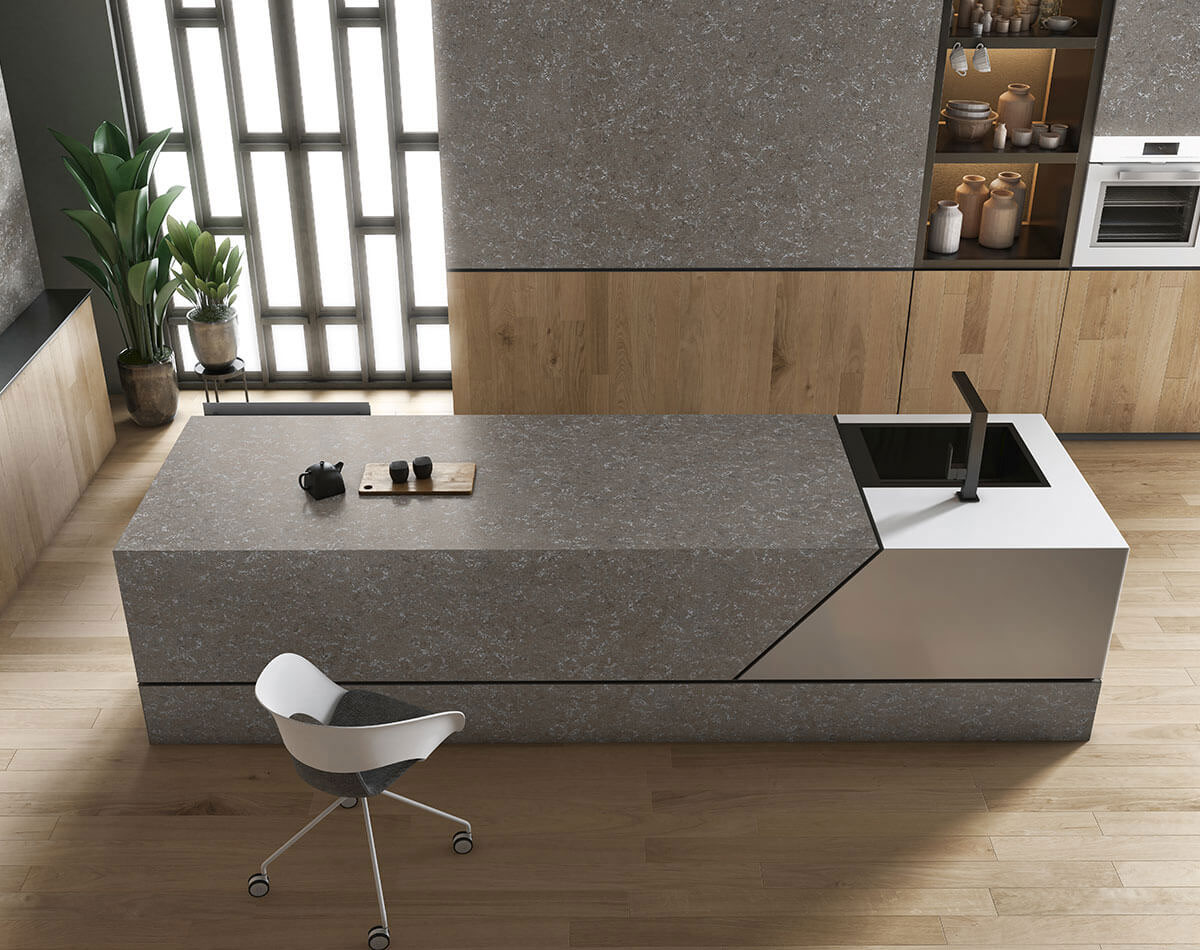
The ultra-thin, 5.5 mm slabs enable floating islands in compact spaces, maximising space while mimicking thick marble. Heat-resistant surfaces handle direct cooking seamlessly; no trivets are needed. Neotra’s slabs pair best with brass fixtures for Indo-Italian elegance, resisting stains in daily preparation. Seamless backsplashes unify patterns, and antimicrobial technology ensures family safety. All our collections are suitable for use in the kitchen. NSF-certified slabs are the safest, as they do not harbour dirt, bacteria, particles or harmful chemicals, which can be kept safe and clean with minimal effort.
Premium Residential Kitchens
The ultra-thin 5.5mm slab enables floating islands in compact apartments, maximising space while mimicking marble. Heat-proof surfaces that handle cooking or direct contact with boiling liquids seamlessly, no trivets needed. Pair Neotra’s white slabs with brass fixtures for Indo-Italian elegance that also resists stains in daily preparation. Seamless backsplashes unify designs with antimicrobial technology that ensures the safety of the family. Blend modern minimalism with cultural vibrancy with Neotra slabs.
Commercial or Hospitality Kitchens
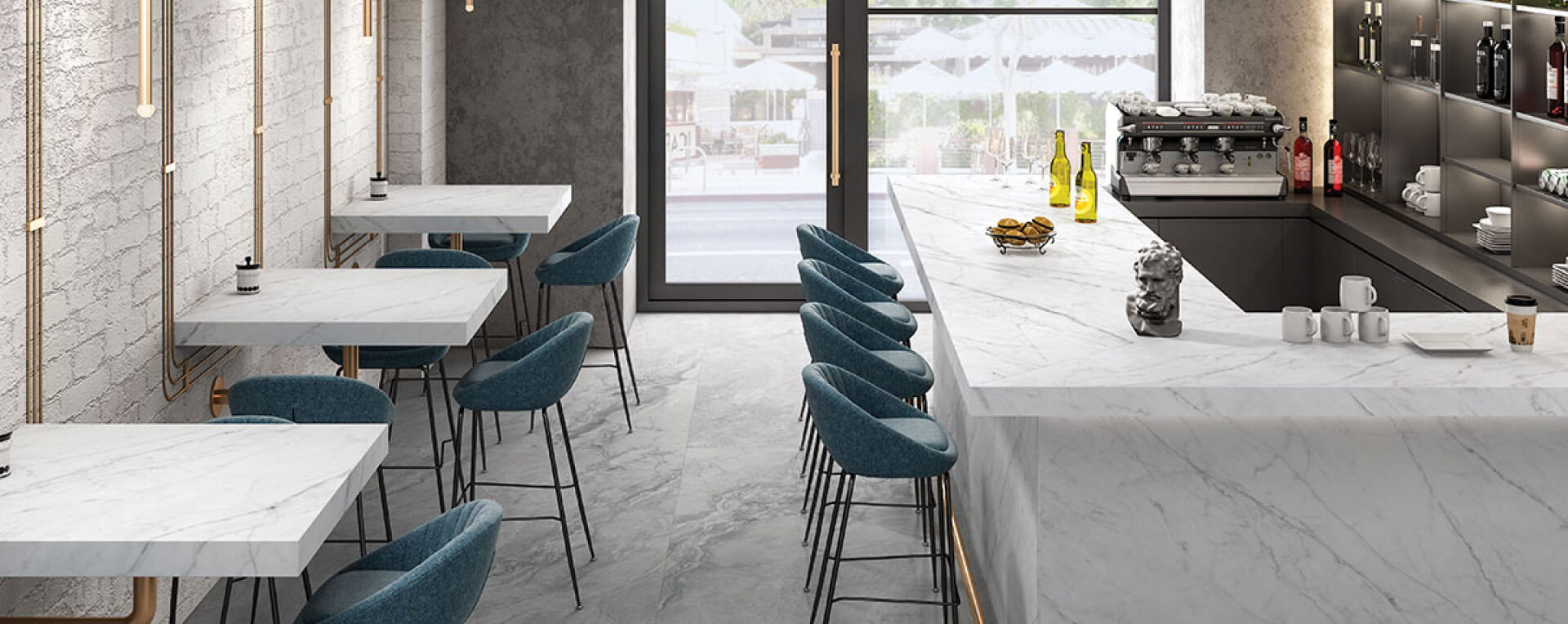
In commercial kitchens, Neotra excels under intense demands. High-traffic hotels with 20 mm slabs withstand cuts without cracks due to superior strength. Heat endurance suits live cooking, chef tables, hotels, and corporate kitchens. Sustainability appeals to luxury places. From luxurious lobbies to corporate pantries, Neotra delivers return on investment through durability, in which hygiene and aesthetics exist together. Neotra collections are fireproof and resistant to acids and detergents; the surface is hygienic, easy to maintain, and does not discolour over time nor require any treatment. The ultra-high-resolution digital decoration process allows for any aesthetic look with an absolute degree of realism.
Final Verdict: Neotra or Quartz?
When it comes to creating contemporary, high-end kitchens with performance, Neotra slabs are superior to quartz. Quartz delivers reliability when budget rules and uniform simplicity suffice. But for heat-proof, frost-resistant, sustainable luxury, Neotra wins. Neotra is engineered for future-focused kitchen designs, especially for premium spaces, while quartz is established. The superior durability, resilience, and design depth make it the future-proof choice for homeowners.