

What to Look for in a Kitchen Slab Surface
Choosing a kitchen slab surface goes beyond appearance. The right surface should combine durability, hygiene, easy maintenance, and long-term visual appeal for everyday kitchen use.
- Prioritise hygiene, durability, maintenance, and installation efficiency
- Assess resistance to abrasion, heat, impact, and chemical agents
- Choose durable slabs that withstand daily meal preparation, accidental knocks, and heavy cookware
- Prefer non-porous or well-sealed surfaces to reduce staining and bacterial ingress
- Select easy-to-clean materials that simplify daily maintenance in busy kitchens
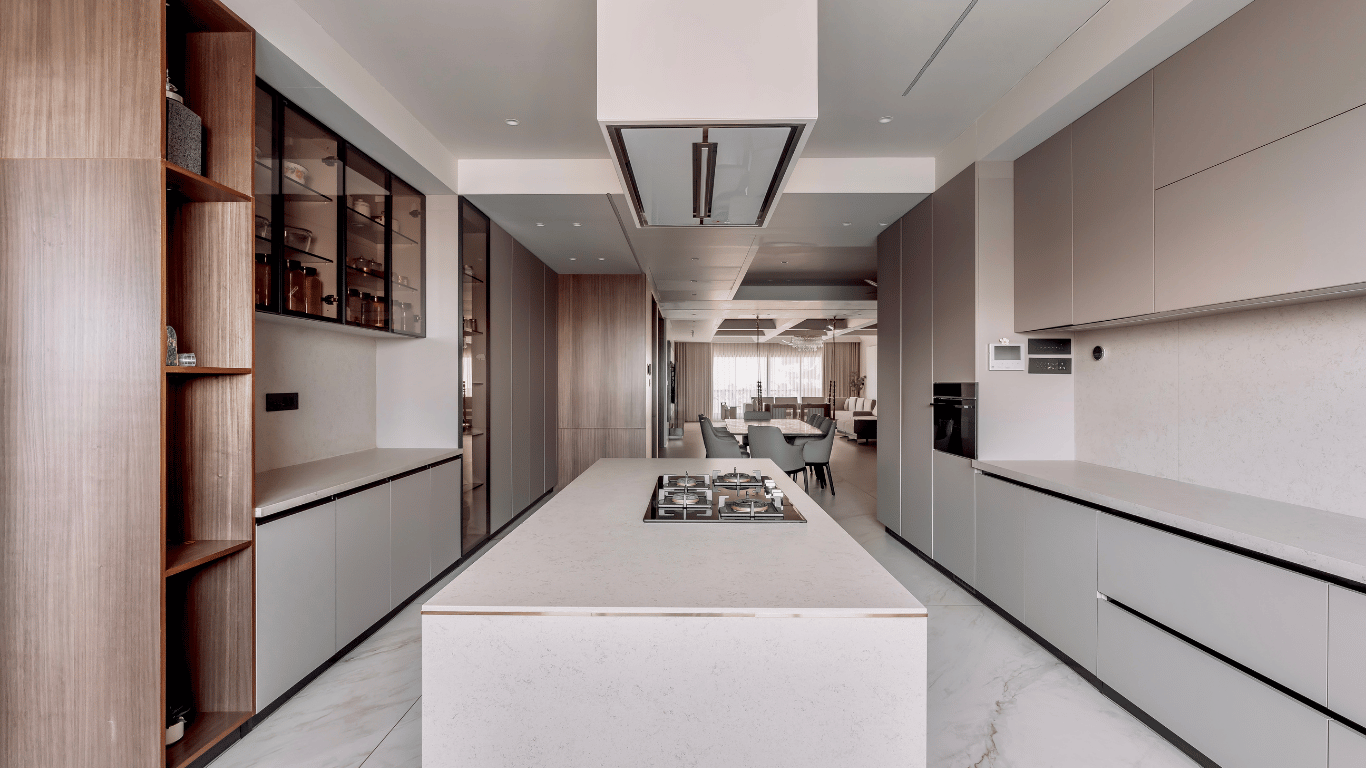
- Large-format slabs with minimal grout lines reduce seams and improve continuity across islands and splashbacks
- Look for surfaces that retain their colour and finish under UV exposure and regular cleaning
- Neutral, architectural finishes provide flexibility for future interior updates and design changes
Top 5 Durable Surfaces for Kitchen Slabs
Kitchen slabs require durable surfaces that last long. Here are the top 5 durable surfaces for kitchen slabs—
1. Neotra Engineered Surface Slabs
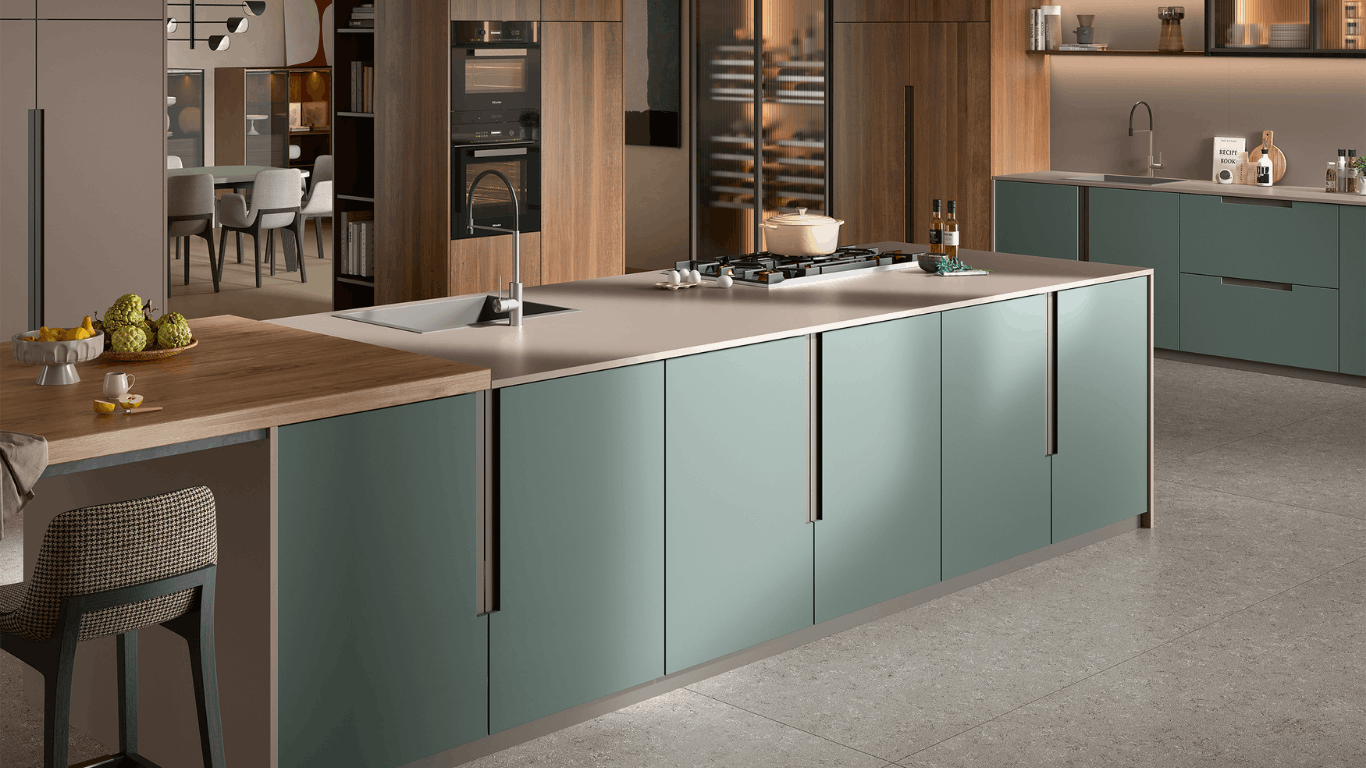
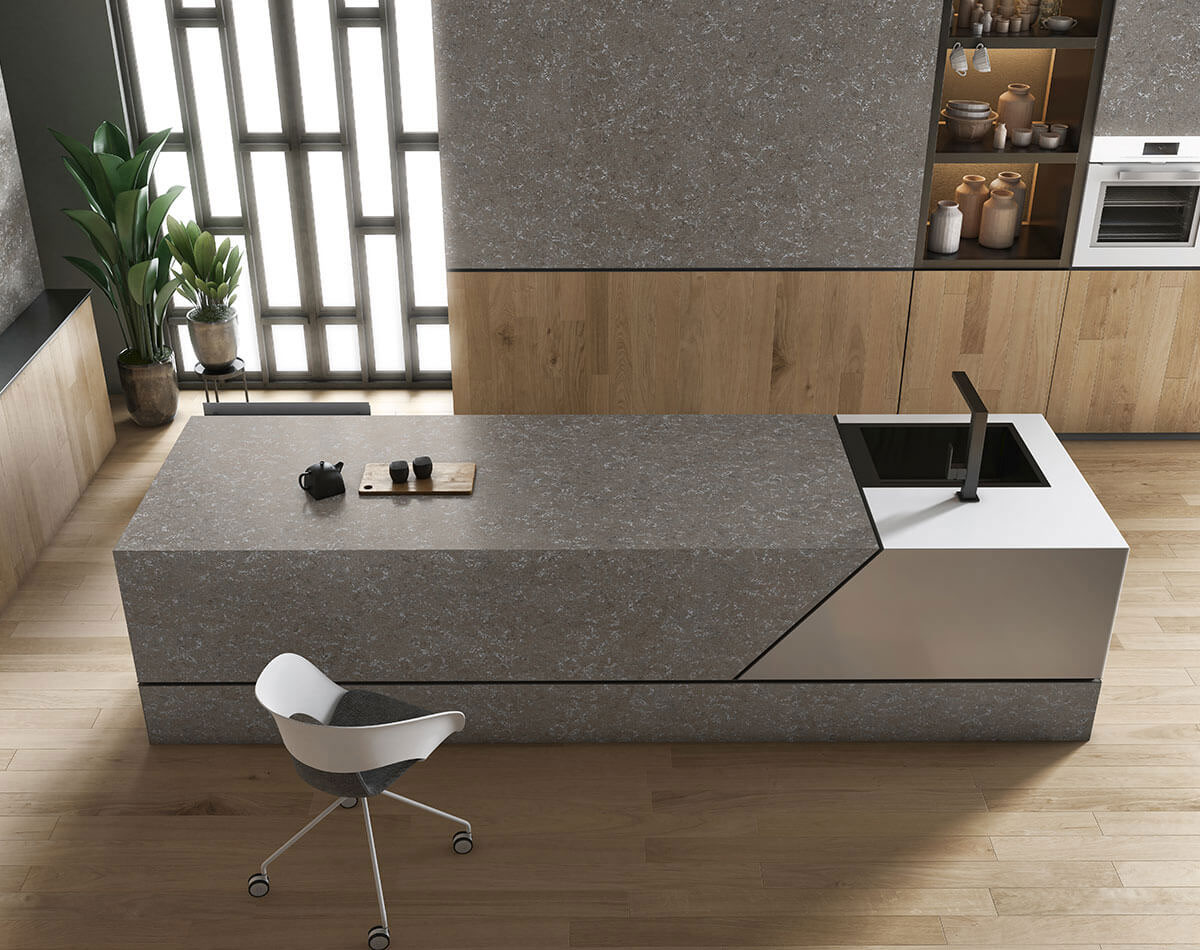
Neotra slabs are high-temperature sintered surfaces made from natural minerals, produced in large formats with multiple thicknesses to enable near-seamless installation and consistent finishing. Our slabs offer scratch and abrasion resistance, porosity, thermal stability, and liquid repellence that lower maintenance needs and support hygienic kitchen environments. Neotra’s manufacturing control enables reliable veining and uniform thickness for refined detailing in modern, durable kitchen slabs.
2. Granite
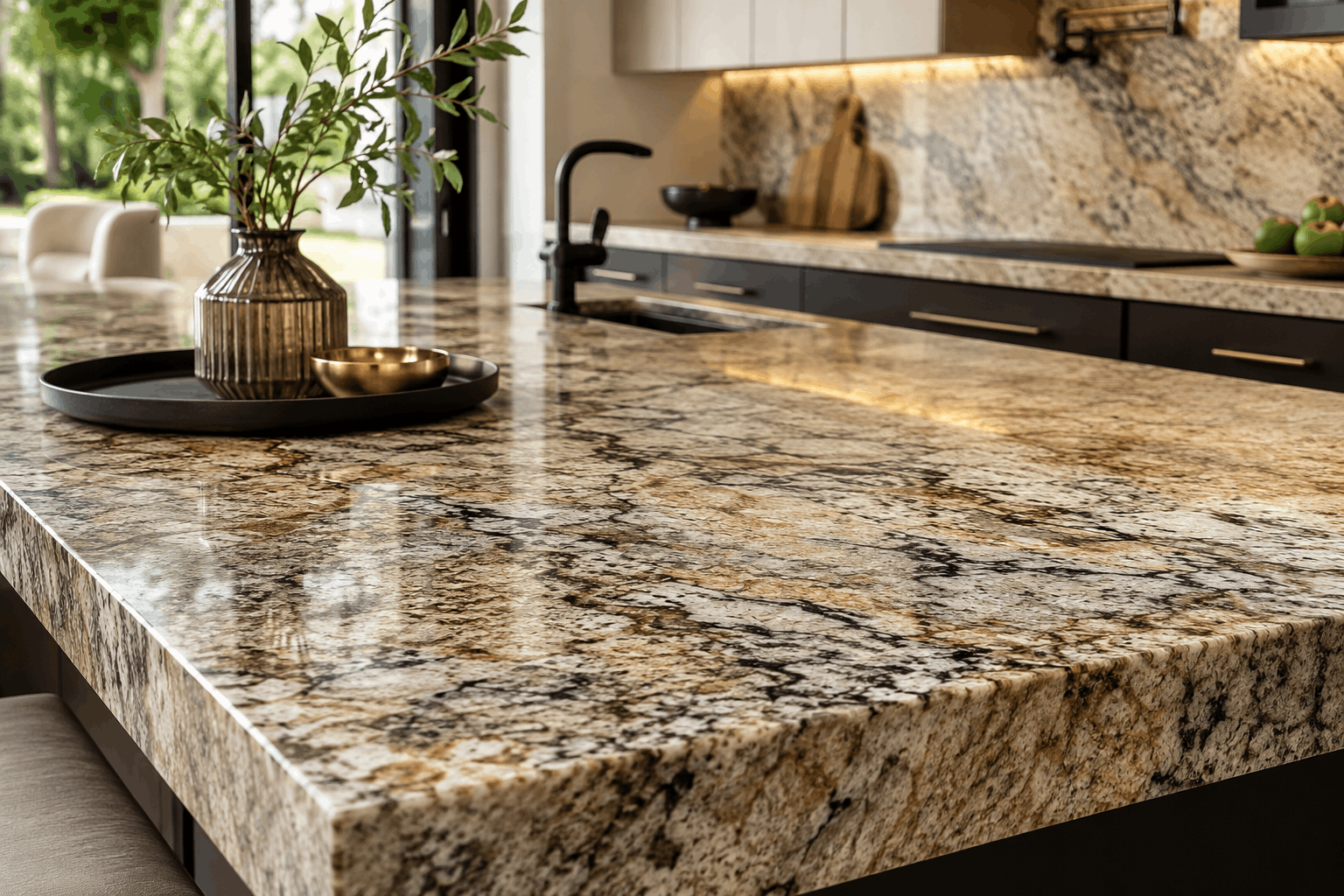
Granite is a natural hard igneous stone valued for thermal stability and scratch resistance; each slab has unique mineralogy and veining, delivering aesthetics attractive to high-end projects. While inherently durable, granite exhibits variable porosity and typically benefits from periodic sealing to maintain stain resistance. Installation requires experienced handling due to potential natural fissures and weight, but when specified and maintained correctly, grnite provides long-lasting, low-wear performance.
Also Read: Quartz vs Granite: Which Countertop Material Is Better?
3. Quartz
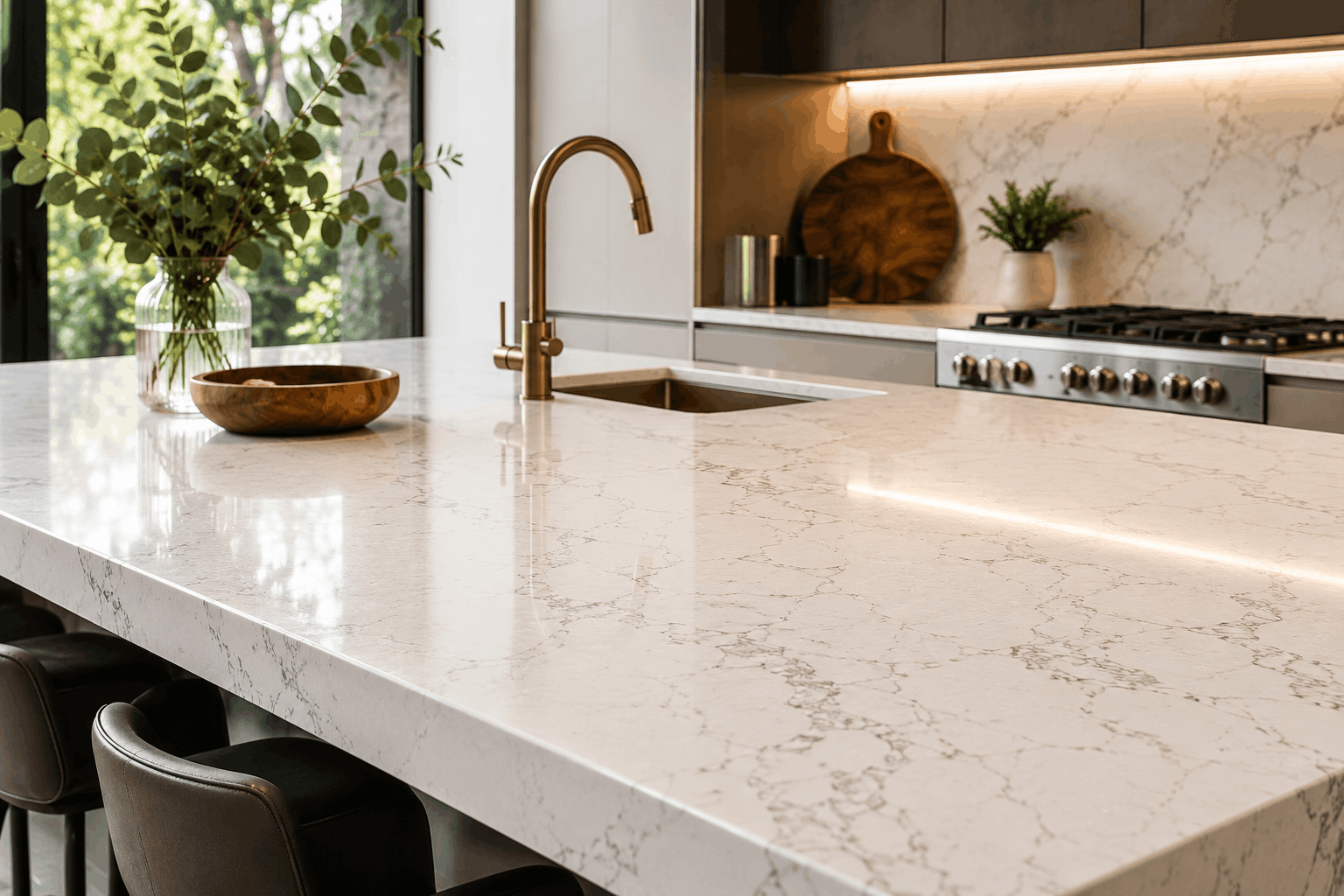
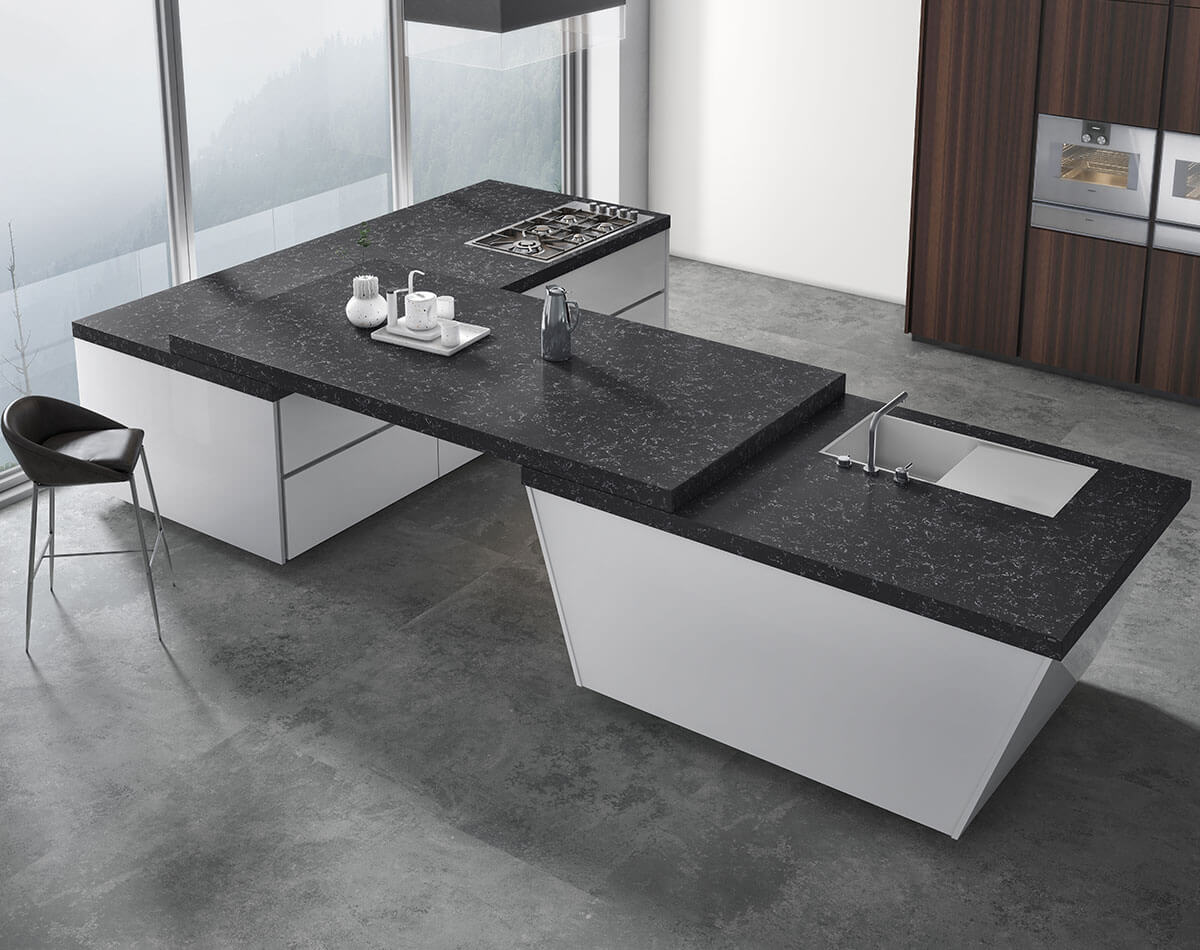
Engineered quartz comprises predominantly crushed quartz bound with pigments and resins to form a low-porosity, highly consistent slab that resists abrasion and staining without routine sealing. It offers predictable colour and pattern control for repeatable design outcomes, simplifying large-slab matches. Quartz handles everyday kitchen stressors well but is more sensitive to sustained direct heat than sintered slabs; protective trivets are recommended when using quartz.
Also Read: Neotra vs Quartz: Which Surface Is Best for Modern Kitchens
4. Porcelain Slabs
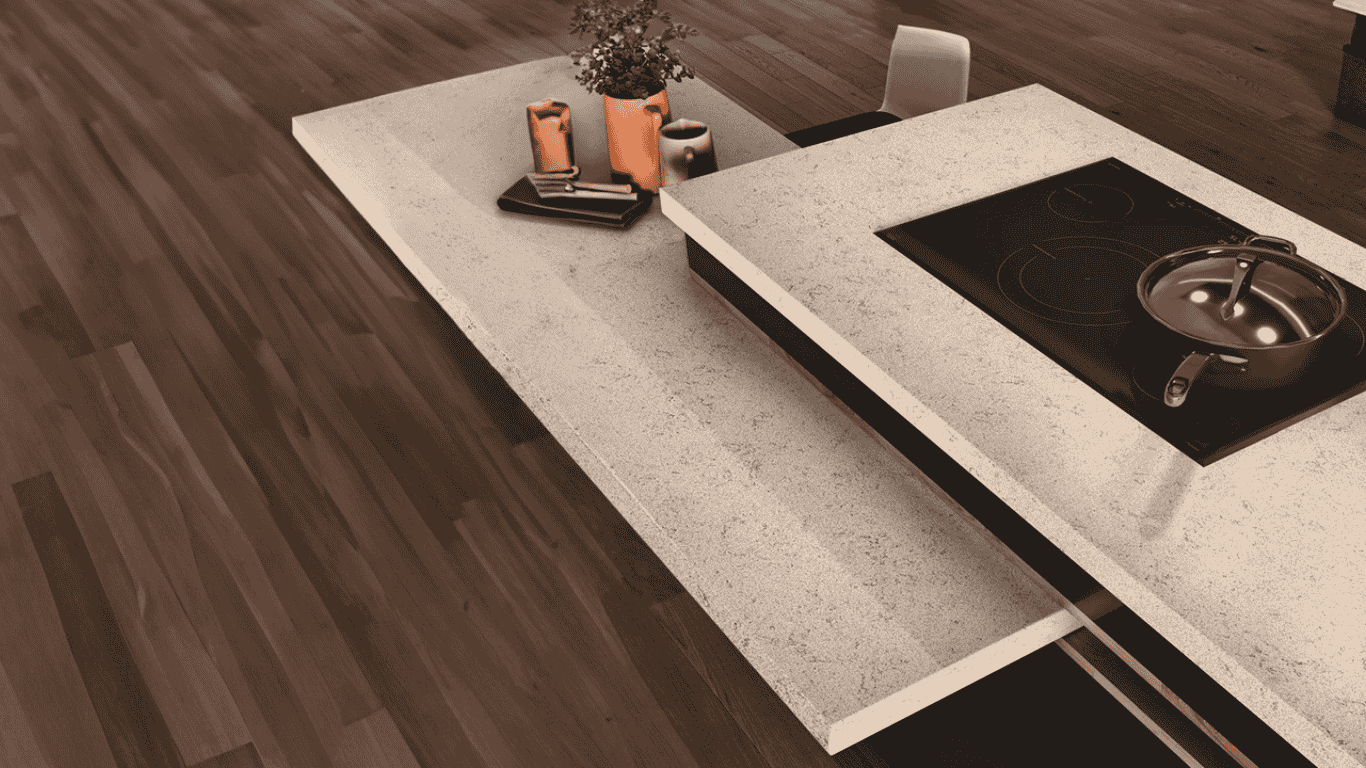
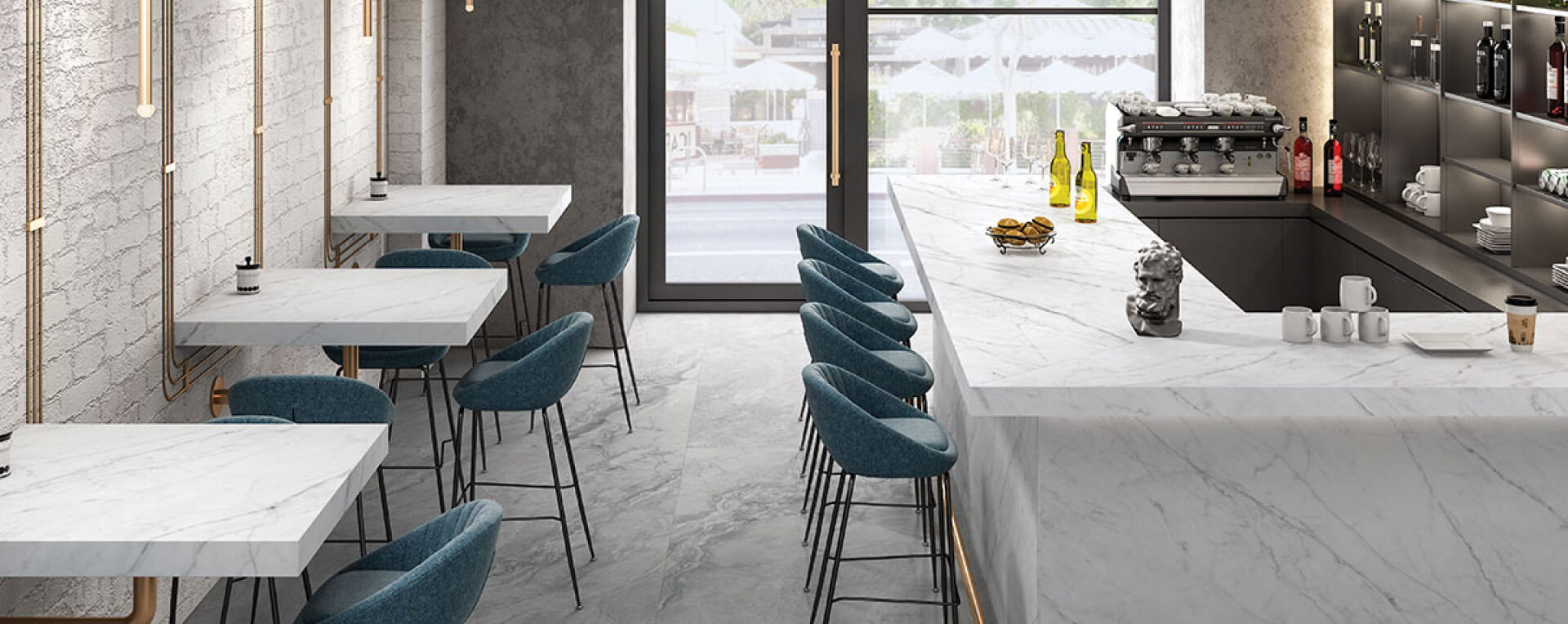
They are sintered at very high temperatures to create dense, near-zero-porosity panels with strong stain, scratch, and UV resistance, suitable for continuous outdoor and indoor applications. Large-format porcelain supports minimal seams and thin-profile detailing while maintaining thermal stability, making it more tolerant of hot cookware than many resin-based materials. Fabrication and installation practices are required for edge treatments and complex cutouts
5. Marble
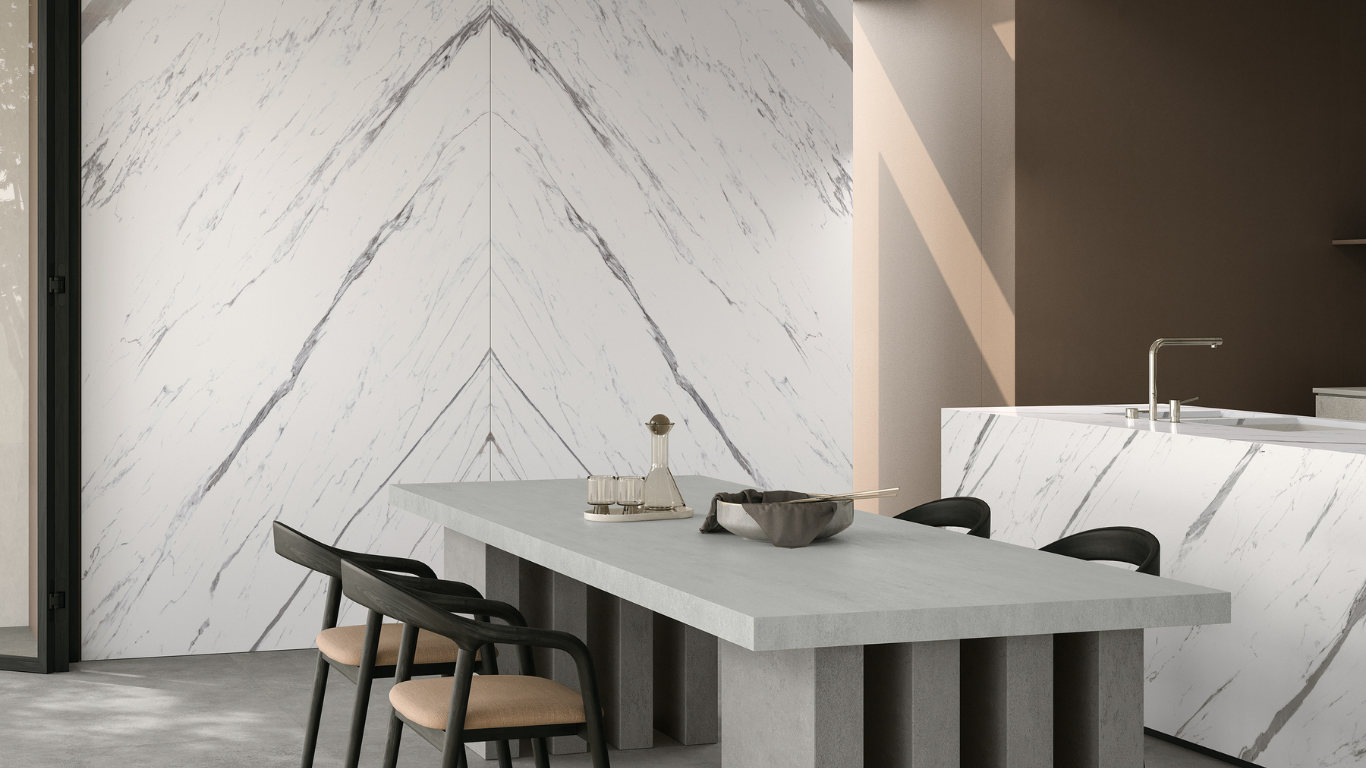
Provides unmatched veining and luminosity for premium kitchens but is softer and more porous than other options, making it prone to scratches, etching, and stains under heavy daily use. Frequent sealing, protective practices, and gentle cleaners are essential to preserve appearance. For design-led projects where aesthetic impact outweighs maintenance demand, marble delivers a signature, high-end interior.
Why Neotra Is the Best Surface for Kitchen Slab in Modern Homes
Modern kitchens demand surfaces that perform under daily culinary stress while contributing to cohesive, architectural interior language. Neotra slabs are engineered to achieve both requirements.
Here are the reasons why Neotra is the best durable kitchen slab for modern homes:-
- Heat and Scratch Resistance for Daily Kitchen Use
Our slabs are made solely from minerals and fired at high temperatures, delivering a high surface hardness that resists abrasion and knife marks, making them suitable for daily food preparation zones. The material’s thermal stability withstands typical cookware temperatures and brief hot contacts better than many resin-containing surfaces. The standard best practice is advised to avoid localised thermal shock. This combination reduces visible wear and helps maintain finish integrity over time.
- No-Grout Seamless Installation
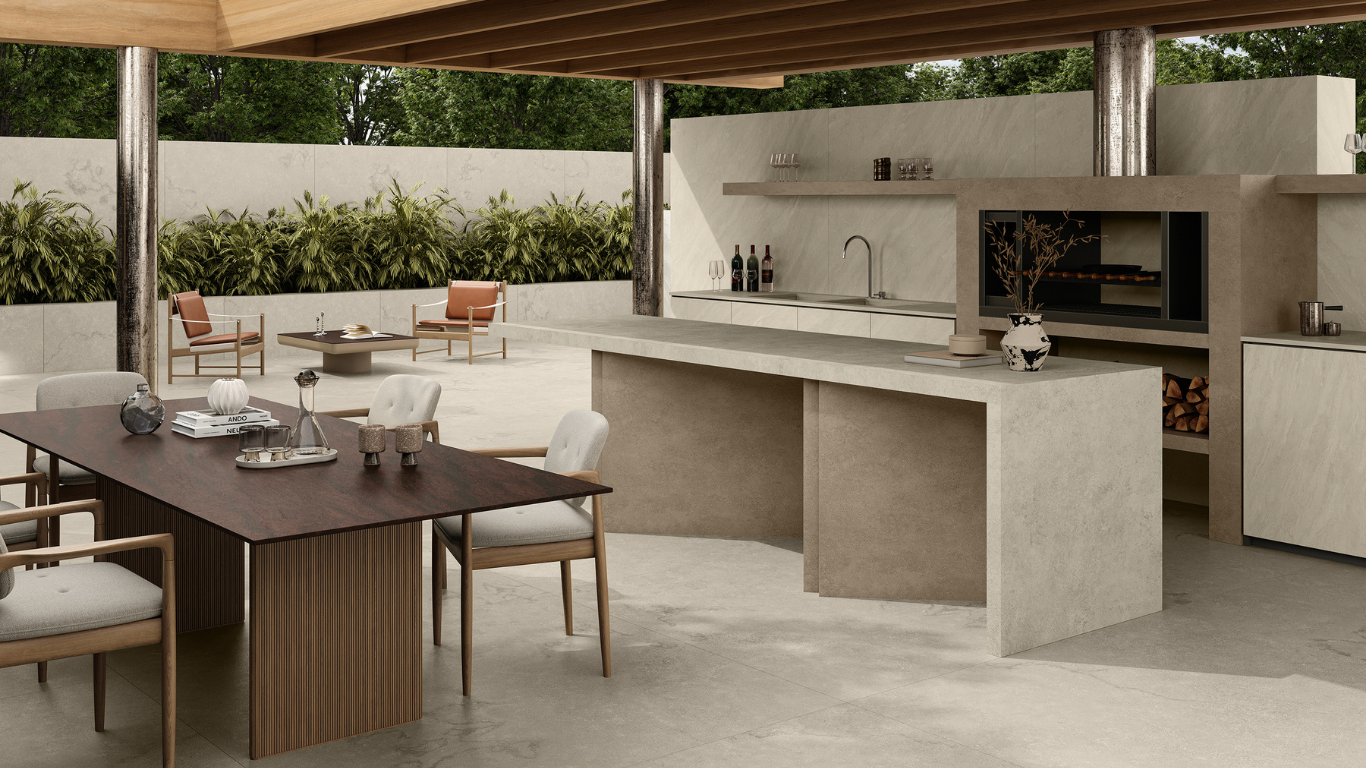
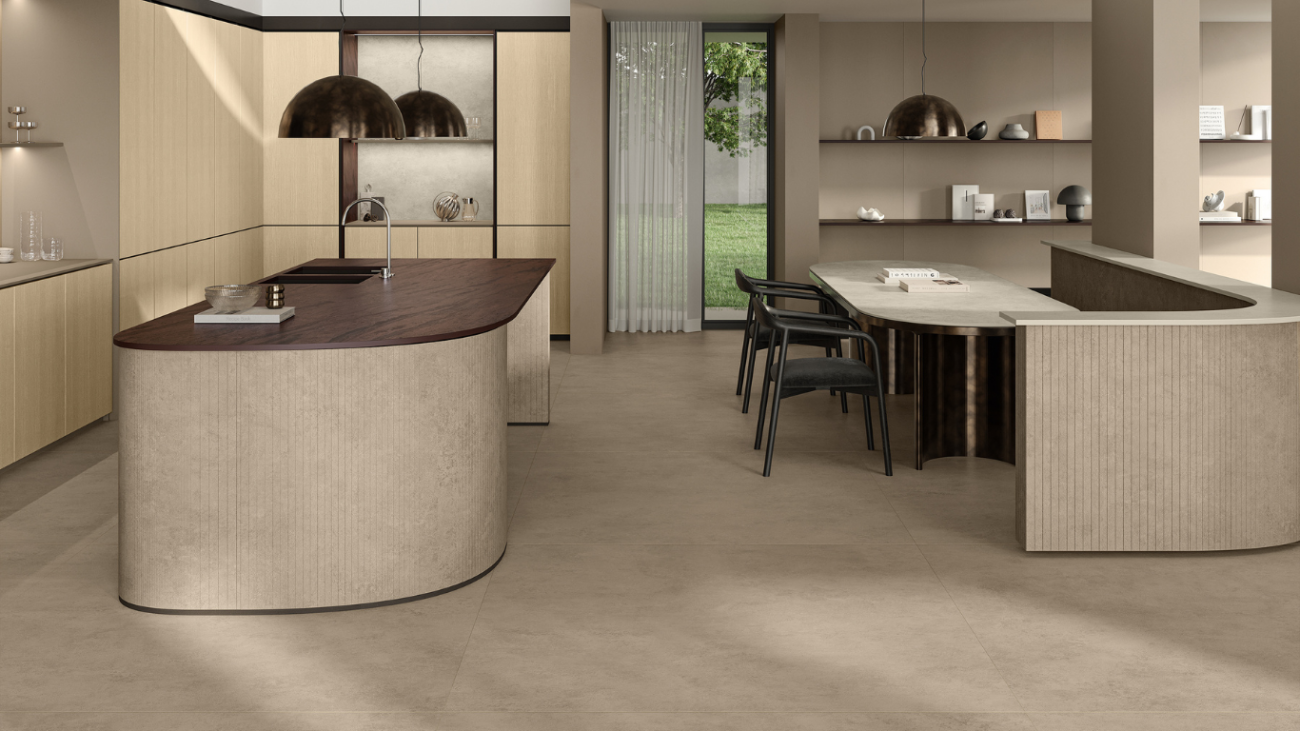
Large-format slabs in multiple thicknesses enable near-seamless installations across continuous splashbacks and islands, reducing grout lines that trap dirt and disrupt visual flow. Controlled thickness improves seam tightness and adhesive bonding, facilitating hygienic surfaces and an uninterrupted architectural aesthetic favoured in premium modern kitchens. For designers, the capability supports clean profiles and repeatable bookmatching across runs while simplifying long-term maintenance.
Also Read: Stunning Kitchen Floor Ideas to Match Your Modern Countertops
- Design Flexibility from Island to Splashback
Neotra offers a curated palette and large formats that allow matching kitchen countertops and islands for cohesive kitchen design. Predictable vein patterns and surface finishes support bookmatching and refined detailing, waterfall edges, thin profiles, and integrated thresholds without sacrificing structural performance when properly specified and fabricated. This design flexibility enables architects and homeowners to realise premium unified surfaces across multiple kitchen elements.