
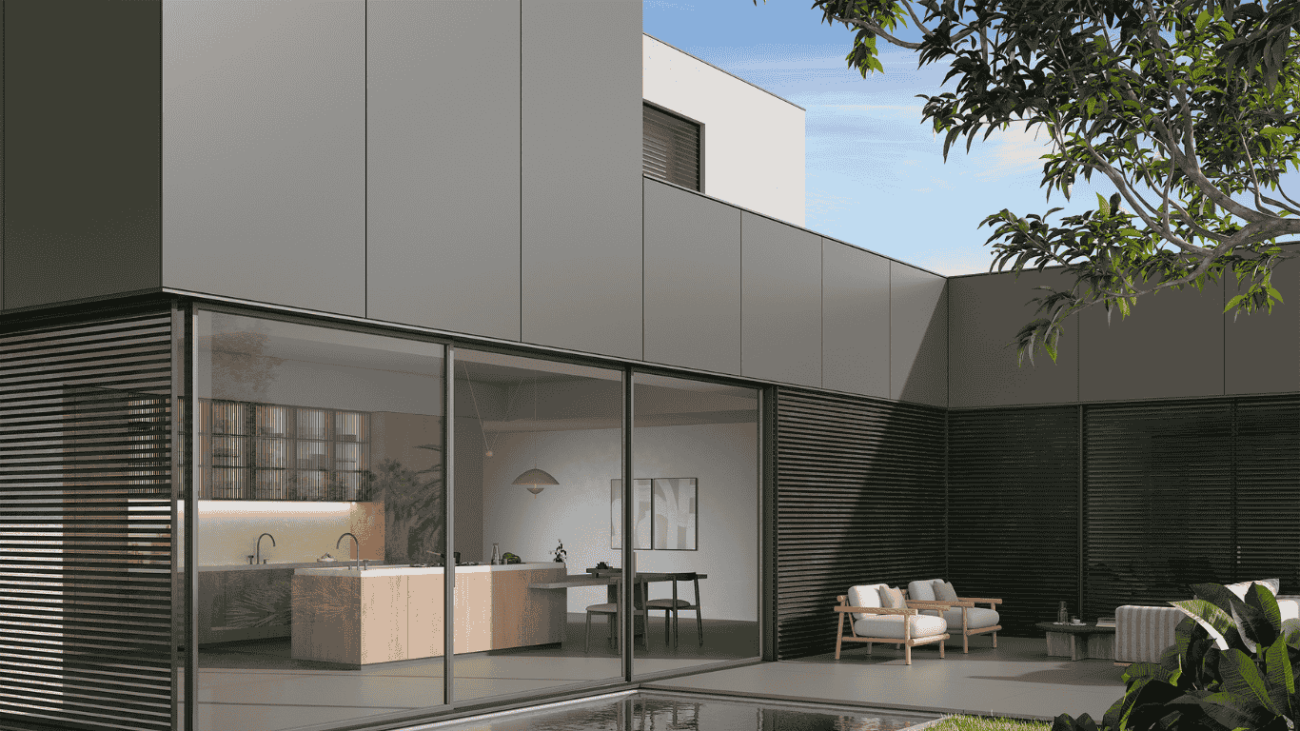
The Architect’s Surface Dilemma: Traditional vs Advanced
Architects often balance material authenticity with project performance. Traditional materials offer timeless appeal, while advanced surfaces address many of the practical challenges faced in modern construction.
| Factor | Advanced Surfaces | Traditional Materials |
| Appearance | Consistent finishes with contemporary aesthetics | Natural textures with unique variations |
| Joints | Large-format surfaces minimise visible joints | Multiple joints may interrupt visual continuity |
| Weight | Lightweight construction reduces load requirements | Heavier materials can increase structural loads |
| Installation | Faster and more efficient installation | More labour-intensive and time-consuming |
| Design Consistency | Uniform appearance across large areas | Natural colour variations between pieces |
| Maintenance | Low-maintenance and easy to clean | May require regular upkeep and sealing |
| Weather Resistance | Engineered for long-term outdoor durability | Performance varies by material type |
| Project Efficiency | Supports streamlined project execution | Can increase construction complexity |
Top 7 Reasons Architects Choose Advanced Surfaces
Advanced surfaces for architecture are better than traditional surfaces, but here are the top 7 reasons architects choose advanced surfaces:
1. Large-Format Design Freedom
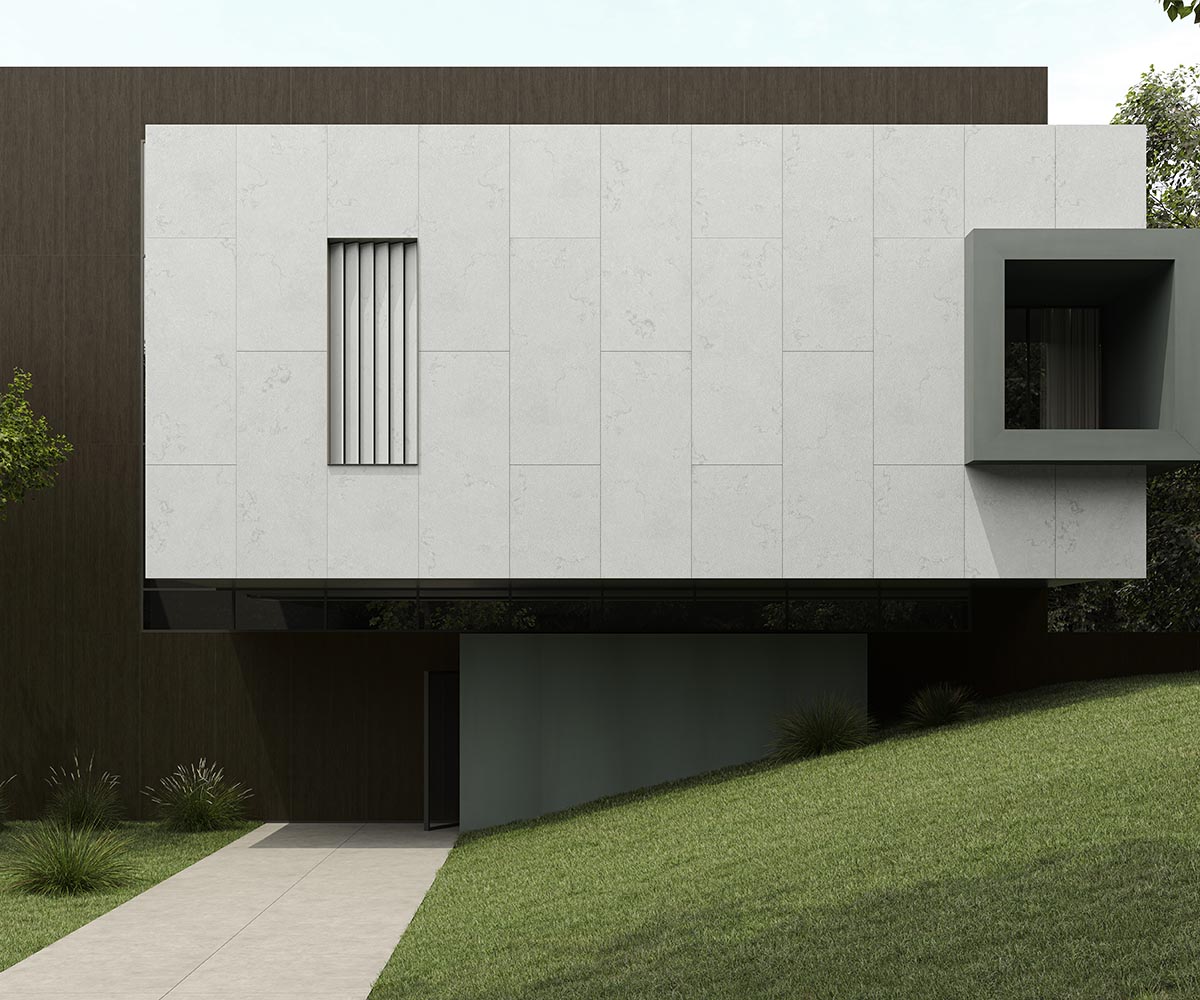
Large-format slabs change how architects conceive plans and transitions. Fewer joints means reduced visual clutter, cleaner shadow lines, and the ability to craft uninterrupted surfaces that emphasise form and proportion. This scale shortens installation time and reduces substrate complexity while supporting bespoke cutouts and integrated detail for windows, doors, and balconies. For residential and commercial projects, the aesthetic impact of fewer breaks with consistent surface texture creates a premium, unified expression that aligns with modern architectural language.
2. Indoor and Outdoor Material Continuity
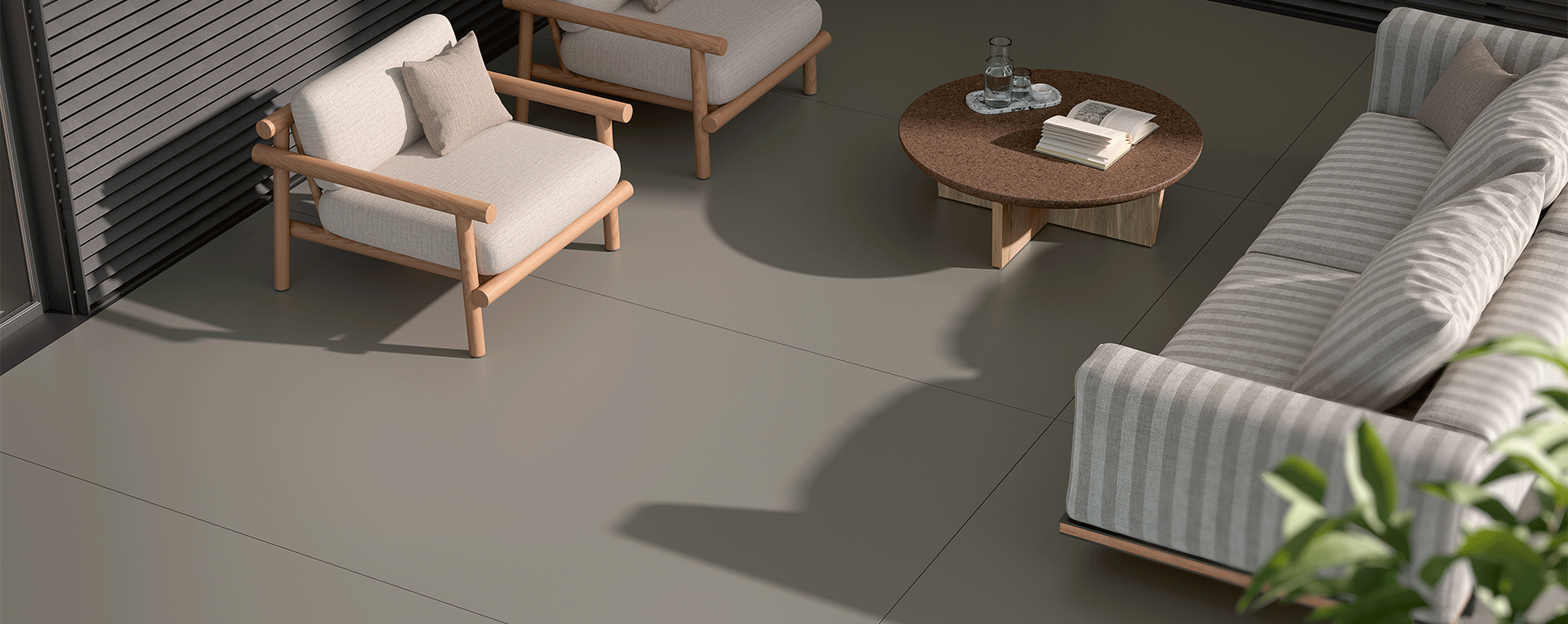
Using the same advanced surface in modern architecture across the interior and exterior creates the same material palette that strengthens spatial continuity. Materials that match technically and resist moisture, UV, and temperature changes allow for consistent colour and texture from the lobby to the terrace. This continuity simplifies maintenance regimes and preserves outdoor surface design intent through seasonal changes. Architects gain confidence specifying single materials across varied contexts without compromising performance, enabling a cohesive narrative from public facades to private interiors.
3. Superior Weather and UV Performance
Unlike natural stone or quartz, Neotra’s advanced surfaces are formulated to resist UV degradation and staining, which is critical for exposed facades and outdoor installations. Stabilised pigments, protective finishes, and low-porous bodies prevent colour shift and moisture-driven deterioration. Manufacturers typically validate these properties with accelerated weathering and performance testing, giving specifiers warranties and lifecycle planning. For projects in high-sun or exposed settings, engineered materials reduce the risk of premature visual decline and recurring restorative costs.
Also Read: Advanced Surfaces vs Quartz: Why Neotra Outperforms Quartz
4. Lightweight for Structural Flexibility
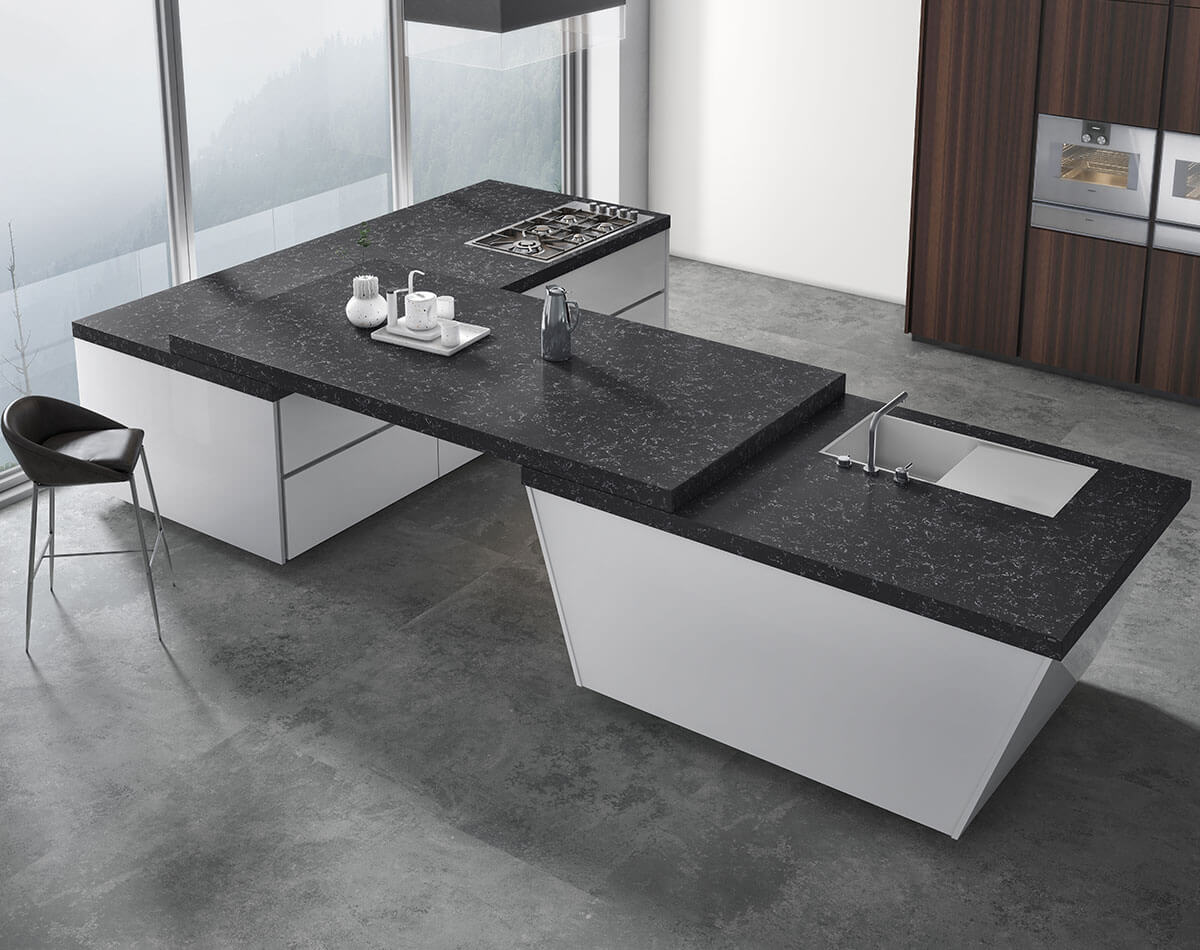
Thin, engineered slabs deliver high strength at significantly lower weight than quarried stone or concrete. This reduced dead load enables slimmer supporting systems, feasible retrofits, and more geometries such as extended cantilevers. Lighter materials cut transport and handling complexity and shorten installation timelines on constrained sites. Structural savings may translate to smaller foundations or reduced framing, which can lower overall project cost. For architects balancing expressive forms and realistic budgets, lightweight advanced surfaces unlock options that heavy traditional materials would prohibit.
5. Consistent Aesthetic at Scale
Unlike natural stone with its quarry-dependent variation, Neotra surfaces deliver consistent colour, texture, and finish across every slab, which is critical for large-scale architectural uniformity. Predictable outputs reduce on-site sorting and the risk of batch mismatch and maintain the designer’s approved visuals. For multi-branding developments or branded rollouts, consistent aesthetics protect design intent and client identity over time.
Also Read: How Advanced Surfaces Revolutionise Modern Home Facades
6. Low Maintenance and Long Lifecycle
Neotra’s non-porous, durable surfaces require no sealing, minimal cleaning, and no replacement cycles, delivering a lower total cost of ownership in architectural projects. Over a building’s lifetime, fewer repairs and replacements lower operational costs and material waste. Combined with manufacturer warranties and maintenance guidance, these properties create predictable lifecycle budgets. For owners, advanced surfaces for architecture represent a balance of sustained appearance, lower total cost of ownership, and reduced downtime.
7. Broad Design Range for Every Brief
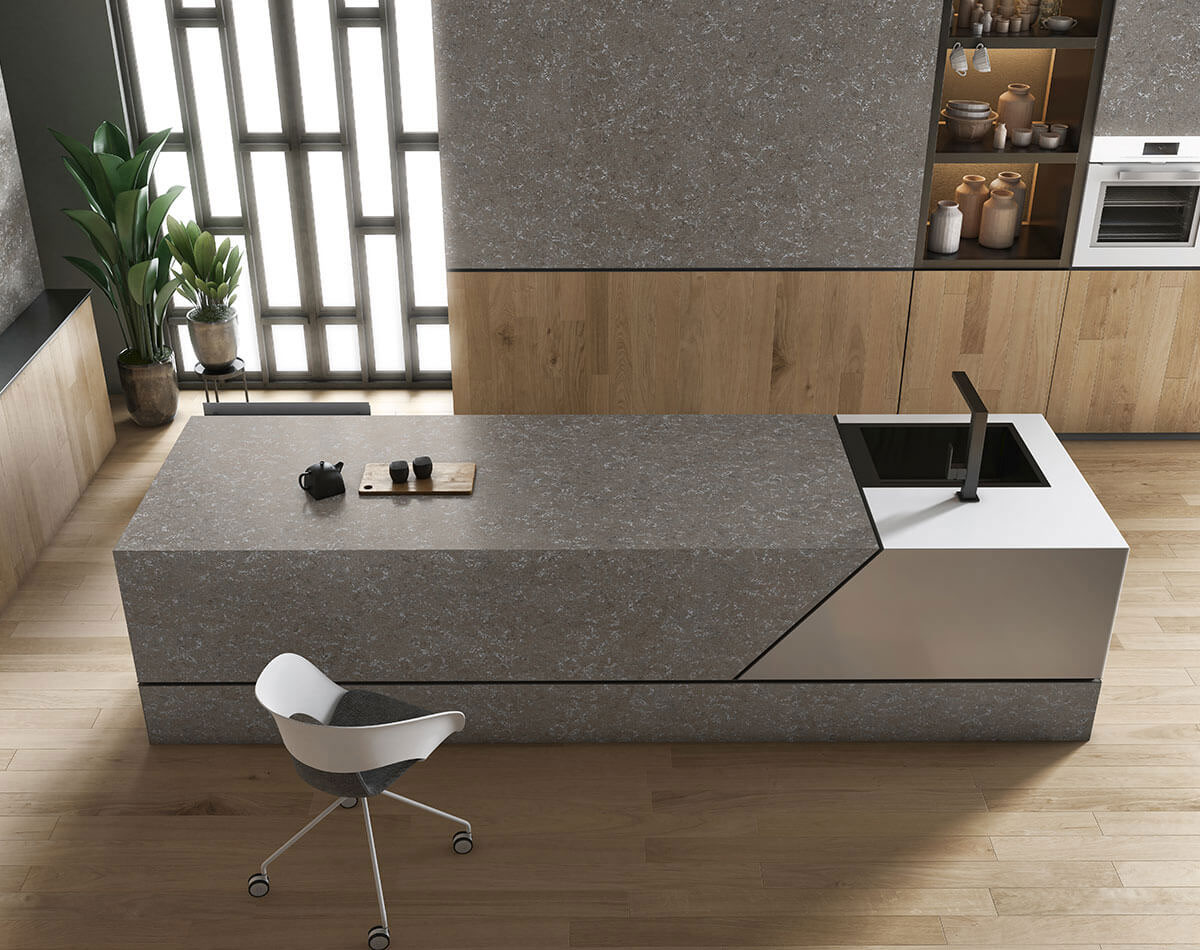
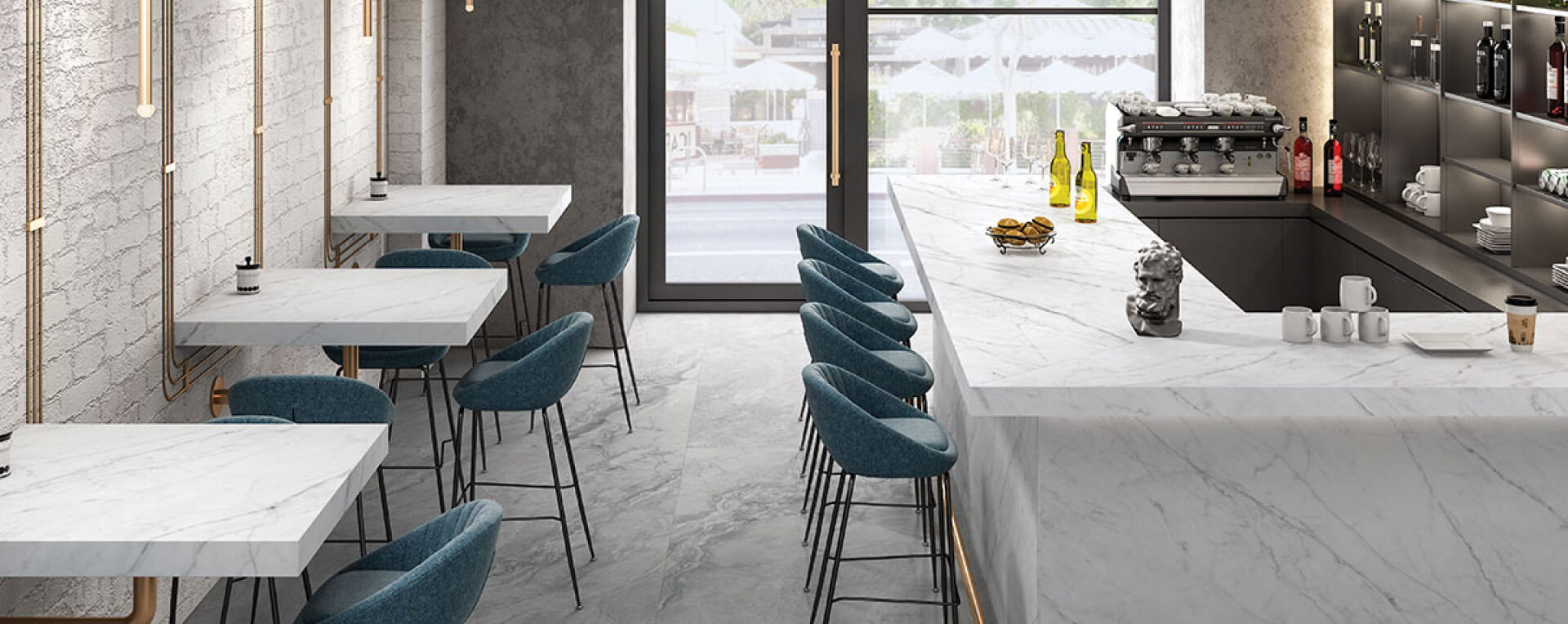
From the warm neutrals of Pastelli to the granular looks of Spa, and from the marble look of Inemnsa to the warmth of the wood look to the Accordi collection, Neotra gives architects a versatile design palette for residential, commercial, and public architecture. Neotra offers various thickness options and sculpted surfaces to meet different functional requirements. This versatility allows architects to adopt a uniform material system across retail, residential, hospitality, and institutional projects, reducing coordination risk while preserving design diversity.
Why Neotra Is the Architect’s Advanced Surface of Choice
Neotra engineered surfaces are designed to meet the aesthetic and technical demands of modern architecture, combining performance, durability, and precision for interior and exterior applications.
- High flexural strength and robust mechanical performance for demanding environments
- Ultra-low porosity and waterproof surfaces that support long-term durability
- Large-format slabs enable minimal-joint aesthetics and seamless visual continuity
- NSF and IGBC certifications support hygiene, sustainability, and performance standards
- Tight tolerances allow precise edge profiles and clean architectural detailing
- Multiple thickness options suitable for facades claddign, walls, floors, and cladding systems
- Composite-reinforced solutions support ventilated cladding and exterior applications
- Low-maintenance surfaces designed for safety, durability, and lasting visual appeal
- Combines material science with measurable performance for modern architectural projects