
Why Sintered Stone and Engineered Surfaces Are Ideal for Kitchen Shelves
Kitchen shelves need materials that withstand daily moisture, heat, and impact while maintaining their appearance with minimal maintenance.
- Resist moisture, heat, oil, and stains, making them ideal for demanding kitchen environments.
- High heat resistance allows shelves near the hob to remain unaffected by rising temperatures.
- Scratch and impact resistance helps keep edges crisp despite the everyday use of bowls, jars, and small appliances.
- Dense, non-porous construction reduces water absorption and supports long-term durability.
- Consistent colour and pattern throughout the material ensure cut edges and exposed sides look as refined as the surface itself.
- This seamless finish is particularly valuable for open kitchen shelving, where every visible edge contributes to the overall design.
Floating Kitchen Shelf Design Ideas
Here are the floating
1. Full-Width Counter-to-Ceiling Neotra Shelf Stack
A single Neotra surface, cut to the full width of the counter, repeated across two or three levels between counter and ceiling, forms a vertical stack that reads as one continuous design statement. Each shelf carries the same slab pattern, so veining flows upward in sequence. This suits narrow gallery kitchens, where the stack adds storage without adding visual weight.
2. Single Statement Stone Top Shelf
One thick Neotra shelf, positioned at eye level and left bare, works as a display ledge for a few considered objects. The strength of engineered surfaces allows a slim profile without added support brackets underneath, keeping the line clean. It suits kitchens where restraint, not storage volume, is the intent.
3. Matching Shelf and Backsplash Materials
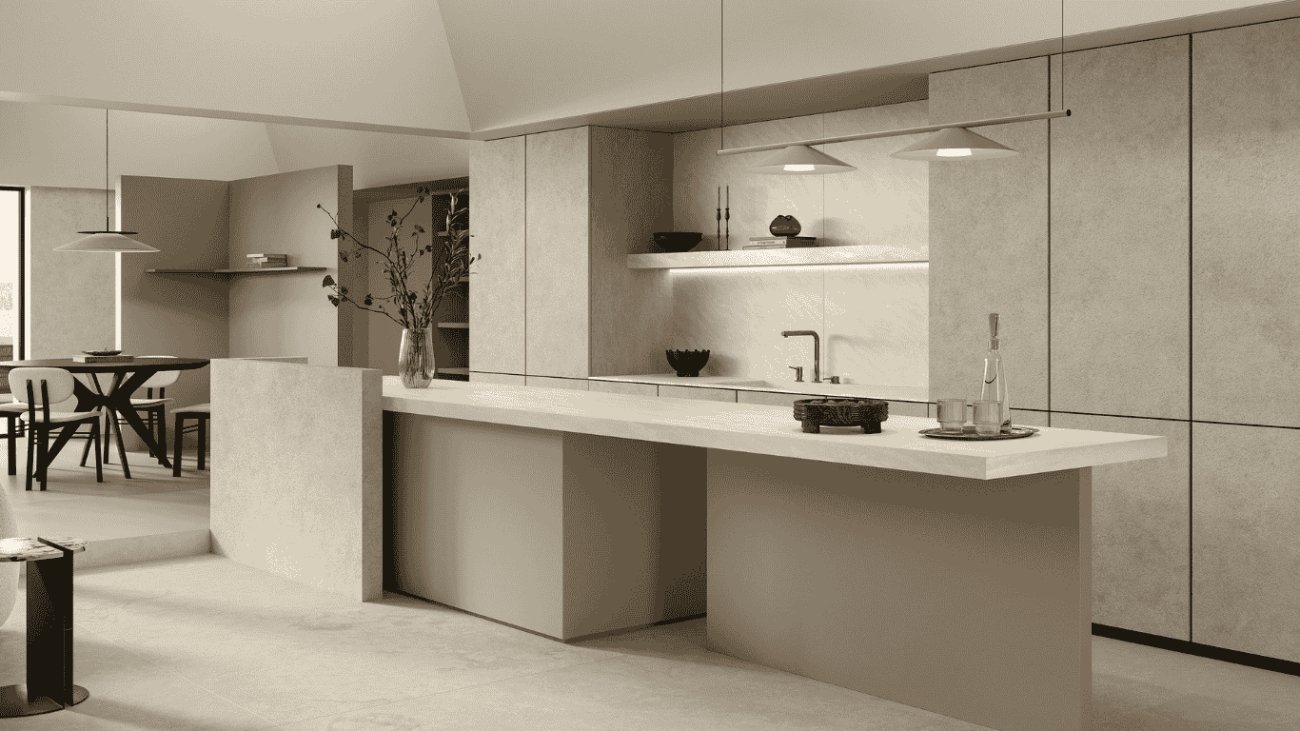
When the floating shelf and the backsplash behind it are cut from the same Neotra slab, the walls read as one continuous surface rather than separate fixtures. This pairing of words with a bold concrete look or bold veins, where pattern continuity becomes the anchor of the cooking wall.
Also Read: Latest Slab Material Trends for Kitchen Counters & Islands
4. Corner Floating Stone Shelf
A corner shelf on Neotra’s surface makes use of an otherwise dead angle, often above a sink or beside a window. Because engineered slabs can be shaped to a seamless corner joint, the shelf reads as a single continuous piece rather than two boards meeting at an angle. It suits small kitchen storage shelves, where every corner needs to justify its presence.
5. Alcove Shelf with Neotra Surface Lining
When a kitchen has a built-in alcove or niche, lining its base, back, and shelf in the same Neotra surface turns a structural gap into a designed feature. The continuous material treatment makes the alcove feel intentional. This idea suits small appliances, curated displays, or spice storage, where the surrounding frames what sits inside.
6. Sintered Stone Spice Shelf Above Hob
A narrow shelf in the Neotra surface, fixed above the hob, holds oils, spice jars, and daily-use containers within easy reach. Because sintered surfaces resist stain and heat, one of the few shelf placements where proximity to cooking is an advantage rather than a maintenance risk. Grease wipes off cleanly, and the surface does not absorb odour or discolour.
Also Read: 12 Small Kitchen Shelves Ideas for Space-Saving Storage
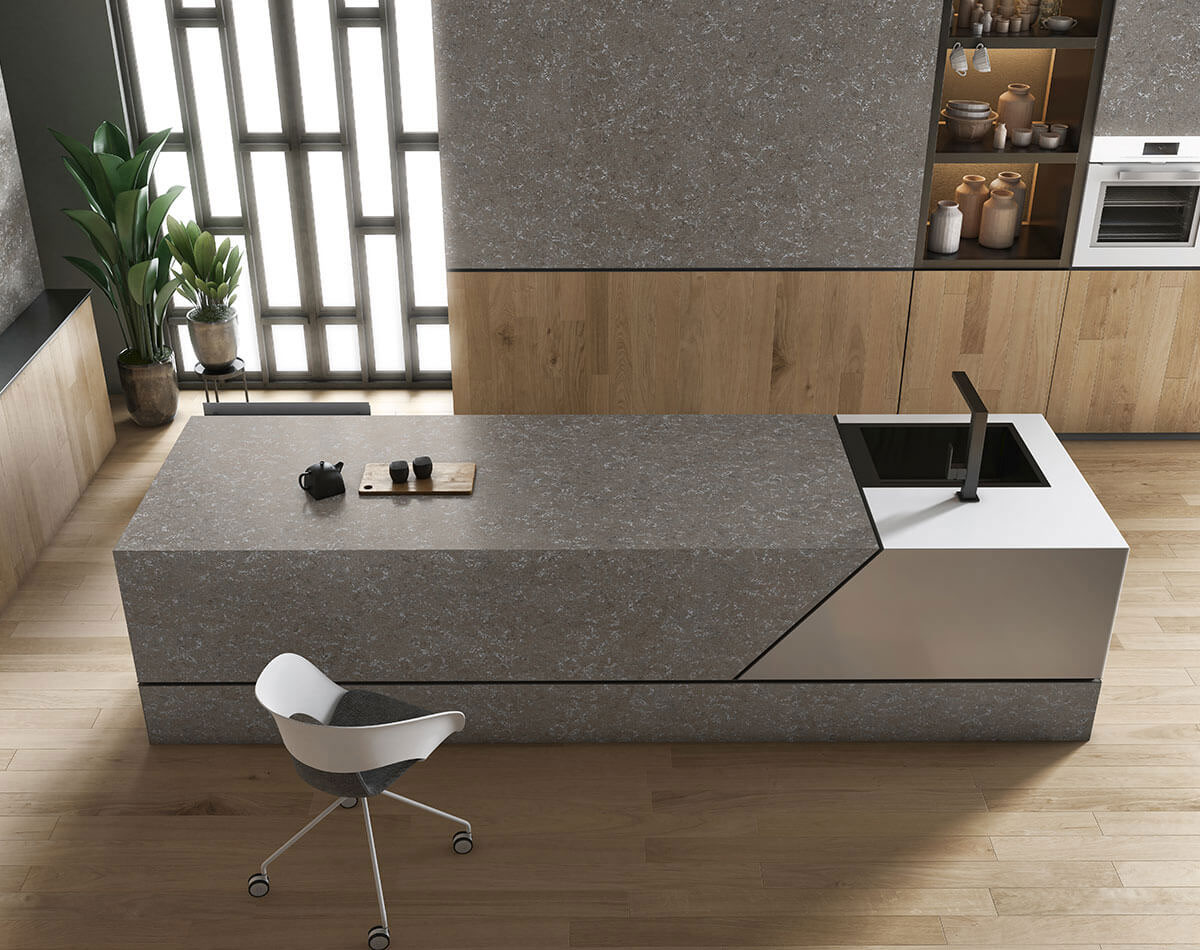
7. Open Stone Shelf as Kitchen Island Extension
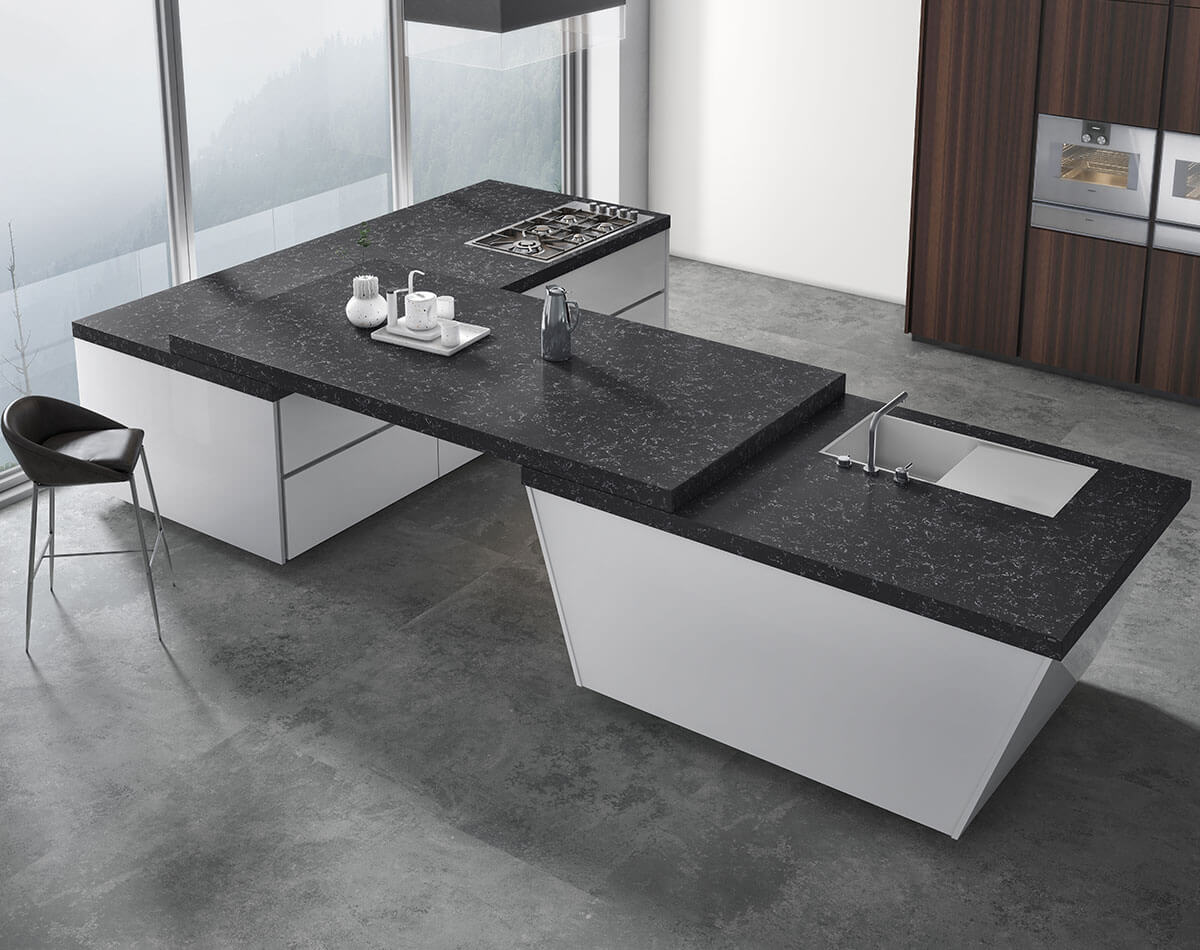
Extending the island countertop outward as an open Neotra shelf, unsupported by brackets or legs, creates a cantilevered ledge for display or casual seating. The engineered surface’s strength allows this overhang without visible support, keeping the island’s silhouette light. It works particularly well paired with waterfall edges, where the same slab wraps from solid surface kitchen countertop to shelf without a visible seam.
How to Specify and Install Neotra Surface Kitchen Shelves
Neotra surfaces are available in 5.5mm, 12mm, and 20mm thicknesses; specify based on span and support. The 5.5mm slab suits short, well-supported spans or shelves. 12 mm boards for most standard kitchen shelf widths without extra backing. 20mm is chosen for statement or unsupported cantilevered shelves, where thickness carries the structural and visual weight. Confirm pattern, finish, and cut-outs for lighting or brackets before fabrication. For installation, shelves are fixed to a concealed mounting rail or cleat anchored into wall studs or masonry, with silicone-based adhesive adding stability at contact edges. For the best installation, it is best left to an experienced mason.