

Why Spiral Staircases Suit Compact Indian Homes
Indian homes are increasingly compact, and every design choice needs to justify its footprint. Spiral staircases solve this elegantly; here’s why they work so well –
- Flexible placement – fits into courtyards, balconies, or besides walls without disrupting layouts.
- Material versatility – works with glass, wood, steel, or engineered surfaces to match any interior style.
- Minimal floor area – a single circular footprint replaces the long run a straight staircase needs.
- Visual lightness – open risers and slender railings keep interiors feeling airy and not boxed in
- Design statement – doubles as a sculptural centrepiece rather than a purely functional element
- Multiple settings – suits multiple settings, equally at home outdoors, indoors, or on rooftops
15 Spiral Staircase Design Ideas
Each spiral staircase design brings its own character, depending on the finish, material, and setting it’s built for. Here are the 15 ideas to consider for compact homes.
Also Read:
1. Steel Spiral Staircase Design
Steel spiral staircases offer strength without visual heaviness. Their industrial edge with a slim profile suits modern homes and duplexes. Brushed or powder-coated finishes add durability and a refined look, making steel a dependable choice for both indoor and semi-outdoor staircase applications in compact layouts.
2. Wooden Spiral Staircase for Warm Interiors
Bring warmth to spiral staircases, softening the geometry of the spiral form. This design suits homes with a transitional or traditional interior palette, pairing naturally with wooden flooring, warm lighting, and furniture for a uniform, inviting staircase experience.
Also Read: 10 Wooden Staircase Designs for Homes That Transform Your Interior
3. Compact Spiral Staircase for Balconies
Balcony access rarely has room to spare. A compact spiral staircase, built with a tight radius and slim railings, connects balconies or terraces to lower floors without consuming valuable outdoor seating or planting space, keeping the balcony open and functional.
4. Glass Baluster Spiral Staircase
Replaces solid railings with frosted or clear panels, letting light pass through uninterruptedly. This creates a sense of openness around the staircase, making it ideal for smaller interiors where visual continuity between floors matters as much as the staircase itself.
5. Black Metal Spiral Staircase
A satin black or matt finish gives spiral staircases a bold, architectural presence. This design works well as a contrast element against neutral flooring or light walls, anchoring the staircase as a deliberate design feature rather than a purely practical fixture.
6. Spiral Staircase with Engineered Surface Steps
Engineered surface treads bring a refined, stone-look finish to spiral staircase steps without the unpredictability of natural material variation. The consistent surface pattern and clean edges suit homes aiming for a polished, considered look across every step of the staircase.
7. Outdoor Spiral Staircase Design
Connect terraces, gardens, or entry points to upper floors. Weather-appropriate materials and open construction allow airflow and light through the structure, making them practical additions to compact plots where external access matters.
Also Read: 15+ Modern Staircase Designs for Stylish Homes
8. Rooftop Access Spiral Staircase
These staircases need to be sturdy yet unobtrusive. A spiral design tucked into a corner of the courtyard or terrace provides direct rooftop access while occupying minimal space, keeping the rest of the outdoor area free for greenery or seating.
9. Minimalist White Spiral Staircase
A white-finished spiral staircase blends into light, minimal interiors rather than competing with them. This design suits homes that favour neutral palettes and clean lines, letting the staircase speak for itself without added ornamentation or contrast.
10. Spiral Staircase with Ambient Lighting
Integrated lighting along the staircase spine or beneath treads highlights the spiral form after dark. Ambient, soft light adds both atmosphere and safety, turning a functional staircase into a subtle design feature that changes character throughout the day.
11. Narrow Space Spiral Staircase Solution
For narrow gaps between structural columns or walls, a compact spiral staircase with a reduced diameter offers vertical access where a conventional staircase simply won’t fit. This makes it a practical solution for irregular or constrained floor plans.
12. Spiral Staircase as Interior Focal Point
Positioned centrally or near an entrance, a spiral staircase can double as the interior’s focal point. Contrasting railings, bold materials, or sculptural forms draw the eye upward, giving the home a distinct architectural identity from the moment one enters.
13. Round Staircase for Duplex Loft
Duplex lofts benefit from a spiral staircase’s compact vertical connection between levels. Its circular form complements open-plan interiors, linking living areas to loft spaces without the visual bulk of a traditional staircase structure.
Also Read: 20 Duplex Staircase Design Ideas for Elegant Homes
14. Spiral Staircase with Wooden Handrail
Pairing an engineered surface or metal with a wooden handrail softens its overall feel. The warmth of wood against a structured frame creates balance, making the staircase comfortable to use while retaining a considered, design-led appearance.
15. Spiral Staircase Design Using Neotra Engineered Surfaces
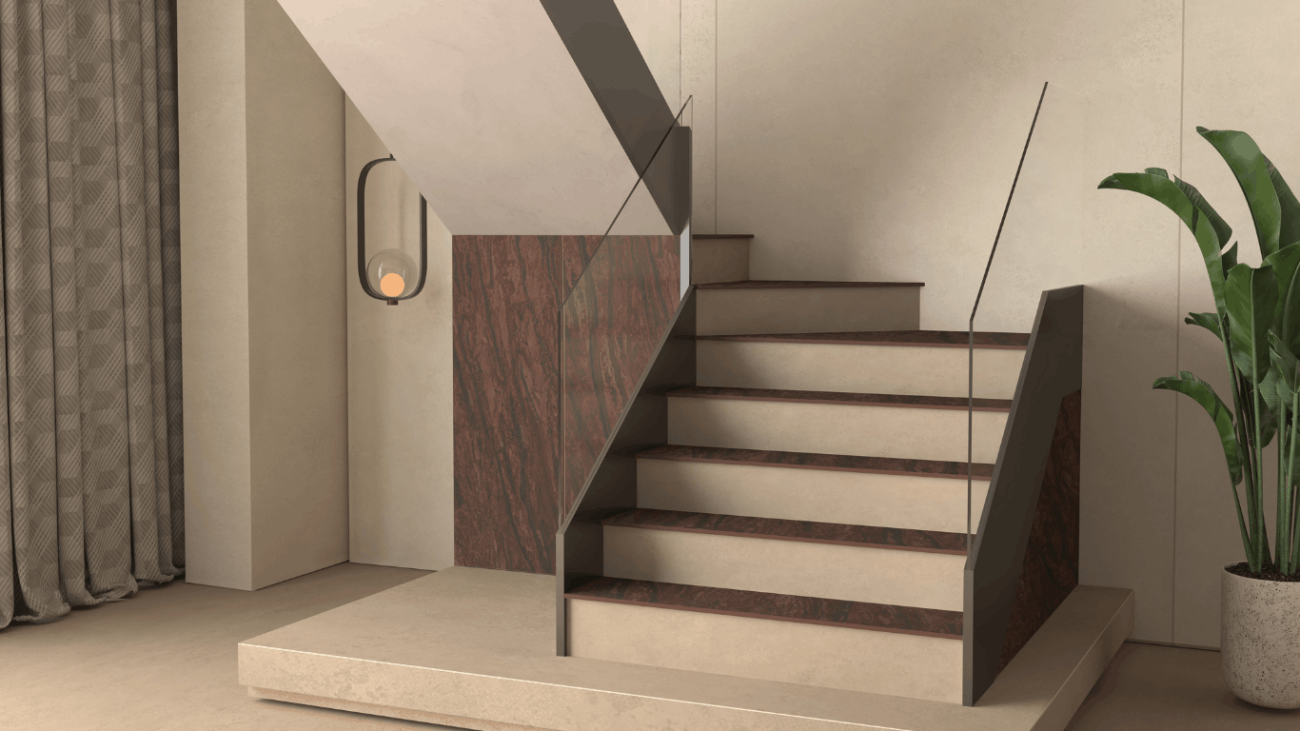
Neotra’s engineered surfaces bring a refined stone-look finish to spiral staircase risers and treads. Available in a range of finishes, Neotra offers a consistent surface appearance across every area, suiting homes that want a coordinated, premium look throughout the staircase.
Wood and Stone Steps vs Engineered Surface Steps
Choosing staircase step material comes down to upkeep, consistency, and appearance. Natural stone brings solidity, but each slab varies in pattern and requires regular sealing. Natural wood offers warmth but can show wear due to heavy footfall or moisture over time. Engineered surfaces from Neotra offer a consistent stone-look finish across steps with simpler day-to-day upkeep, making them a practical option for busy households seeking a coordinated appearance.
| Aspect | Wood steps | Stone steps | Engineered surface steps |
| Appearance | Natural grain and warm | Natural veining and rich | Consistent and coordinated pattern |
| Design consistency | Varies by piece | Varies by slab | Uniform across steps |
| Maintenance | Needs periodic polishing | Needs periodic sealing | Simple regular cleaning |