
What Is Aluminium Cladding?
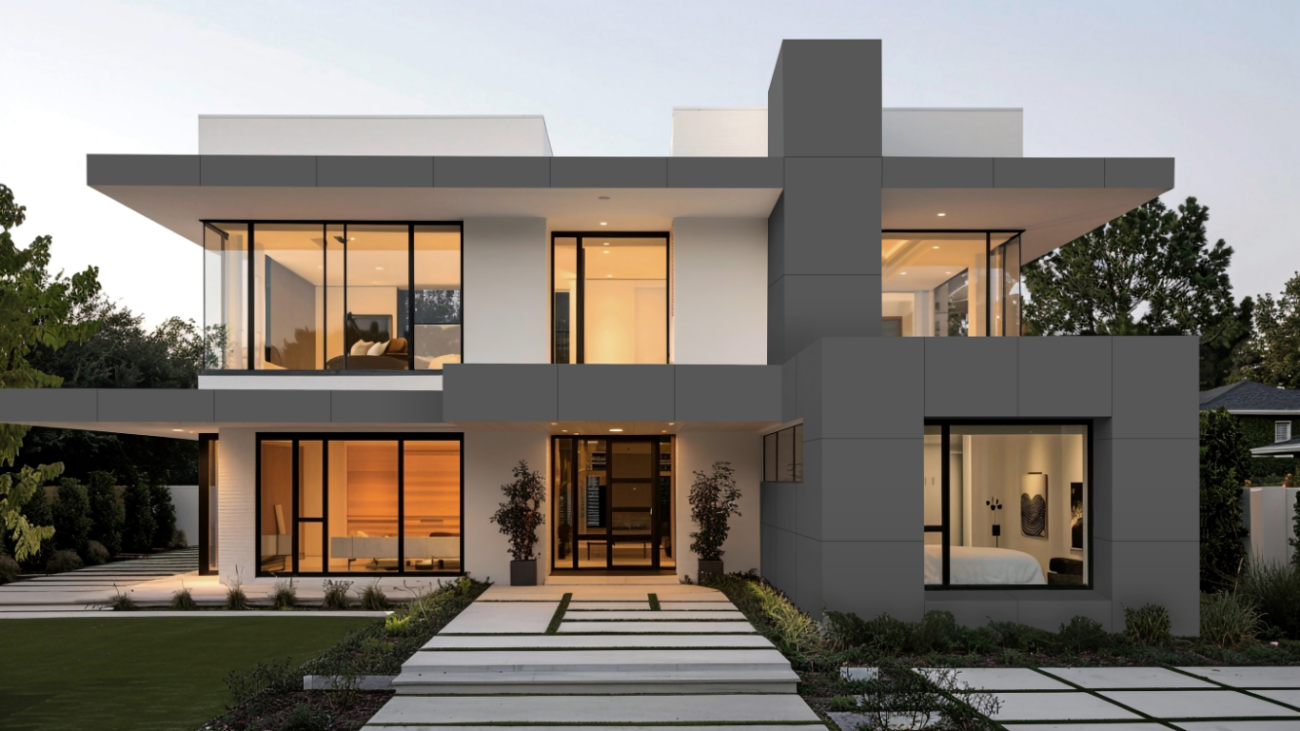
Aluminium cladding is an exterior facade system made of aluminium panels or sheets, renowned for being corrosion-resistant, lightweight, and easy-to-fabricate into precise geometric forms. It is commonly used for retrofits, commercial towers, and contemporary residences where speed of installation and a crisp, metallic aesthetic are preferred over textural richness or natural material depth.
What Is Sintered Stone Cladding?
Sintered stone cladding is an engineered facade material created by compressing natural minerals under extreme heat and pressure, producing a non-porous, dense surface. It is available in marble, stone, concrete, and wood-look surfaces, offering the visual richness of natural building facade materials with far greater strength and weather resistance, making it a preferred choice for facades meant to last for decades.
Key Comparison Factors
Here are the factors that decide whether aluminium or sintered slabs are right for a project:
-
Weight and Structural Load
Weight sits at the heart of every facade decision. Aluminium is prized for being lightweight. Simplifying installation and eases the load on high-rise projects. Sintered slabs’ weight varies with slab thickness and panel size and is typically supported through mechanically fixed systems engineered for the load. The right choice depends on structural capacity and system design, not weight alone.
Also Read: Top 7 Cladding Materials for Modern Building Exteriors
-
Weather and Surface Durability
Facades endure decades of rain, sun, and pollution, and here are the two materials that diverge visibly. Aluminium resists corrosion but can show dents, scratches, or colour fade in high-UV climates or coastal regions over time. Sintered stone, fired at extreme temperatures, resists UV fading, moisture, thermal shock, and abrasion almost entirely, holding its finish and colour through relentless weathering across every season.
-
Design Flexibility and Finish Range
Aluminium offers clean, solid colours, precise geometric panels, and metallic finishes suited to modern structures. Neotra-engineered slabs speak a far richer language, available in stone, marble, wood, or concrete look with striking realism, alongside bold solid tones too.
-
Maintenance and Lifespan
Metal cladding needs periodic cleaning and occasional recoating or repainting to preserve its finish, especially in polluted or coastal environments. Sintered slabs, by contrast, are largely maintenance-free; their dense, non-porous surface resists staining and requires only everyday cleaning. In terms of lifespan, sintered slabs outperform aluminium, retaining their original appearance and structural integrity for a considerably longer period.
Types of Aluminium Cladding and Sintered Stone Panels
Within each material category, several distinct structures exist, each suited to different building types, architectural ambitions, and budgets.
-
Aluminium Composite Panels (ACP)
Aluminium composite panels consist of two thin aluminium sheets bonded to a polymer or mineral core, creating a rigid, lightweight panel. It is widely used for its affordability, ease of fabrication, and a flat, uniform finish that suits commercial and budget-conscious projects, though its core composition can limit performance in extreme fire safety or high-load applications compared to solid alternatives.
Also Read: Top 5 Durable Exterior Wall Cladding Ideas
-
Solid Aluminium and Cassette Panels
These use a single sheet of aluminium, folded and framed into modular units for ventilated facades. They offer greater rigidity, fire performance, and a cleaner, monolithic appearance than composite panels. Cassette systems are favoured for high-rise buildings and premium commercial projects where decision-making and long-term structural reliability outweigh the lower cost of laminated alternatives.
-
Standard Sintered Stone Facade Panels
Standard sintered stone facade panels are fixed directly to the substrate using mechanical anchors, offering a dense, seamless envelope. Available in large formats, they minimise visible joints and deliver a monolithic, high-end appearance. This system suits low- to mid-rise buildings where design continuity matters most, providing exceptional durability without the added complexity of a fully ventilated cavity system.
-
Ventilated Sintered Stone Rainscreen Systems
These systems mount sintered stone panels onto a structure with an air cavity behind, allowing heat and moisture to escape naturally. This prevents condensation, improves thermal performance, and extends facade lifespan considerably. Panels are mechanically fixed rather than adhered, making replacement simple and enabling striking large-format exterior wall cladding across high-rise towers, commercial complexes, institutional, and residential projects.
Aluminium Cladding vs Neotra Sintered Stone Panels
Here’s a side-by-side comparison of aluminium cladding with Neotra slabs—
| Factors | Aluminium Cladding | Neotra Slabs |
| Weight | Lightweight, eases structural load | Varies by thickness, supported via ventilated or mechanical fixing |
| Weather Resistance | Corrosion-resistant, can fade or dent | Resists UV, scratches, and moisture |
| Design Range | Metallic finishes, solid colours | Marble, concrete, wood, stone-look, and solid colours |
| Maintenance | Periodic cleaning and occasional recoating | Largely maintenance-free surface |
| Lifespan | Moderate, can degrade over time | Retains appearance over a longer period |
Selecting one depends on the factors and environment. Aluminium is a popular choice for fast installation and lightweight quality. Neotra slabs’ durability, weathering resilience, and resistance to fading, staining, and scratching across large-format facades.
Design Ideas Using Aluminium and Sintered Stone
Contrasting or combining these two materials opens up a range of facade compositions, each suited to different architectural moods.
Also Read: Best Exterior Cladding Materials for Modern Buildings
Monochrome Metal Facade
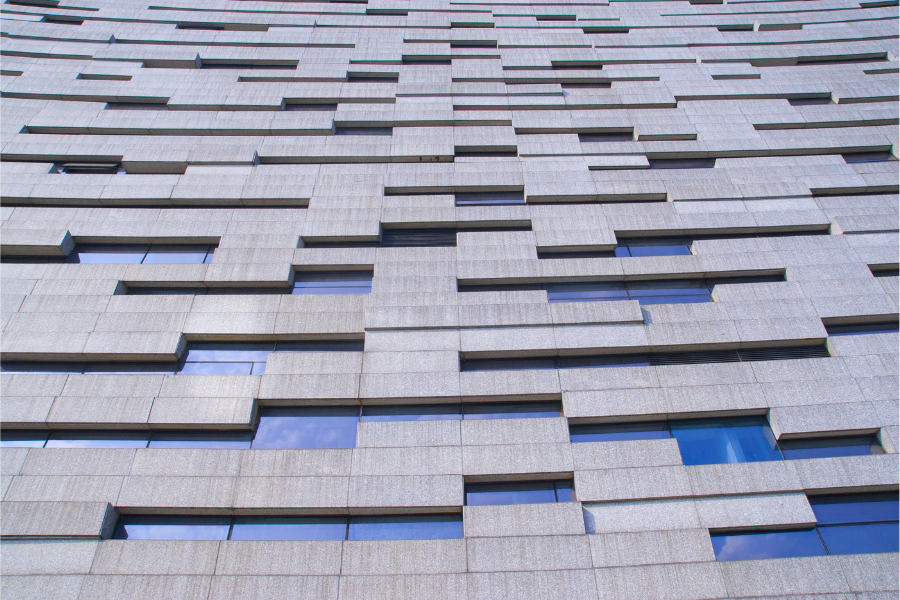
A monochrome metal facade using solid-toned aluminium panels is one restrained shade of graphite, charcoal, or matt white across the elevation. Clean joint lines and a uniform finish create a sharp, minimalist silhouette. This approach suits residencies and commercial buildings that favour precision and geometric discipline over textural variation.
Mixed Material Facade: Aluminium and Sintered Stone
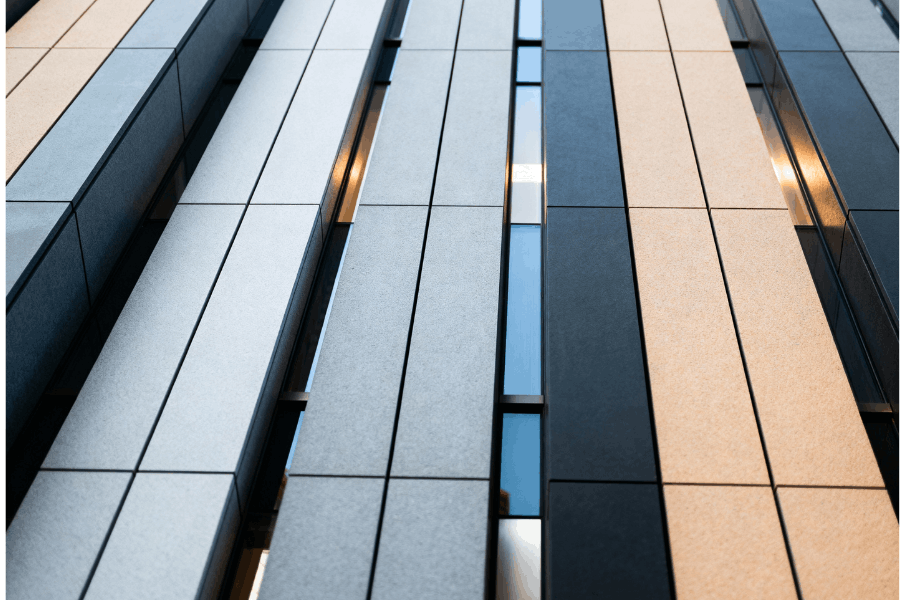
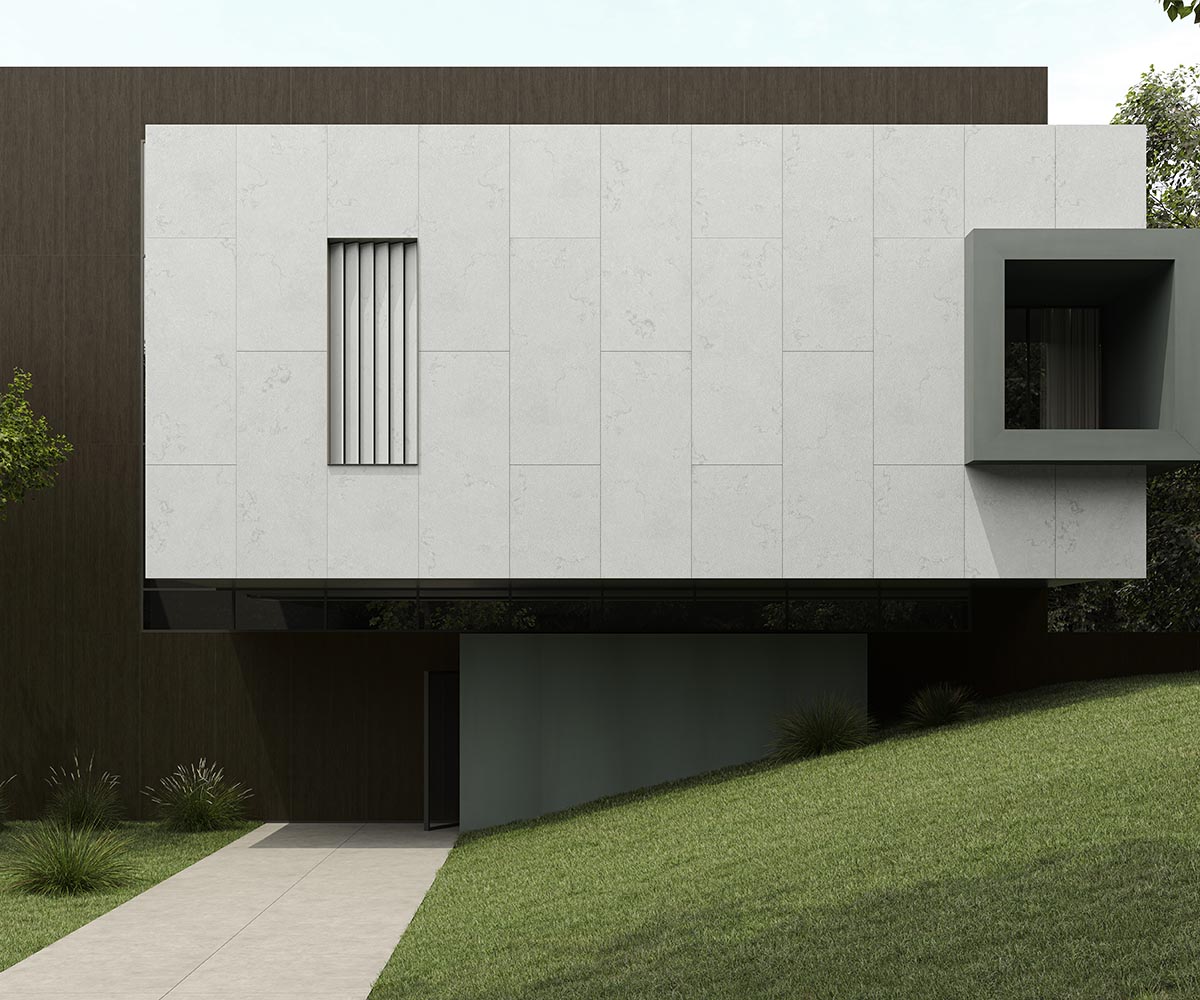
This facade pairs aluminium’s crisp geometry with the depth of our engineered surface, using aluminium framing or accent bands against large-format sintered panels. The contrast between matt metal and stone-look texture adds visual dimension without clutter, giving architects a facade that feels both grounded and engineered in natural material.
Full Sintered Stone Facade with Metal Accents
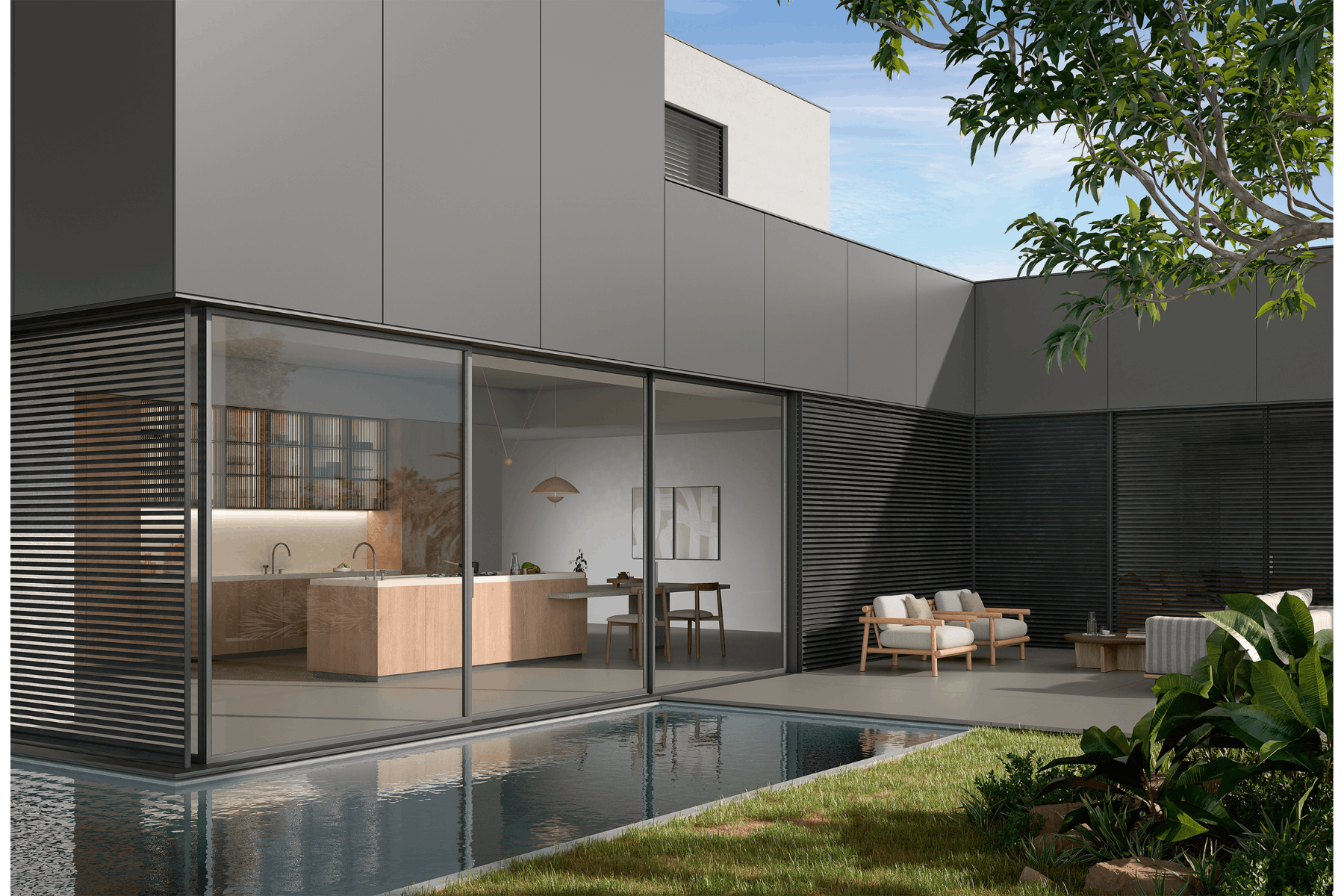
Our wood-look or stone-look panels cover most of the elevation, with slim aluminium detailing marking window lines, entrance framing, or structural edges throughout. The result is a facade materials dominated by natural texture and warmth, sharpened by precise metallic accents that highlight architectural form without ever competing with it.