
10 Floating Vanity Top Designs
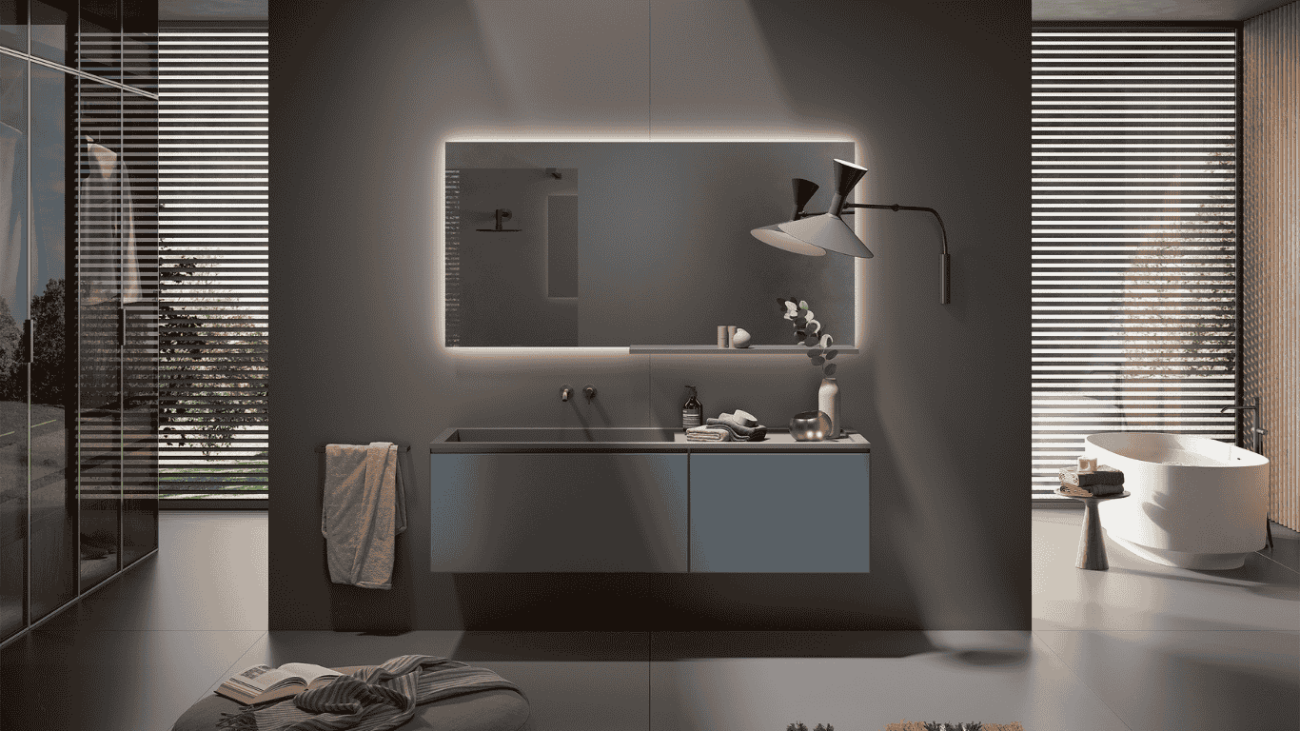
Here are the 10 vanity top ideas; each design below shows a different way to let the vanity top lead the room.
-
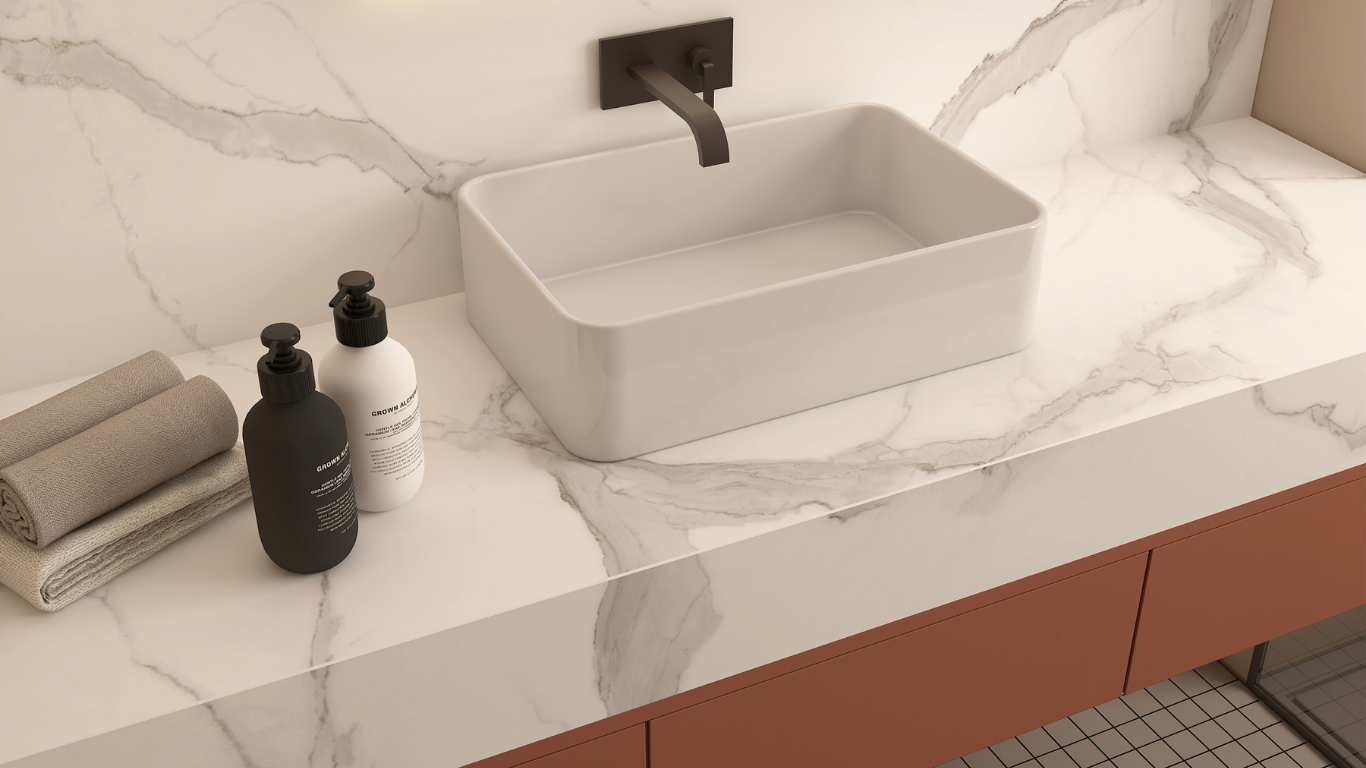
1: Calacatta Marble-Look Sintered Stone Floating Slab Top
Bold grey veining on a soft white base brings the look of Calacatta marble to the bathroom. The sintered stone slab floats off the wall with ease. It gives you luxury styling without the upkeep, etching, or staining of natural stone.
-
2: Integrated Seamless Basin Wall-Mounted Vanity Top Design
The top and basin are one piece; there are no joints, rims, or gaps where dirt can collect. This wall-mounted bathroom vanity creates a sculpted, minimal look, while water flows straight into the bowl for easier cleaning.
-
3: Monochromatic Dark Slate Engineered Surface Vanity Top
A deep slate finish sets a clean and moody tone. Pair with matt black fittings and soft lighting for a private spa-like feel. Dark engineered surfaces also hide daily marks well, so the top stays looking sharp day after day.
-
4: Low-Profile Ultra-Thin Edge Floating Slab Countertop
A slim edge makes the slab look light and almost weightless. Thin profiles suit compact bathrooms and strong, clean lines. Sintered stone keeps its strength even at reduced thickness, so the top feels fine but never fragile, which is ideal for minimalist spaces.
Also Read: 15 Vanity Top Designs That Make Small Bathrooms Feel Larger
-
5: Backlit Translucent Onyx-Effect Floating Vanity Top
Soft light beneath an onyx-effect surface creates a gentle glow. The vanity becomes a feature, not only a fixture. This works best in master baths and powder rooms, where mood and ambience matter most. Pair it with warm LED strips.
-
6: Waterfall Edge Floating Sintered Stone Vanity Top
The slab runs down the side of the vanity in one clean line. The waterfall edge adds weight and drama to a floating form. Plain or veined, it gives the vanity countertop a bold, truly architectural presence in the room.
-
7: Concrete-Finish Industrial Style Floating Slab Top
A concrete finish slab brings raw texture with a refined edge. The muted grey tone pairs well with glass, steel, and timber. Unlike real concrete, engineered surfaces do not stain, crack, or need sealing. The look is industrial, yet livable and warm.
-
8: Wall-to-Wall Extended Floating Vanity Surface with Lower Shelf
One long slab runs the full width of the wall. A lower shelf below holds baskets and towels, keeping the top clear. This is a practical layout for shared bathrooms that still looks tidy, uncluttered, and well-planned.
Also Read: 12 Vanity Designs for Small Bathrooms That Save Space
-
9: Warm Wood-Grain Effect Sintered Stone Floating Top
Wood-grain sintered stone adds warmth to a modern space. Get the soft look of timber with none of the warping, swelling, or fading. Best for a calm, natural, spa-like feel. Pair it with stone-toned walls.
-
10: Curved Soft-Corner Floating Vanity Slab Top
Rounded corners soften the hard lines of a bathroom. A curved slab feels gentle, inviting, and safe in family homes. Large-format engineered surfaces can be cut and shaped with precision to achieve this smooth, flowing form.
Why Large Format Slabs Excel in Floating Vanity Designs
There is no cabinet base to hide flaws; a floating vanity shows its full top surface. Large-format slabs suit this style because one piece can cover the whole span. The result looks clean, calm, and well-planned.
- Strength: Sintered stone is rigid and dense, as it handles long spans when supported correctly.
- Low water absorption: Steam and splashes do not seep in, which suits humid bathrooms.
- Fewer joints: A single slab means fewer seams; the top looks seamless and is easier to wipe clean.
- Scratch and stain resistance Cosmetics, soap, or toothpaste are easy to clean off.
- Design freedom Thin edges, waterfall sides, and cut-outs are possible in one continuous surface.
Also Read: Neotra vs Quartz: Which Surface Is Best for Modern Kitchens
Material Selection: Sintered Stone vs Natural Marble for Vanity Tops
Natural marble offers a timeless look, but it needs steady care, especially in a wet room. Sintered stone offers a similar beauty with far better performance, and this is why Neotra-engineered surfaces suit modern bathrooms so well.
| Feature | Natural Marble | Sintered Stone |
| Etching | Can react to acidic products and develop etch marks. | Resists acidic products and everyday bathroom exposure. |
| Porosity | Absorbs liquids and may develop stains over time. | Non-porous, so spills remain on the surface. |
| Consistency | Each slab has unique variations in colour and pattern. | Offers a more uniform look across large slabs. |
| Durability | Requires careful handling to prevent scratches, heat damage, and impact marks. | Handles heat, impact, and scratches better. |
| Maintenance | Requires regular sealing and ongoing care. | Needs simple, routine wiping for everyday maintenance. |
Also Read: Neotra vs Marble: Which Is More Stylish and Practical?
Structural Mounting & Load-Bearing Support Guidelines
A floating vanity depends on its support. The slab looks light, but it carries fittings, water, and daily use. Good planning keeps the vanity safe and the surfaces free from stress.
- Brackets: Use heavy-duty concealed brackets rated well above the total load.
- Wall type: Fix the vanity to solid masonry or a reinforced frame but avoid plain drywall.
- Slab thickness: Match the thickness to the span and the mounting method. Also confirm with the manufacturer.
- Cutouts: Keep corners rounded and also avoid cutting close to the edges.
- Support spacing: Place supports at regular intervals. Long spans need extra support at the centre.
- Moisture: Waterproof the wall behind the unit before fixing.
- Installation: Use trained fabricators and level the top carefully.