

Why TV Unit Design Anchors the Living Room
Every living room organises itself around a focal point, and for most Indian homes today, that focal point is the television wall. Here’s why the TV unit deserves as much design attention as the sofa or the flooring.
- Sets the visual axis – the TV wall is usually the first thing seen on entering the room, making its design the room’s first impression.
- Balances storage and display – a good unit hides remotes, cables, and set-top boxes while showcasing books, art, or decor.
- Defines the room’s material language – the finish used here often dictates the palette for the rest of the space.
- Improves everyday function – proper ventilation and cable management keep electronics organised and accessible.
- Anchors lighting design – accent lighting and backlighting around the unit shape the room’s evening ambience.
15 TV Shelf Design Ideas
Modern TV shelf designs have moved well beyond a single console against a wall. Below are 15 design directions to consider, each suited to a different room size, functional need, or material sensibility.
1. Floating TV Shelf Unit
A wall-mounted console with no visible legs, creating a light, airy look. It keeps the floor visually clear, works well in compact rooms, and makes cleaning easier. Often paired with concealed wiring for a seamless, uncluttered finish.
Also Read: 20 Stunning Stone Wall Design Ideas for a Beautiful Home
2. TV Shelf with Hidden Storage
Push-to-open drawers and closed cabinets keep set-top boxes, remotes, and gaming consoles out of sight. This design suits households that want a clean visual line without sacrificing everyday storage for electronics and accessories.
3. Wall-Mounted TV Panel with Shelves
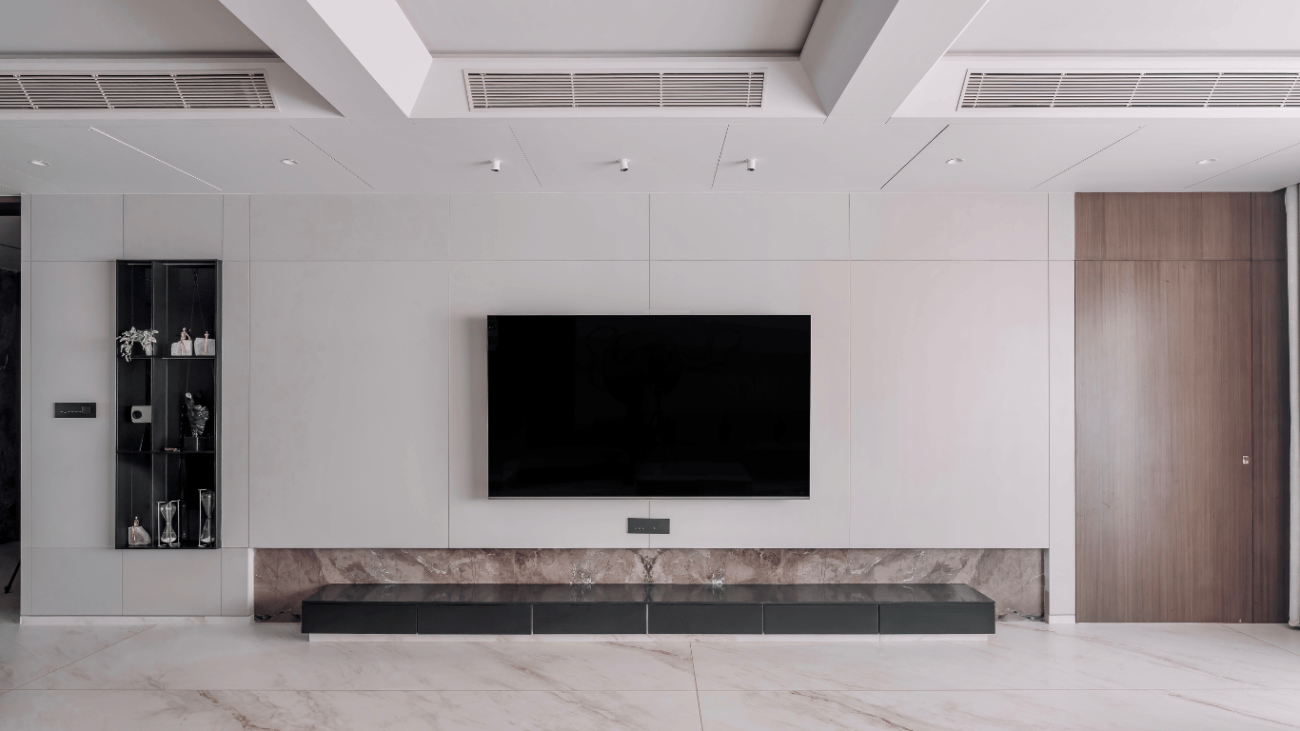
A full-wall panel with a television embedded and open shelves flanking it. This design adds display space for books and decor while keeping the television visually integrated into the wall composition rather than standing apart.
4. Backlit TV Unit Design
LED strips placed behind the TV panel or along shelf edges add depth and a soft glow. Backlighting reduces eye strain during evening viewing and gives the wall a layered, boutique hotel-like appearance after dark.
5. Wood and Stone TV Unit Combination
Pairing a stone- or marble-look with wood-look cabinetry creates visual contrast and warmth. This combination works particularly well in living rooms that want a premium feel without leaning fully into one material tone.
Also Read: 10 Luxury Living Room Interior Design Ideas to Elevate Your Home
6. Minimalist Single-Shelf TV Console
Just one long, low shelf beneath the television, kept free of visual clutter. This design suits modern and Scandinavian-style interiors where restraint and clean horizontal lines matter more than storage capacity.
7. TV Unit with Display Niches
The recessed niches built into the TV wall hold curated objects, artwork, or plants. The negative space around each niche does the styling work, making this ideal for homeowners who enjoy rotating decor pieces.
8. Engineered Surface TV Panel Backdrop
A large-format engineered slab behind the television creates a seamless, joint-free backdrop. The consistent finish across a big surface area gives the wall a considered, gallery-like presence without visual breaks.
9. L-Shaped TV Shelf Design
The unit wraps around a corner, extending storage along an adjacent wall. This works well for rooms where the television wall meets a bar unit or reading nook, maximising storage without extra floor footprint.
Also Read: 10 Luxury Living Room Interior Design Ideas to Elevate Your Home
10. TV Shelf with Integrated Study Table
A fixed or fold-out desk built into one end of the unit, useful for compact homes needing a work-from-home corner. It keeps the living room multi-functional without introducing a separate desk.
11. Textured Accent Wall TV Unit
A fluted or textured panel surrounds the television, adding tactile interest against an otherwise flat wall. This design works well when the rest of the room is kept relatively neutral and plain.
12. Compact TV Shelf for Small Living Rooms
A slim-depth unit designed for smaller layouts and apartments, prioritising width over bulk. Floating or wall-mounted versions work particularly well here, keeping the floor area open and the room feeling larger.
13. Floor-to-Ceiling TV Shelf Unit
A full-height storage wall that combines the television with cabinets, bookshelves, and display sections. This design maximises storage in one wall, making it a strong choice for media-heavy or book-loving households.
Also Read: Top 10 Marble Wall Design Ideas for Luxurious Interiors
14. Dark-Toned TV Unit Design
Granite, deep wood, or charcoal-look finishes create a dramatic feel around the television. Dark tones also reduce glare during viewing, making this a practical choice for rooms with heavy screen time.
15. TV Shelf Design Using Neotra Engineered Surfaces
Our engineered slabs bring a consistent, large-format finish to TV units, from stone-look backdrops to wood-look cabinetry fronts, giving the wall a considered, cohesive look across the entire composition.
Laminate TV Units vs Engineered Surface Panels
Laminate has long been the default choice for TV units because of its lower upfront cost and wide colour range. However, laminate is a thin surface layer applied over a substrate, which means it’s more prone to chipping, peeling, and moisture damage at edges and joints over time. Engineered surfaces, by contrast, are large-format slabs with a consistent finish through a thicker cross-section, allowing for fewer visible joints across a TV wall and a more uniform look in stone, marble, wood, or concrete-look finishes. For homeowners prioritising long-term appearance and a seamless backdrop over the TV, engineered surfaces offer a premium visual outcome, while laminate remains a budget-friendly option for smaller or frequently updated spaces.
| Aspect | Laminate | Engineered Slabs |
| Finish consistency | The surface layer can show wear at the edges | Consistent finish across large formats |
| Design range | Wide colour and pattern range | Stone, concrete, wood, and marble-look finishes |
| Joints on the TV wall | More joints for larger walls | Fewer visible joints |
| Best suited for | Budget or frequently updated interiors | Premium, long-term living room walls |