
Why Sintered Stone Slabs Are the Ultimate Bar Counter Material
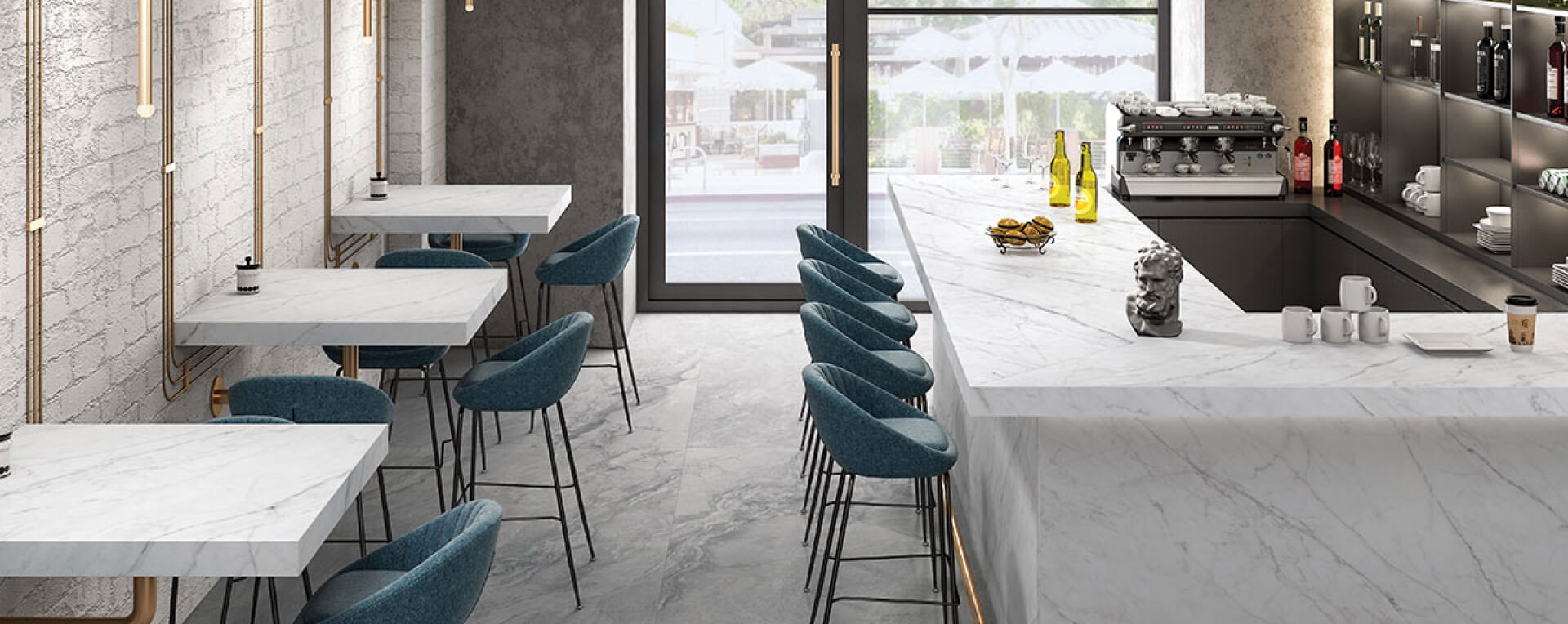
Traditional materials such as marble, granite, stone, or ceramic tiles have their advantages and disadvantages. Marble requires regular upkeep; granite is better with a textured finish; wood gets wet easily, demanding frequent care and polishing. Ceramic tiles come in various finishes, such as glossy and matt; depending on how they are made, they offer slip and scratch resistance. Sintered stone surfaces from Neotra are engineered surfaces made solely from minerals without resins. Our Neo Invicta, Neo Scudo Tech, Neo Forte, and Neo Senso technologies help our surfaces perform extraordinarily even after decades. They are fire-resistant and resist acids and stains from hot coffee or wine spills. They are scratch-resistant, easy to maintain, and do not discolour over time, which makes the sintered stone slabs the ultimate bar counter material for your space.
Traditional materials such as marble, granite, stone, or ceramic tiles have their advantages and disadvantages. Here’s why sintered stone slabs are best –
- Marble requires regular upkeep; granite is better with a textured finish; wood gets wet easily, demanding frequent care and polishing.
- Ceramic tiles come in various finishes, such as glossy and matt; depending on how they are made, they offer slip and scratch resistance.
- Sintered stone surfaces from Neotra are engineered surfaces made solely from minerals without resins. Our Neo Invicta, Neo Scudo Tech, Neo Forte, and Neo Senso technologies help our surfaces perform extraordinarily even after decades.
- Fire-resistant and resist acids and stains from hot coffee or wine spills.
- They are also scratch-resistant, easy to maintain, and do not discolour over time, which makes the sintered stone slabs the ultimate bar counter material for your space.
12+ Kitchen Bar Counter Designs
Here are 12+ kitchen bar counter ideas, from compact designs to luxurious. Use this to find a design that suits your home and your daily routine.
1: Calacatta Marble-Look Sintered Stone Waterfall Bar Counter
Bold grey veining on a soft white base brings the look of Calacatta marble to the bathroom. The sintered stone slab floats off the wall with ease. It gives you luxury styling without the upkeep, etching, or staining of natural stone.
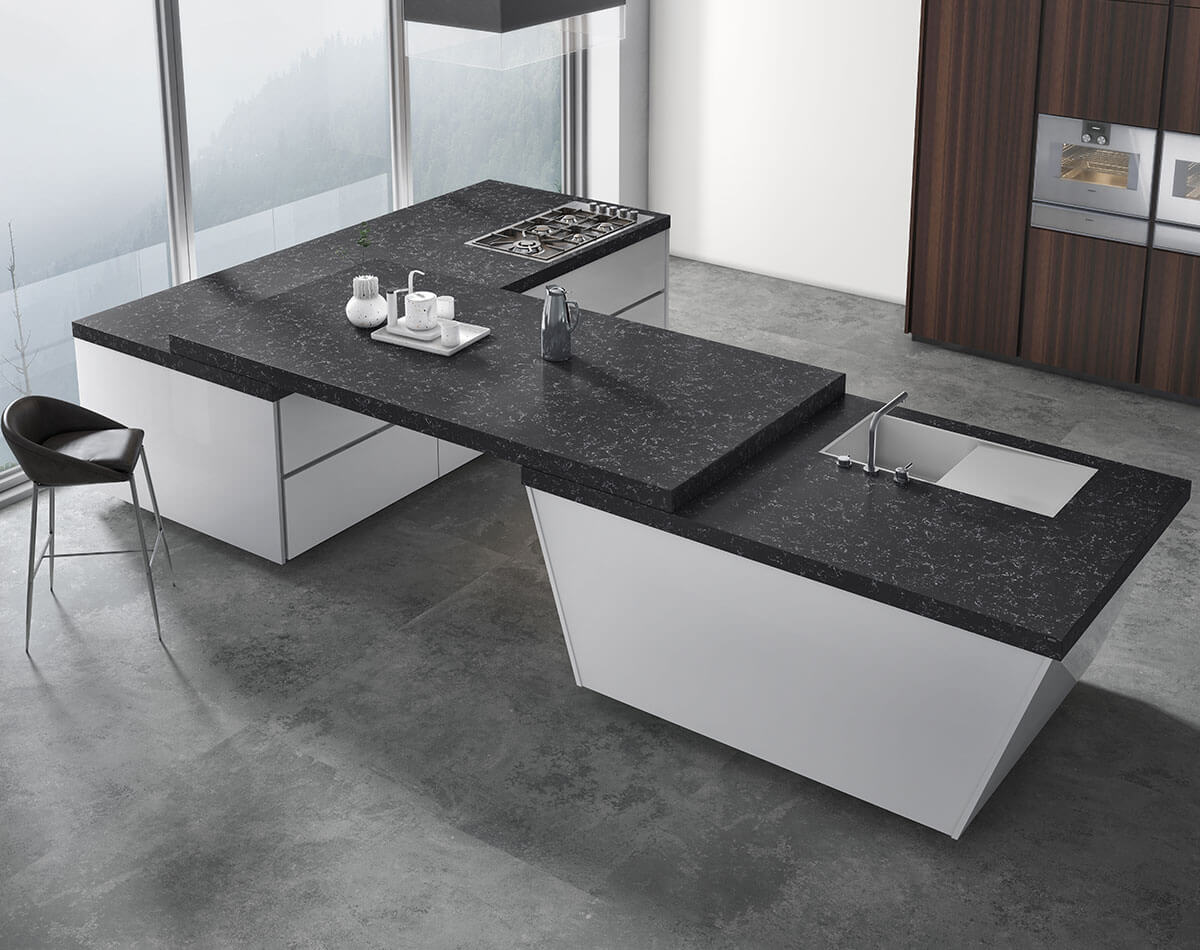
2: Dual-Level Island with Raised Stone Bar Countertop
The dual-level kitchen countertop has two levels. The lower level is for cooking and preparation; the raised level is for seating and serving. The upper ledge also hides clutter from guests, such as small appliances and dishes. A practical choice for busy households that entertain often.
3: Monochromatic Dark Slate Cantilevered Breakfast Bar
A deep slate finish sets a clean and moody tone for breakfast. Pair with matt black fittings and soft lighting for a private spa-like feel. Dark engineered surfaces from our Pastelli collection also hide daily marks well, so the top stays looking sharp day after day.
4: Backlit Translucent Onyx-Effect Bar Counter Surface
Soft light beneath an onyx-effect surface creates a gentle glow. The vanity becomes a feature, not only a fixture. This works best in master baths and powder rooms, where mood and ambience matter most. Pair it with warm LED strips.
5: Fluted Wooden Pedestal with Oval Sintered Stone Countertop
The fluted wood has fine vertical grooves that add depth and rhythm to the base. An oval stone top softens the shape and adds a rich contrast. Works well in rooms with natural tones and soft lighting.
6: Concrete-Finish Industrial Bar Counter for Open Kitchens
For open kitchens, opt for concrete-finish material, giving it an industrial, modern look. The muted grey tone pairs well with glass, steel, and timber. Unlike real concrete, engineered surfaces do not stain, crack, or need sealing. The look is industrial, yet livable and warm.
Also Read: 5 Stunning Glass Countertop Designs for Contemporary Kitchens
7: Extended Peninsula Bar Counter with Steel Leg Support
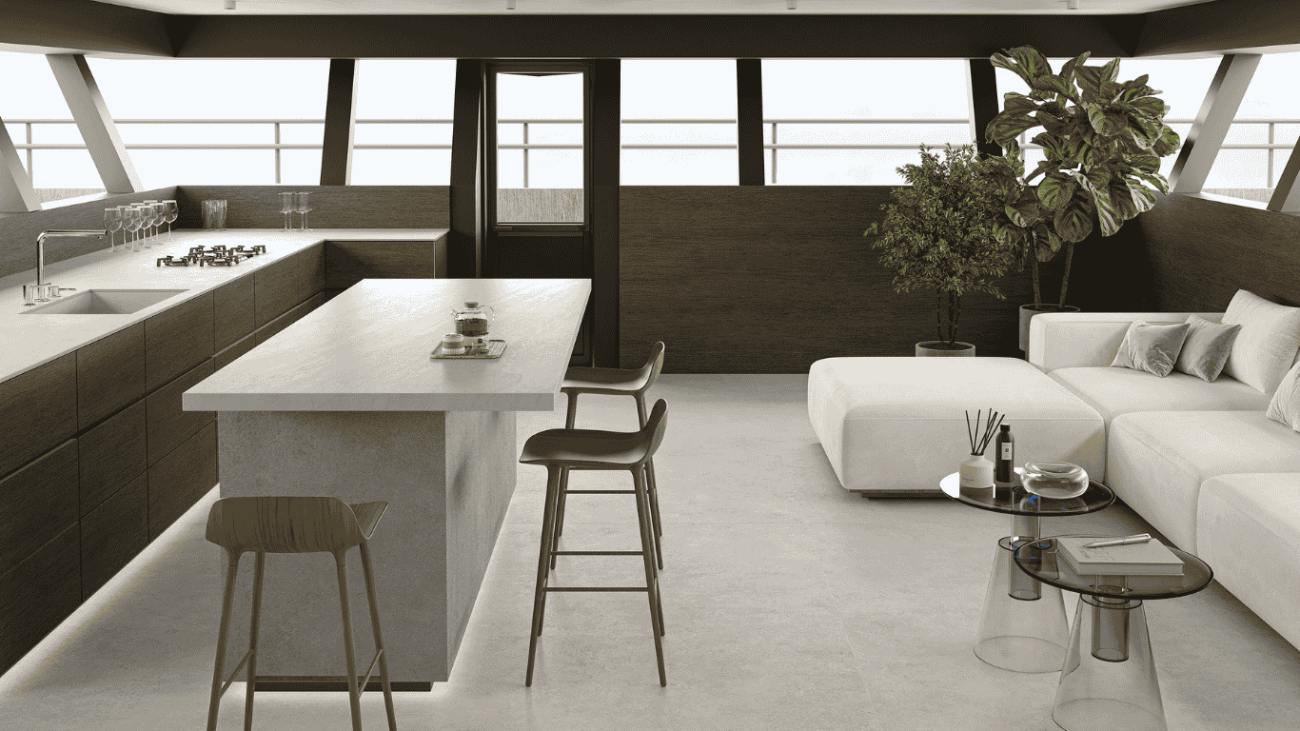
Like other space-saving kitchen countertop designs, it works well in kitchens that cannot fit a full island; it also marks a clear boundary between the kitchen and dining area that suits open-plan homes. With a steel leg support, it keeps the walkway open on one side, making the room feel organised.
8: Under-Counter LED Illuminated Stone Bar Top
Concealed warm LED lighting beneath the overhang makes a stone bar top glow softly, adding depth. This creates a floating effect and lends the kitchen a refined evening ambience.
9: Curved Soft-Corner Sintered Stone Bar Counter Design
Curves soften a kitchen full of straight lines. A rounded bar end improves movement, as there are no sharp corners to bump into. Also a safer option for homes with young children. The shape adds a touch of luxury and suits both classic and modern interiors.
Also Read: 10 Kitchen Interior Design Ideas with Premium Kitchen Countertops
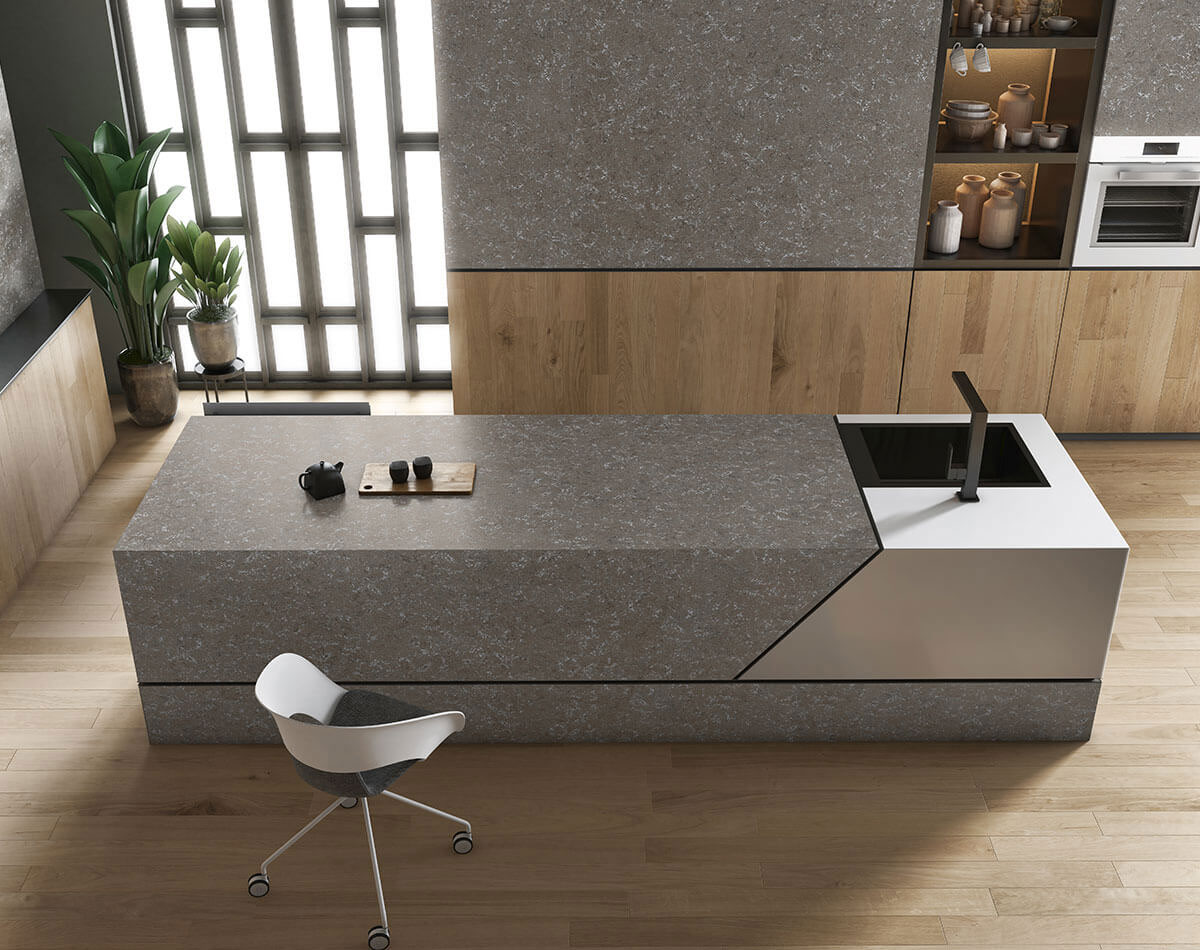
10: Integrated Sink & Wine Chiller Cocktail Bar Countertop
An integrated bar includes a small sink and wine chiller designed for drinks and light food preparation. Keeps guests away from the main cooking zone. For homes that host regularly, this is a smart and contemporary addition to your space.
11: Terrazzo-Effect Sintered Stone Social Bar Counter
A speckled pattern of chips and fragments adds playful texture to a refined space. A terrazzo-effect surface in sintered stone on a social bar counter offers the best of both worlds. Sintered stone resists stains, heat, and scratches, so a hot cup of tea will not leave a mark.
12: Compact Pull-Out Floating Stone Bar Counter for Small Spaces
For small and compact kitchens, a floating bar attached to the wall saves floor space, as they do not require legs or cabinets beneath, so the area stays open and light. Perfect in apartments, where every inch counts.
Also Read: Types of Countertops and Their Benefits for Your Home
Comparing Surface Materials: Sintered Stone vs Wood vs Granite
Sintered stone slabs, wood, and granite are distinct materials, offering different features, maintenance requirements, and lifespans. Here’s a quick comparison of these materials to help you choose –
| Surface Material | Stain Resistance (Wine/Citrus) | Heat Resistance | Maintenance Requirement | Lifespan |
| Sintered Stone Slab | 100% Stain-Proof (Non-Porous) | Up to 1200°C (Extreme) | Wipe clean with water | Permanent |
| Natural Hardwood | Low (stains and warps easily) | Low (Scorches) | High (annual sealing/oiling) | 5 – 10 Years |
| Natural Granite | Moderate (Requires sealing) | High | Periodic sealing needed | Long |
Also Read: 8 Best Kitchen Countertop Materials For Indian Homes
Kitchen Bar Standards: Counter Height, Overhang & Stool Clearance
Good design depends on the correct measurements. Use these standard guides when planning your bar counter.
- The counter-height bar should be about 36 inches; the bar-height counter should be 42 inches high.
- For seating width, allow 24 inches for each person.
- Keep the overhang depth of 10 to 12 inches for comfortable knee space.
- Leave at least 36 to 42 inches behind the stools so people can pass easily.
- Bar-height counters create a clear separation from the work area, while counter-height designs feel more casual and are easier for children and older family members to use.